Introduction: the hidden lever in cloud routing optimization
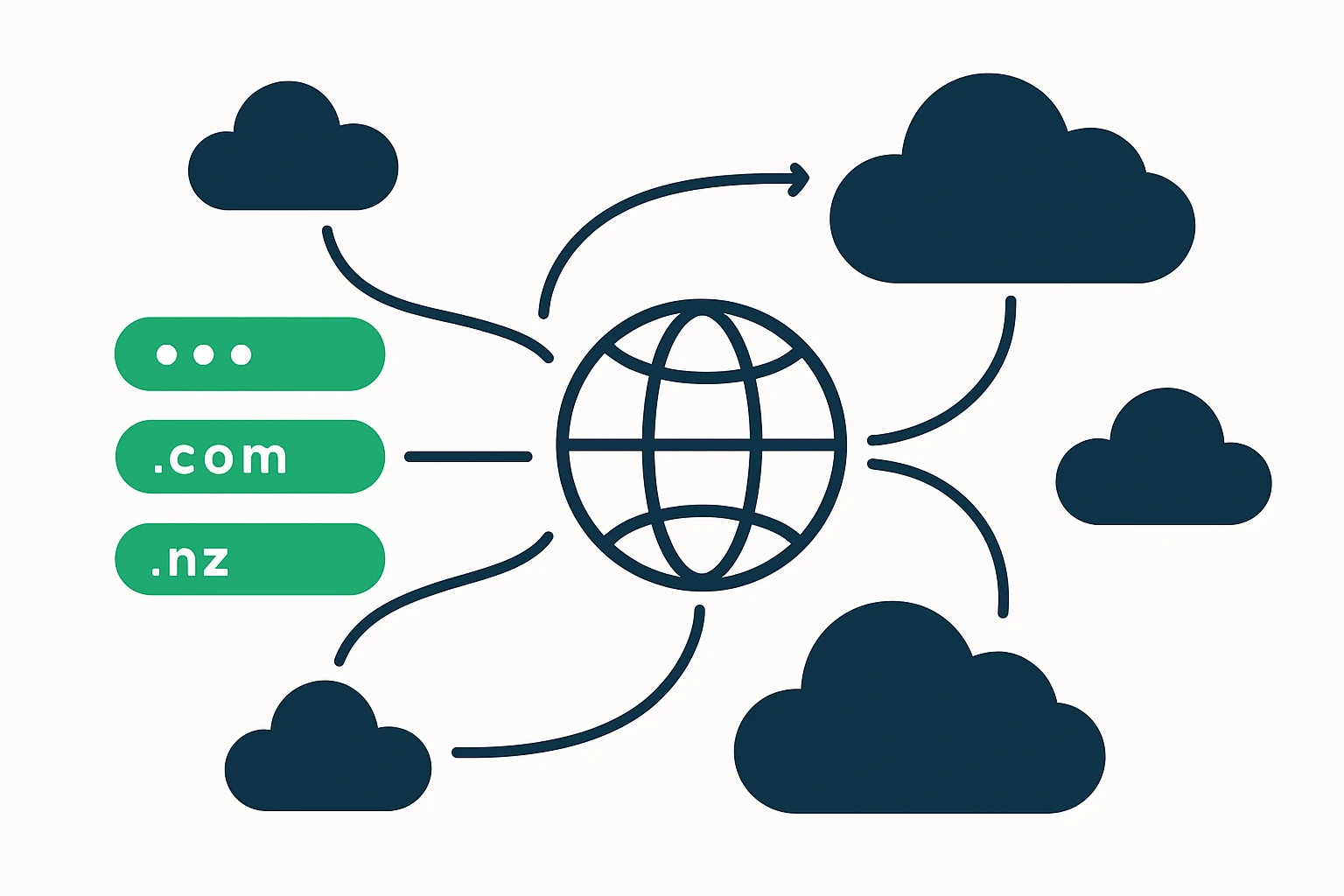
When SaaS and enterprise networks stretch across multiple cloud providers, routing decisions cannot rely on a single path or a single failure domain. Latency, uptime, and user experience depend on a tapestry of factors: where your DNS resolvers sit, how quickly you react to an outage, how edge routing decisions align with real-time health signals, and how your domain surface is managed across TLDs. In practice, this means you need a disciplined approach to domain asset intelligence - knowing which domains, subdomains, and TLDs you actually own or depend on, and how they behave in different failure modes. That intelligence is a core driver of cloud routing optimization, especially for teams pursuing resilient, low-latency performance across multi-cloud architectures.
As the cloud ecosystem grows more complex, teams increasingly leverage DNS-based failover and edge routing techniques to keep services available even when a region or provider falters. This article connects the dots between domain asset visibility, DNS failover strategies, and multi-cloud traffic engineering, and shows how practitioners can operationalize these concepts without adding unsustainable complexity. For context, modern DNS and edge platforms increasingly rely on Anycast and global resolver visibility to minimize latency and improve resilience.
In the realm of edge and DNS routing, anycast and resilient DNS workflows are foundational. Cloudflare’s Foundation DNS launch highlights how Anycast-based architectures enable global availability and proximity-based responses, which are central to reducing latency and improving uptime at scale. Foundation DNS launch
Why domain visibility matters for cloud routing optimization
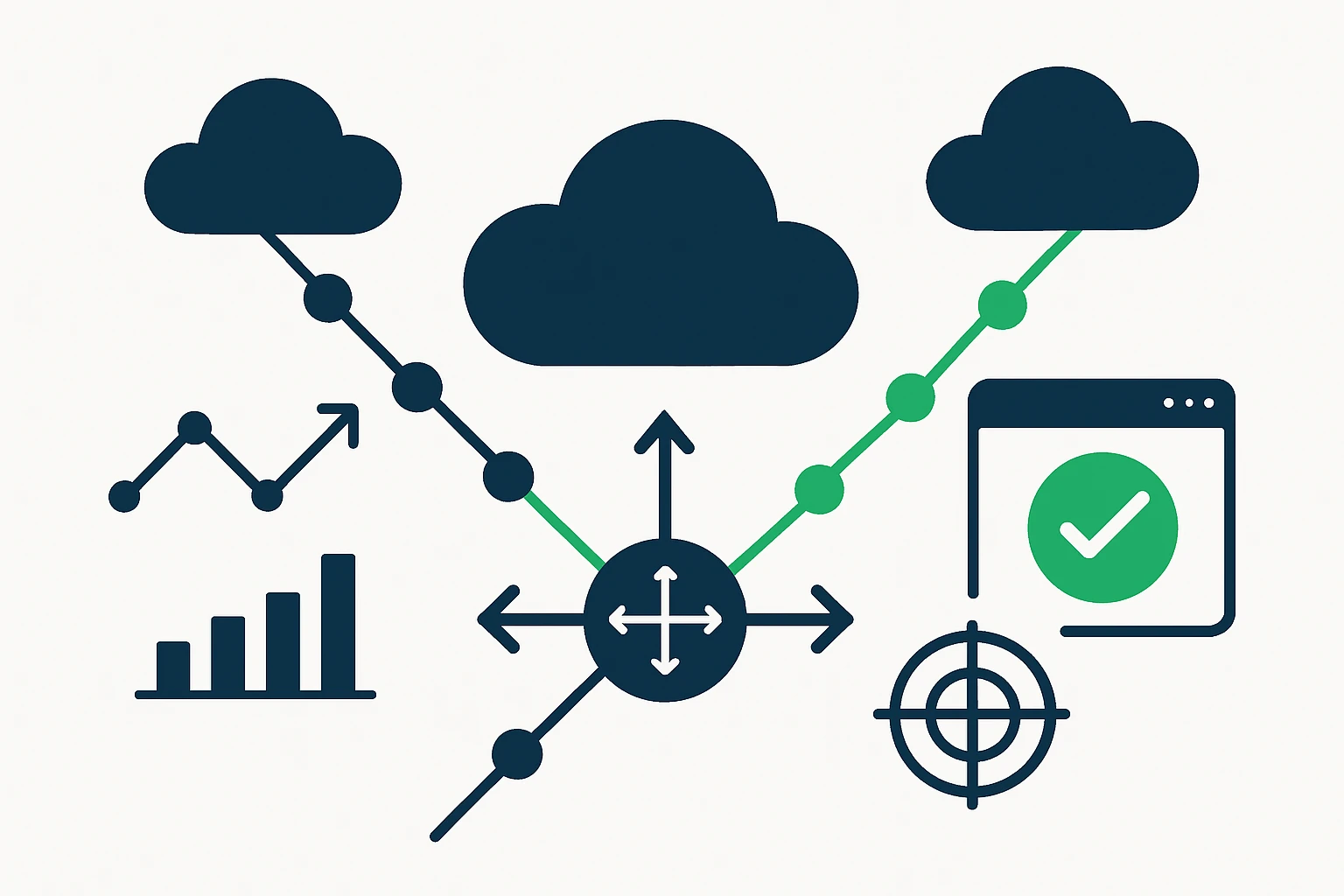
Cloud routing optimization is not only about routing packets faster, it’s about orchestrating where those packets are directed as health signals and geographic demand shift. A clear view of your domain footprint across TLDs helps IT and networking teams align DNS failover, edge routing, and cross-cloud strategies with real-world traffic patterns. This perspective yields several concrete benefits:
- Improved failover accuracy. When you know which domains and subdomains are critical to your services, you can design health checks and DNS failover rules that point traffic to healthy endpoints with minimal delay. AWS Route 53’s DNS Failover capability is a practical example of how health checks can drive automated rerouting to maintain availability. Configuring DNS failover
- Smarter multi-cloud routing decisions. A comprehensive view of domains across TLDs lets you balance load and latency across providers, reducing hot spots and avoiding single points of failure. Cross-cloud considerations are increasingly supported by routing strategies that combine DNS-based controls with health data from providers like AWS and Google Cloud. DNS failover in Route 53 demonstrates how failover can be policy-driven rather than ad hoc.
- Resilience at the edge. Anycast-based DNS infrastructure brings queries to the nearest healthy resolver, which is a cornerstone of robust edge strategies. The Cloudflare Foundation DNS rollout demonstrates how global anycast can underpin fast, highly available DNS resolution. Foundation DNS launch
Beyond theory, many teams turn to practical data assets to support these decisions. For example, some practitioners use downloadable domain lists to inventory and monitor the domain surface that their applications rely on. This approach, while not a substitute for real-time health data, helps teams map potential failure domains and pre-position traffic controls before outages occur. A widely cited resource category is downloadable TLD domain lists, including sources that provide up-to-date zone data. AllZonefiles – TV domain list.
Domain asset intelligence: what it is and how to use it
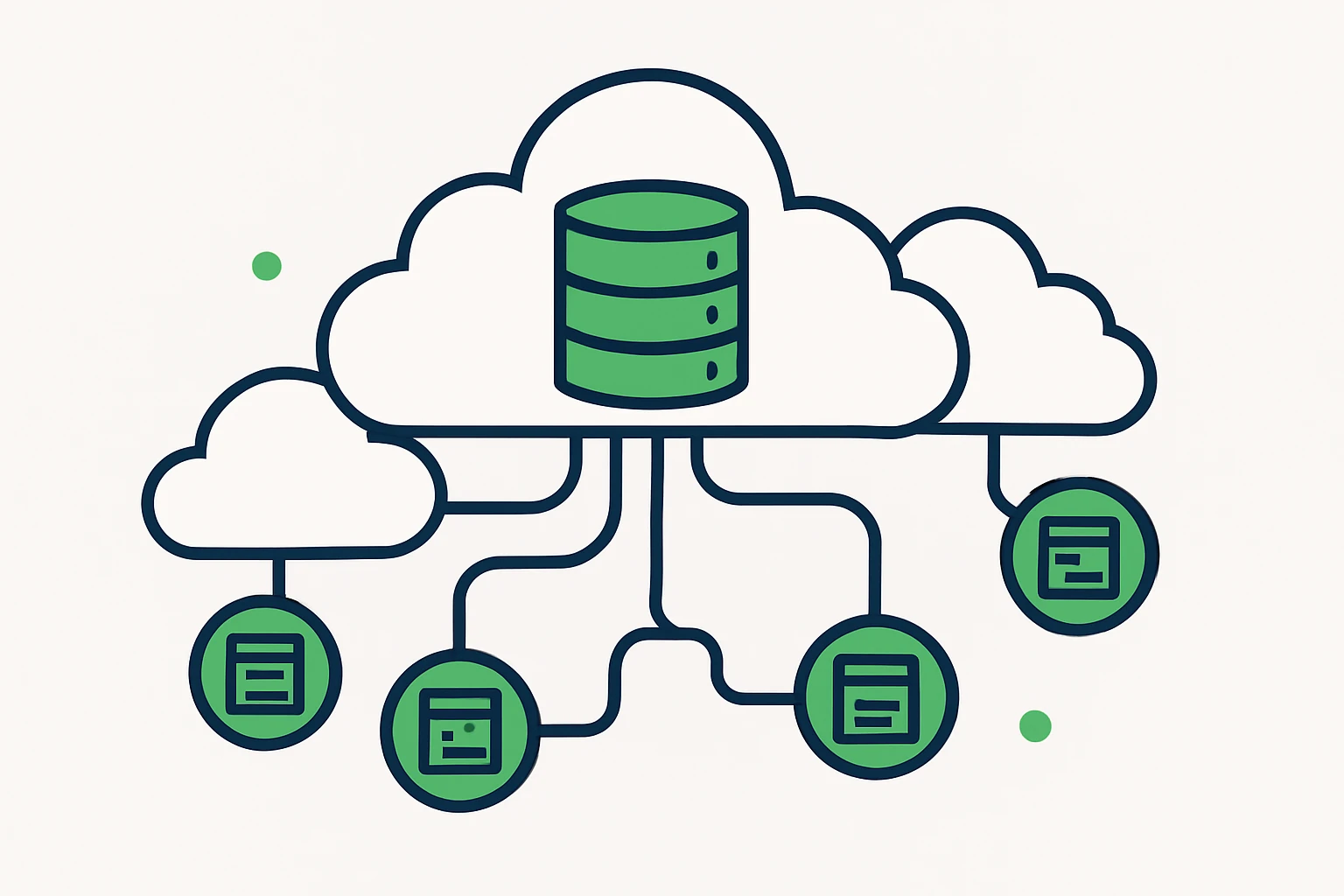
Domain asset intelligence refers to the systematic collection, validation, and usage of the domains and subdomains that make up your public surface. It goes beyond ownership records to include how those domains terminate traffic, how they’re resolved across resolvers, and how they participate in failover or routing decisions. When you couple domain asset intelligence with DNS-based traffic management, you gain a powerful lever to influence latency and uptime across a multi-cloud stack.
One practical component of this intelligence is the ability to source and leverage domain lists for inventory purposes. Some teams augment their asset inventories with downloadable domain lists for TLDs such as .tv, .link, and .pt to identify known assets or potential exposure points. AllZonefiles – TV domain list provides a concrete example of available datasets that practitioners consult to triangulate their domain surface. While these lists are not a substitute for live health checks, they help you understand the domain topology you must account for in your routing strategy. Additionally, you can connect domain data with resolver and edge telemetry to validate which domains actually participate in queries and failover events.
For teams seeking a practical data source, WebAtla offers domain inventory resources that can complement DNS and routing work. Their catalog includes a List of domains by TLD and a broader RDAP & WHOIS database, which can help you verify ownership and registration status as you map your domain surface. RDAP & WHOIS Database
A practical workflow: from data to decisions
Turning domain asset intelligence into actionable routing decisions requires a disciplined workflow. The following framework encapsulates a pragmatic approach that many teams find effective for cloud routing optimization in multi-cloud environments:
Framework: Discover, Validate, Deploy, Monitor
- Discover - Build a current inventory of domains and subdomains across your surface. Include critical CNAMEs and A records, and map them to edge locations or cloud regions. Leverage downloadable domain lists where appropriate to complement internal records.
- Validate - Verify ownership and registration data, confirm DNS health signals (TTLs, propagation, resolver behavior), and assess whether each domain participates in traffic management controls (health checks, failover, or geodistribution rules).
- Deploy - Implement or adjust DNS failover policies and edge routing configurations that reflect your validated asset map. Use policy-driven routing (latency-based or failover-aware) where supported by your DNS provider and cloud platforms.
- Monitor - Continuously observe domain health, DNS propagation, and edge latency. Establish alerting for abnormal resolver behavior or slow failover, and refine policies based on observed performance and cost trade-offs.
In practice, the Deploy phase might involve configuring DNS failover in a provider like AWS Route 53, which supports automated failover based on health checks. This approach aligns with the broader principle that DNS-based routing is a control plane for latency-aware, resilient traffic engineering rather than a passive mechanism. Configuring DNS failover
From an edge perspective, combining DNS failover with Anycast-style resolution improves coverage and reduces the mean time to service recovery during outages. The Cloudflare Foundation DNS launch underscores how a global anycast footprint enhances availability and query response times by steering clients to nearby healthy resolvers. Foundation DNS launch
Operational considerations for a multi-cloud routing strategy
As you scale across AWS, Google Cloud, and other providers, certain operational patterns tend to emerge. While every environment is unique, the following considerations commonly influence the success of cloud routing optimization efforts:
- Health signal quality matters. Robust health checks that reflect end-user impact (latency, error rates, and regional outages) are essential to avoid flapping between endpoints. AWS Route 53’s documented failover model emphasizes the need to align health checks with real service availability. Configuring DNS failover
- DNS TTLs shape failover responsiveness. Shorter TTLs can speed up failover but increase DNS query load and cost, longer TTLs reduce churn but may slow recovery. This trade-off should be deliberated as part of your policy design, especially in multi-cloud scenarios with diverse resolver ecosystems.
- Edge and resolver proximity reduce latency. An architecture that intentionally places resolvers and edge PoPs closer to user populations helps minimize the latency impact of DNS lookups and failover events. Cloudflare’s Anycast-based approach provides a concrete example of how proximity can improve performance and resilience. Foundation DNS launch
- Asset inventories inform risk modeling. Knowing which domains and subdomains exist across your surface helps you model failure domains and plan cross-cloud redundancy more effectively. The practice of collecting domain lists (e.g., .tv, .link, .pt) is a practical step toward a more predictable routing posture, even if you ultimately rely on live health data for decisions. See AllZonefiles for examples of downloadable zone lists. AllZonefiles – TV domain list
Limitations and common mistakes
Even well-designed domain asset intelligence programs can falter if they overlook key limitations or fall into common traps. Here are some of the most important ones to avoid:
- Overreliance on DNS failover without health checks. DNS failover is powerful, but it should be driven by reliable, application-level health signals. Without robust health checks, failover decisions may be misinformed and lead to erratic routing.
- Ignoring TTL implications. TTLs influence failover speed and DNS query load. In multi-cloud contexts, balancing responsiveness with cost is essential. Documentation and best practices from major providers emphasize treating DNS failover as a policy decision, not a silver bullet.
- Assuming all TLDs behave identically. Different TLDs and registries have varying propagation characteristics and registrar policies. Asset inventories should account for these differences rather than assuming uniform behavior.
- Underestimating data quality risk. Downloads of domain lists can be out-of-date or incomplete. Always corroborate with live DNS telemetry and WHOIS/ RDAP data where possible. For reference, providers and researchers discuss the importance of robust, up-to-date data in DNS and edge architectures. AllZonefiles TV domain list
- Underinvesting in monitoring and observability. Multi-cloud routing requires end-to-end visibility across providers, resolvers, and edge nodes. A mature program combines DNS health data with network performance metrics to drive decisions that actually improve user experience.
Editorial note: weaving client assets into a credible, editorial narrative
To make domain asset intelligence actionable, publishers often seek to illustrate the topic with concrete, publishable data sources and practical steps. In this article, we referenced credible DNS and routing resources to ground the guidance in real-world practice, including AWS Route 53’s DNS failover configuration and Cloudflare’s discussion of Anycast-based resilience. We also point readers to domain data resources (e.g., downloadable zone lists) to demonstrate how asset inventories can be built and maintained. For readers who want to explore a concrete catalog of domain data assets from a provider, WebAtla offers domain catalogs and RDAP/WK databases that can serve as a practical complement to DNS and routing work. List of domains by TLD and RDAP & WHOIS Database.
Conclusion: turn domain asset intelligence into disciplined cloud routing optimization
Cloud routing optimization is poised to be more effective when teams treat domain surface management as a first-class input to traffic engineering. By combining a validated inventory of domains across TLDs with DNS failover capabilities and edge routing strategies, organizations can achieve lower latency, higher uptime, and more predictable performance in multi-cloud environments. The practice is not a single-tool solve, it’s a structured, data-informed approach to routing that aligns with the realities of modern cloud architectures. And while external data such as downloadable domain lists can support situational awareness, they must be integrated with live health telemetry and policy-driven routing to realize durable improvements in resilience and user experience.
For those who want to explore practical assets that help translate domain data into routing decisions, consider WebAtla’s domain catalogs and RDAP/WK databases as part of your broader data foundation. List of domains by TLD | RDAP & WHOIS Database