Introduction: Shaping Performance in a Multi-Cloud World
For modern SaaS platforms and enterprise apps, performance is not a luxury - it's a prerequisite. When applications span multiple cloud regions and providers, routing decisions become as important as the code itself. The goal is not just to move packets from point A to B, but to deliver consistency in latency, availability, and user experience across diverse networks. This article unpacks how cloud routing optimization, DNS-driven traffic management, and inter-domain routing techniques come together to reduce latency, improve uptime, and optimize multi-cloud network performance. We ground the discussion in practical strategies, common trade-offs, and a framework you can apply to real-world deployments.
Key Concepts: How Traffic Finds Its Best Path Across Clouds
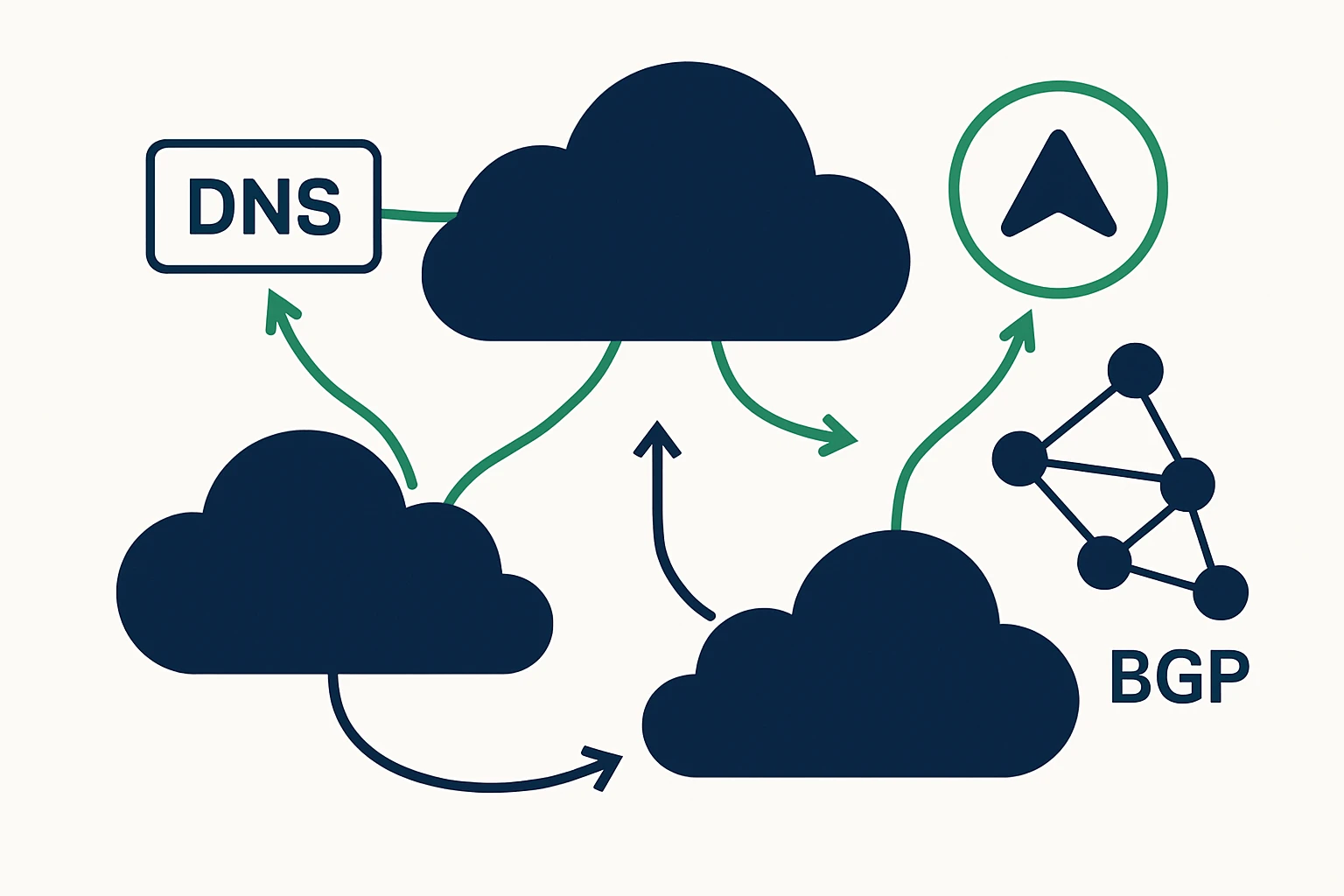
To understand how to optimize cloud routing, it helps to map three core capabilities that teams typically combine in production:
- Anycast routing: using a single IP address served from multiple locations so that user requests are steered toward the nearest healthy endpoint. This approach can dramatically reduce reachability latency when deployed at scale. (cloudflare.com)
- DNS-based traffic management: DNS can steer users by geography or latency, and DNS failover can redirect traffic away from failing regions or clouds. Modern DNS services support techniques like latency-based routing and health checks to automate failover decisions. (docs.aws.amazon.com)
- Inter-domain routing optimization (BGP): BGP policies and metrics influence which network path data travels, and operators sometimes adjust path attributes to prefer certain routes. Techniques such as AS-PATH prepending and path selection can shape traffic flows, albeit with careful consideration of stability and propagate-ability. (cisco.com)
Section 1: Anycast and Latency - What It Delivers and What It Costs
Anycast routing is a foundational tool for latency-aware traffic placement. In practice, a shared IP address resolves to different physical servers in multiple locations, the network’s routers deliver a query to the nearest instance that can answer. This mechanism shifts the latency calculus from a static endpoint to a dynamic decision across an anycast-enabled fabric. For operators, the upside is clear: requests travel shorter distances on average, reducing tail latency for global users. However, the benefits hinge on careful deployment and ongoing health monitoring to prevent traffic from converging on a single site during partial outages.
Industry understanding of anycast is well established: a single IP can be advertised from multiple locations, and routing decisions are made in the network to reach the closest healthy interface. This raises the bar for observability and control, since latency improvements depend on the underlying network topology and real-time reachability. (cloudflare.com)
Section 2: DNS-Driven Traffic Management - Latency, Geography, and Failover
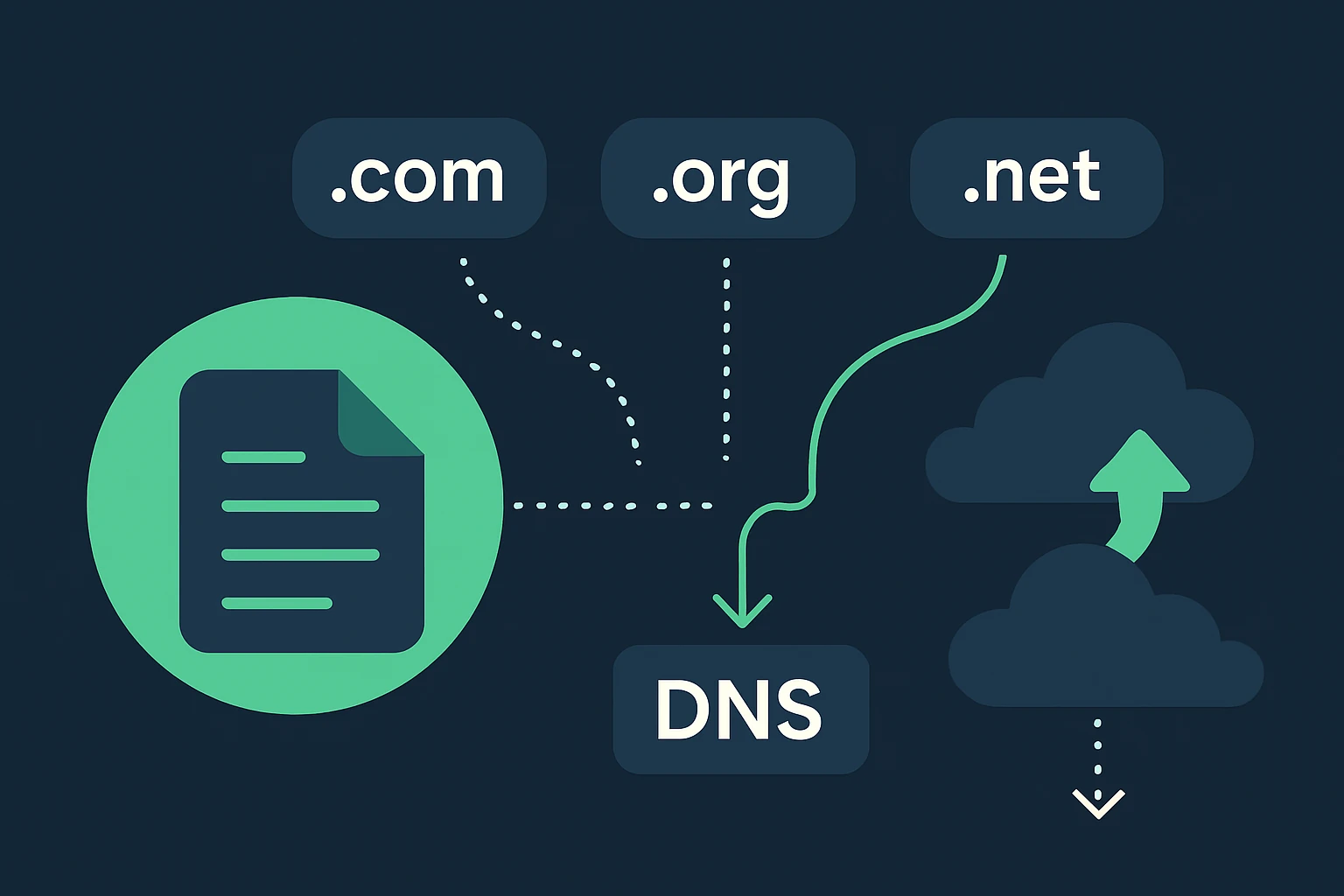
DNS-based traffic management lets operators influence user-path selection at the domain name resolution layer, before packets even start their journey. When combined with health checks and geographic or latency-based routing policies, DNS can significantly reduce user-perceived latency and improve failover resilience. The practical recipe often includes a mix of:
- Latency-based routing to route users to the lowest-latency endpoint across regions and clouds.
- Geoproximity or geolocation routing to steer traffic toward nearby infrastructure.
- DNS failover to redirect traffic away from unhealthy regions or clouds in near real time.
Cloud providers document these patterns, showing that traffic can be globally managed through a suite of routing types that, when combined with failover, enable low-latency, fault-tolerant architectures. In multi-region deployments, DNS-based failover can be integrated with health checks to automate traffic redirection during outages, supporting a resilient global footprint. (docs.aws.amazon.com)
From a practical standpoint, DNS failover is not instantaneous. The time-to-live (TTL) of DNS records and the propagation characteristics of DNS caches mean that failover often has measurable but acceptable delays. This is where combining DNS strategies with other routing tools - such as anycast and BGP policies - becomes essential for meeting strict RTO/RPO targets. For example, Route 53 has documented workflows for manual failover and automated health checks to manage regional traffic, providing a blueprint for resilient cloud-native architectures. (aws.amazon.com)
Section 3: BGP Optimization and Path Control - Shaping Inter-Cloud Traffic
Beyond the DNS layer, inter-domain routing decisions - especially BGP - play a critical role in how traffic moves between ISPs and cloud networks. BGP optimization often involves manipulating path attributes to influence route selection across autonomous systems. Techniques such as AS-PATH prepending can bias traffic toward preferred paths, though they must be used with caution to avoid instability or unexpected routing behavior. Industry guidance emphasizes the importance of understanding how these policies interact with global Internet routing, and that any changes should be tested in staging before production. (cisco.com)
Section 4: A Practical Framework for Multi-Cloud Routing Decisions
To help teams operationalize these concepts, consider the following framework for evaluating routing options in a multi-cloud environment. Each row represents a technique, its typical use case, and the key trade-offs.
| Technique | Best Use Case | Trade-offs |
|---|---|---|
| Anycast routing | Global latency reduction, seamless failover at the edge | Complexity in health checks, potential uneven load distribution if not well instrumented |
| DNS-based load balancing | Latency-aware routing across clouds and regions, automated failover | TTL cache impact, DNS-level delays during failover, requires robust health checks |
| BGP path tuning | Prefer specific networks or ISPs for performance or reliability | Risk of instability, requires coordination with providers, slower change propagation |
These techniques are not mutually exclusive. A pragmatic multi-cloud strategy often blends them: use anycast to reduce distance to edge endpoints, DNS-based routing to manage user direction and failover, and targeted BGP adjustments to influence inter-provider traffic when observed latency or loss patterns suggest a more favorable path. For teams, the key is to measure, validate, and iterate - collecting latency, jitter, and error-rate data across clouds and regions to guide tuning.
Section 5: Practical Workflow for Implementation
Below is a concrete, end-to-end workflow you can adapt for a multi-cloud deployment. The steps emphasize observability, automation, and risk-aware changes rather than ad-hoc tweaks.
- Baseline observability: instrument end-to-end latency, regional outage frequency, and DNS resolution times across all clouds. Establish a canonical set of KPIs (average latency, 95th percentile latency, uptime, MTTR).
- Choose a primary routing thesis: decide whether your priority is ultra-low latency, regional resilience, or cost efficiency. Your thesis will inform the mix of anycast, DNS, and BGP policies.
- Implement DNS-based traffic management: configure latency-based or geoproximity routing where supported, couple with health checks to enable automated failover. Plan TTLs to balance responsiveness with cache efficiency.
- Layer in anycast cautiously: deploy anycast where edge PoPs are densely distributed and health monitoring is robust, ensure alerting for regional outages that could skew traffic.
- Fine-tune BGP only with controlled change windows: if you adjust BGP attributes, do so in a staged fashion with rollback plans and continuous monitoring for unintended routing shifts.
- Run rehearsals: simulate regional outages and measure the impact of DNS failover and path changes on user latency and availability. Iterate until performance targets are met.
In practice, a CloudRoute-style approach emphasizes visibility and controlled experimentation - avoiding large, untested changes that could create new failure modes while still pushing for meaningful reductions in latency and improvements in uptime.
Section 6: An Integrated View for Domain-Portfolio Managers
For organizations managing domain assets across multiple TLDs and providers, routing decisions also intersect with domain infrastructure and DNS resilience. If you operate a large domain portfolio, consider how DNS failover and latency-aware routing can be used to protect not only application endpoints but also domain-resolution paths themselves. For institutions relying on a catalog of domains in diverse TLDs (for example, .su, .pics, or .beer), structured domain lists and reliable DNS resolution become part of your edge strategy. For more on domain lists by TLD, see the resources below from WebAtla. List of domains by TLD and download list of .su domains.
As you scale, ensure that your edge strategy remains aligned with your cloud routing posture. A resilient approach blends domain-resolution reliability with fast edge delivery and robust failover. The goal is to keep users connected with a consistent experience, even as cloud regions, providers, and network paths evolve.
Limitations, Trade-offs, and Common Mistakes
Even well-architected routing strategies face real-world constraints. Three common pitfalls are worth noting:
- Over-reliance on a single mechanism: relying solely on DNS failover for outage response can lead to cache-induced delays in failover. Combine DNS with edge routing and health-aware failover to shorten reaction times.
- Unstable BGP policies: aggressive AS-PATH prepending or frequent route changes can cause instability, increased jitter, and traffic oscillations. Always test changes in a lab or canary environment first. (cisco.com)
- Misalignment of TTLs and user experience: TTLs that are too long can slow a recovery after a failure, TTLs that are too short raise DNS query load and cost. Find a balance, guided by observed recovery times and user impact.
Another practical limitation is the variability of network performance across providers and peering routes. Latency improvements that look good in a lab can shrink in the wild due to factors outside your control. This underscores the need for ongoing measurement and a staged release process when adjusting routing policies. (docs.aws.amazon.com)
A Structured Decision Block: Framework for Choosing Routing Tactics
To make the framework actionable, consider the following decision matrix when planning a multi-cloud routing uplift. Use it to compare options across real-world constraints like time-to-value, operator effort, and risk tolerance.
- Decision Criterion: Objective (latency, uptime, cost) and operational readiness (team bandwidth, tooling).
- Option A: Latency-first Anycast + DNS failover in a multi-region setup.
- Option B: DNS-based load balancing with geoproximity routing and regional health checks.
- Option C: BGP path optimization with controlled AS-PATH prepending where providers permit.
By mapping each option to the business objective and risk profile, teams can stage changes and measure outcomes before expanding to broader traffic cohorts. For readers seeking concrete examples, CloudRoute’s routing and traffic engineering capabilities are designed to blend these techniques into a coherent, observable workflow that scales with multi-cloud requirements.
Real-World Context: What the Experts Say
Industry observers emphasize that the right mix of routing techniques depends on traffic patterns, cloud footprint, and geography. Anycast provides edge resilience where footprints are dense, DNS-based routing shines when you must direct users across regions quickly, and BGP tuning can yield gains where provider-level path characteristics dominate performance. The literature consistently points to a thoughtful, measured approach rather than a single silver bullet.
For example, reports and guidance from major cloud and network practitioners highlight the value of combining DNS failover with robust health checks, and the practical realities of implementing BGP policies in a dynamic Internet landscape. (docs.aws.amazon.com)
Conclusion: A Path to Higher Cloud Network Performance
Multi-cloud networks offer powerful capabilities, but they also introduce complexity in routing and DNS layers. By combining cloud routing optimization, anycast routing, and DNS-based traffic management, organizations can achieve meaningful latency reductions and improved uptime. The trade-offs - some operational, some technical - are real, but they can be managed with a disciplined approach: instrument, test, and iterate in controlled stages, couple DNS failover with edge- and network-layer routing to shorten recovery times, and approach inter-domain routing changes with caution and robust rollback plans. When executed thoughtfully, this integrated strategy translates into faster, more reliable experiences for users wherever they are in the world.
For domain portfolio managers or teams integrating domain-level routing with cloud delivery, consider tying in a documented domain-data resource such as the WebAtla catalog of TLD-domain lists. For example, you can explore List of domains by TLD or download targeted TLD lists such as .su domains to inform your edge routing experiments.
References
Key sources include: Cloudflare: What is Anycast DNS?, Amazon Route 53: Configuring DNS Failover, and Cisco: How to Optimize BGP Path using AIGP. These references underpin the practical patterns discussed and provide deeper dives for practitioners implementing multi-cloud routing strategies. (cloudflare.com)