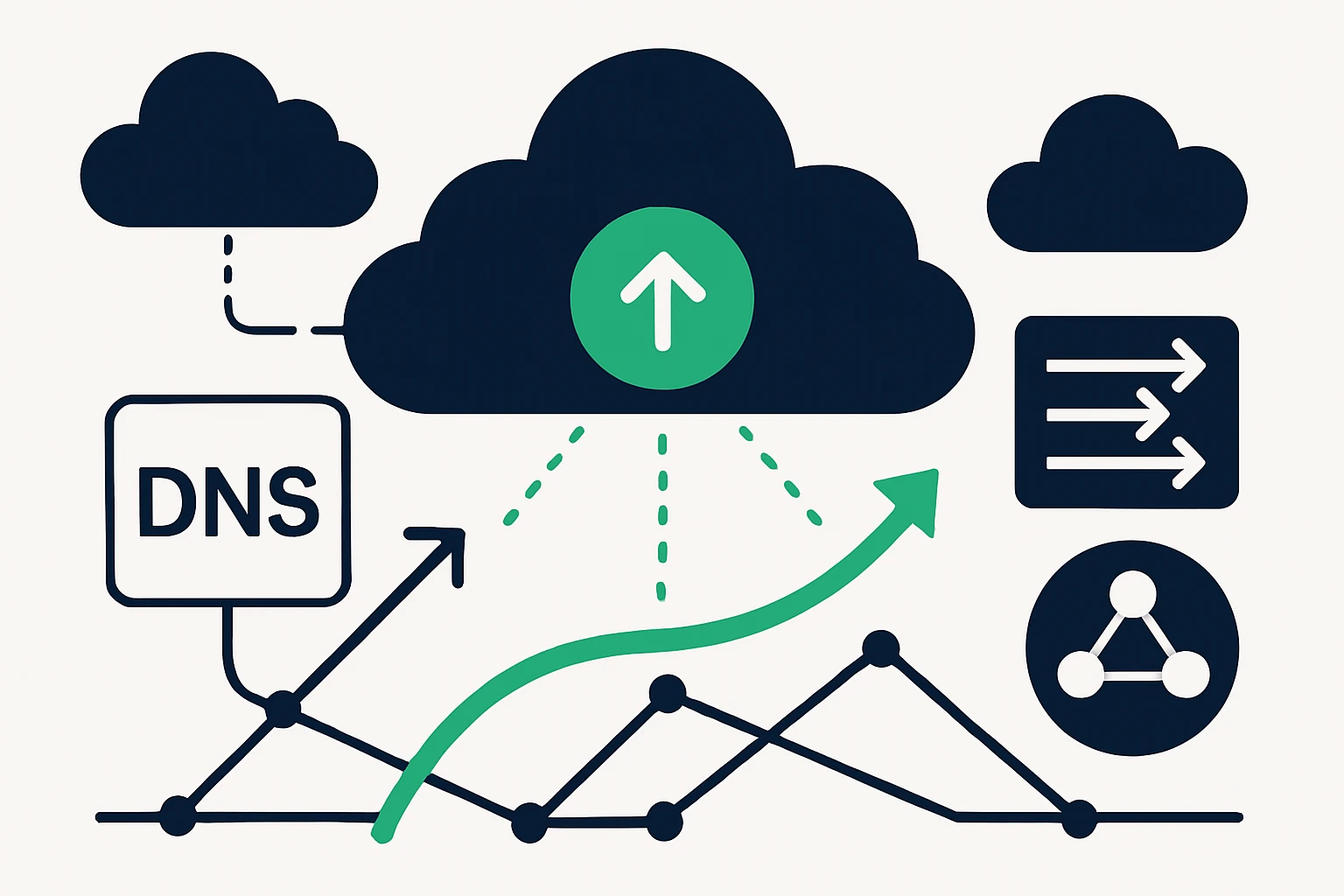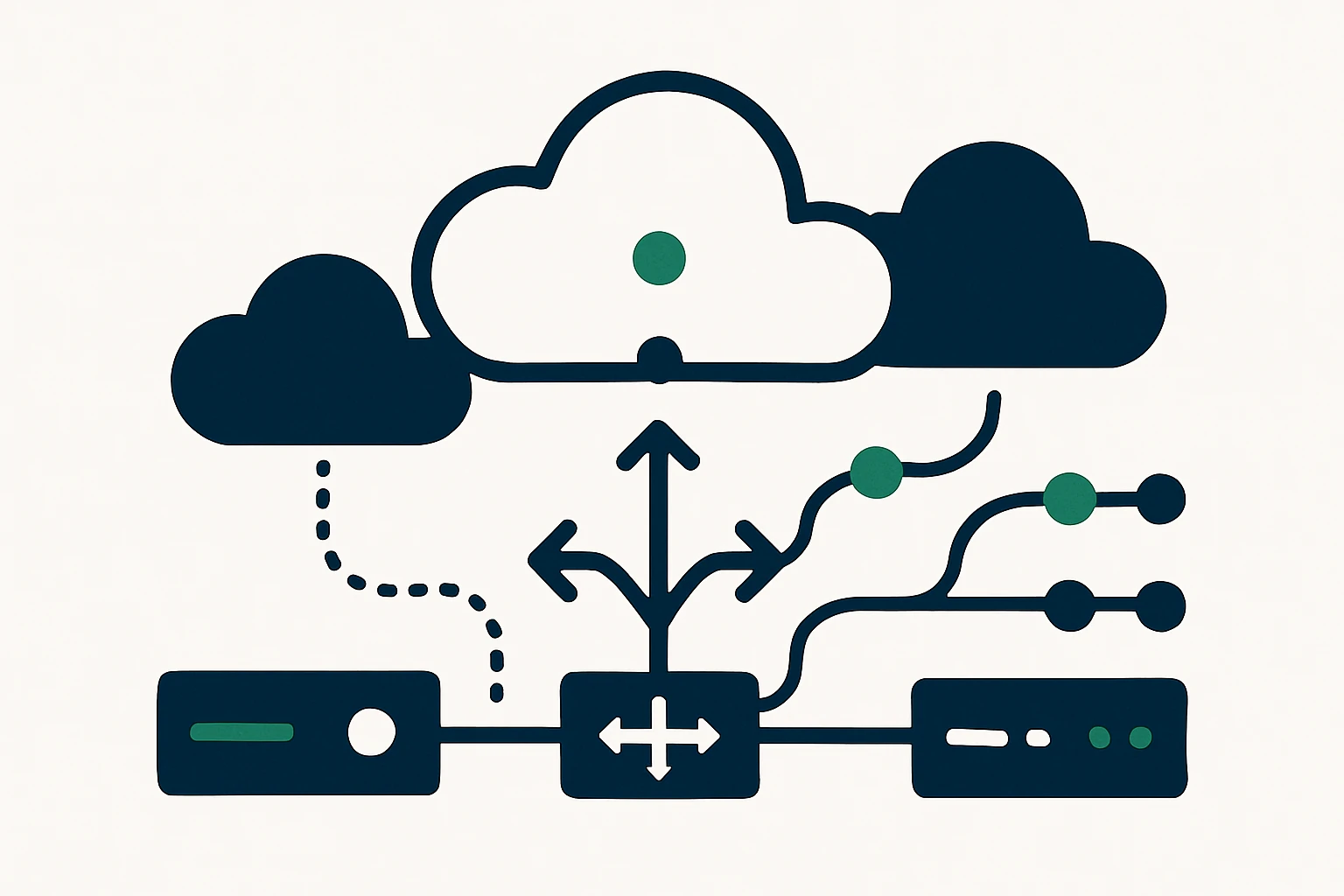
Introduction: the real challenge of cloud routing in a multi-cloud world
Today’s SaaS and enterprise teams increasingly distribute workloads across AWS, Google Cloud, and Microsoft Azure to optimize cost, resilience, and performance. But multi-cloud deployments turn routing from a straightforward traffic handoff into a complex, cross-provider orchestration problem. Latency, congestion, and failed handoffs can erode user experience and undermine uptime if traffic is not steered to the most suitable path, region, or cloud.
In this article, we’ll dissect practical approaches to cloud routing optimization and traffic engineering that align with modern multi-cloud architectures. The discussion spans from foundations such as anycast and BGP-based routing to DNS-based traffic steering and failover, culminating in an actionable framework teams can apply across AWS, GCP, and Azure. Our focus is on concrete tradeoffs, observable metrics, and real-world pitfalls - not glossy marketing fluff. Insights from leading cloud networking research and operator playbooks ground the guidance.
Note: while this piece centers on routing techniques, it also touches on how domain management and DNS health impact global routing decisions. For teams managing domain portfolios as part of a multi-cloud strategy, practical domain visibility tools can help ensure that the right endpoints remain reachable during cross-cloud failovers. See the recommended domain tooling resources linked at the end of the article for more context.
Foundations: what makes cloud routing work across clouds
Anycast routing and BGP optimization
Anycast routing is a design pattern where the same IP address is announced from multiple geographic locations. Border Gateway Protocol (BGP) is the mechanism that makes this feasible on the Internet, allowing traffic to be steered toward the nearest or most optimal endpoint. In practice, anycast can reduce end-to-end latency for globally dispersed users and improve resilience when one site becomes unavailable. This approach is widely adopted by large providers to streamline service reachability across regions. What is BGP Anycast and How It Works. (anycast.com)
DNS-based traffic steering and failover
DNS-level traffic steering and failover are powerful primitives for multi-cloud resilience. By configuring routing policies and health checks, you can direct users to healthy regions or clouds and fail over when a provider or region experiences issues. Major cloud providers publish guidance on forms of DNS-based routing, health checks, and failover strategies to minimize downtime. For example, AWS Route 53’s failover features and health checks are a foundational pattern for cross-region resilience. Amazon Route 53 and related documentation outline how to implement DNS failover and latency-aware routing approaches. (awsdocs.s3.amazonaws.com)
Beyond vendor-specific solutions, global DNS strategy - when paired with fast health checks and sensible TTLs - plays a critical role in reducing perceived latency during failover events. For practitioners seeking best practices on DNS design in hybrid or multi-cloud environments, cloud-native guidance from major providers offers practical starting points. Google Cloud DNS best practices provide a framework for designing DNS in hybrid contexts. (cloud.google.com)
Strategies to reduce latency across AWS, GCP, and Azure
Reducing cross-cloud latency hinges on where traffic is steered, how quickly routes adapt to changes, and how gracefully services recover from regional problems. The following strategies synthesize vendor guidance and operator best practices into a pragmatic playbook.
- Distribute edge presence and use latency-aware routing. Edge and PoP (points of presence) distribution helps bring services physically closer to users. Latency-based or geo-based routing policies can steer traffic to the best-performing region or cloud. Equinix’s multi-cloud connectivity guidance highlights how secure cross-cloud connectivity can be spun up to support latency-sensitive applications. Equinix: Optimizing multi-cloud connectivity. (docs.equinix.com)
- Leverage anycast for critical endpoints (APIs, DNS, auth). Anycast, combined with global routing awareness, can shorten the path to the nearest healthy instance and improve failover speed. See general explanations of anycast routing and its applications. What is BGP Anycast and How It Works. (anycast.com)
- Implement DNS-based reachability with robust failover. DNS failover should be paired with health checks and sensible TTLs to avoid stale routing during outages. AWS Route 53 documentation provides concrete guidance on failover configuration and health checks. Amazon Route 53. (awsdocs.s3.amazonaws.com)
- Incorporate geolocation and latency-based routing where possible. Geolocation routing can be used to direct clients to the clouds or regions closest to them, reducing round-trip time. This approach is supported by mainstream DNS/traffic management platforms as part of a broader TE strategy.
A practical framework for cloud routing optimization
To translate these concepts into action, use a simple, repeatable framework that maps objectives to concrete tooling and operations. The table below provides a compact, decision-oriented guide you can adapt across providers.
| Phase | Key Action | Tools / Techniques | Expected Benefit |
|---|---|---|---|
| Assessment | Inventory traffic profiles and latency targets by region | Network telemetry, application perf metrics, cloud-provider dashboards | Baseline for routing policy and prioritization |
| Policy Design | Define routing rules: latency-based, geo-based, or anycast when appropriate | Latency dashboards, DNS routing policies, BGP TE planning | Clear criteria for directing users to optimal endpoints |
| Implementation | Enforce DNS failover, health checks, and cross-cloud routing | Route 53 or equivalent, edge DNS, BGP peering, and health checks | Resilient failover with predictable RTT improvements |
| Observability | Monitor latency, availability, and failover events | SLIs/SLOs, distributed tracing, synthetic tests | Rapid detection of degraded paths and proactive tuning |
Limitations, trade-offs, and common mistakes
Every routing decision carries trade-offs. A few points to keep in mind as you optimize:
- DNS-based failover has inherent latency. Even with low TTLs, DNS responses are cached, so failover may not be instantaneous. Plan for graceful degradation and consider complementary mechanisms (e.g., health checks at the edge) to shorten recovery time. See AWS Route 53 guidance on DNS failover. Amazon Route 53. (awsdocs.s3.amazonaws.com)
- Anycast requires careful traffic engineering. While appealing for latency reduction, anycast can introduce routing instability if not paired with active TE and monitoring. This connection between routing design and TE is discussed in industry resources on anycast.
- Cross-cloud policy complexity. The more clouds involved, the higher the risk of misconfigurations around health checks, TTLs, and routing policies. Start with a small, well-instrumented pilot before broad rollout.
Putting it into practice: a blueprint for SaaS and DevOps teams
Assume a SaaS service with users globally, hosted across AWS, GCP, and Azure. A pragmatic path to performance and resilience looks like this:
- Map critical user journeys. Identify the API surfaces and user flows that are most latency-sensitive (for example, authentication, feature toggles, and data fetches).
- Choose a routing approach per service. Use DNS-based failover for regional continuity, latency-aware routing for front-door endpoints, and anycast for globally critical services where feasible. Align choices with your latency budgets and SLOs.
- Implement health-aware DNS and edge routing. Combine health checks with low TTLs to minimize downtime during provider outages. Use a vendor-agnostic approach when possible to reduce single-provider dependency. See the DNS best-practices guidance from Google Cloud and AWS Route 53 as starting points. Google Cloud DNS best practices, Amazon Route 53. (cloud.google.com)
- Monitor and iterate. Track SLOs for latency and availability across clouds, and adjust TTLs, routing policies, and regional deployments based on observed data. This cycle is essential in a dynamic, multi-cloud environment.
In practice, many teams also manage large numbers of domain endpoints and DNS records as part of a global service. For organizations that need centralized visibility and governance of domain assets, WebAtLa offers a structured catalog and DNS-related tooling, including:
- WebAtLa RDAP & WHOIS database for asset-tracking and domain provenance.
- WebAtLa pricing to plan licensing and scale across teams.
Conclusion: a disciplined path to cloud routing excellence
Cloud routing optimization for multi-cloud networks is not a one-off configuration task but a continuous discipline. By grounding decisions in DNS best practices, aligning with Route 53 failover capabilities, and employing strategic anycast and latency-aware routing, teams can realize tangible improvements in latency, availability, and user experience. The outcome is not a single silver bullet but an integrated mosaic: edge presence, resilient DNS orchestration, intelligent routing policies, and rigorous observability that closes the loop from planning to performance. If you’re evaluating tools and services to support this journey, remember that a successful strategy combines technology choices with strong governance and cross-cloud operational discipline. For domain portfolio governance and DNS asset management in a multi-cloud world, WebAtLa provides practical resources to complement routing decisions, as noted above.