Introduction: the urgency of cloud routing optimization in a multi-cloud world
Today’s cloud-native architectures rarely sit entirely within a single provider. Enterprises routinely blend AWS, Google Cloud, and Microsoft Azure to optimize cost, resilience, and geographic reach. That multi-cloud reality amplifies a stubborn truth: performance isn’t just about compute or storage, it’s about how traffic finds its way from users to services and back again. Suboptimal routing, inconsistent peering, and regional outages can translate into higher latency, jitter, and surprising downtime - even when each cloud vendor delivers robust global infrastructure. In this context, cloud routing and traffic engineering become mission-critical disciplines for SaaS teams, DevOps, and enterprise IT leaders. CloudRoute’s audience - architects building resilient, low-latency networks - needs practical guidance that bridges theory with field-tested tactics. This article outlines a discipline-ready framework for cloud routing optimization that aligns with multi-cloud realities and modern DNS-based resilience patterns.
Understanding the anatomy of multi-cloud routing challenges
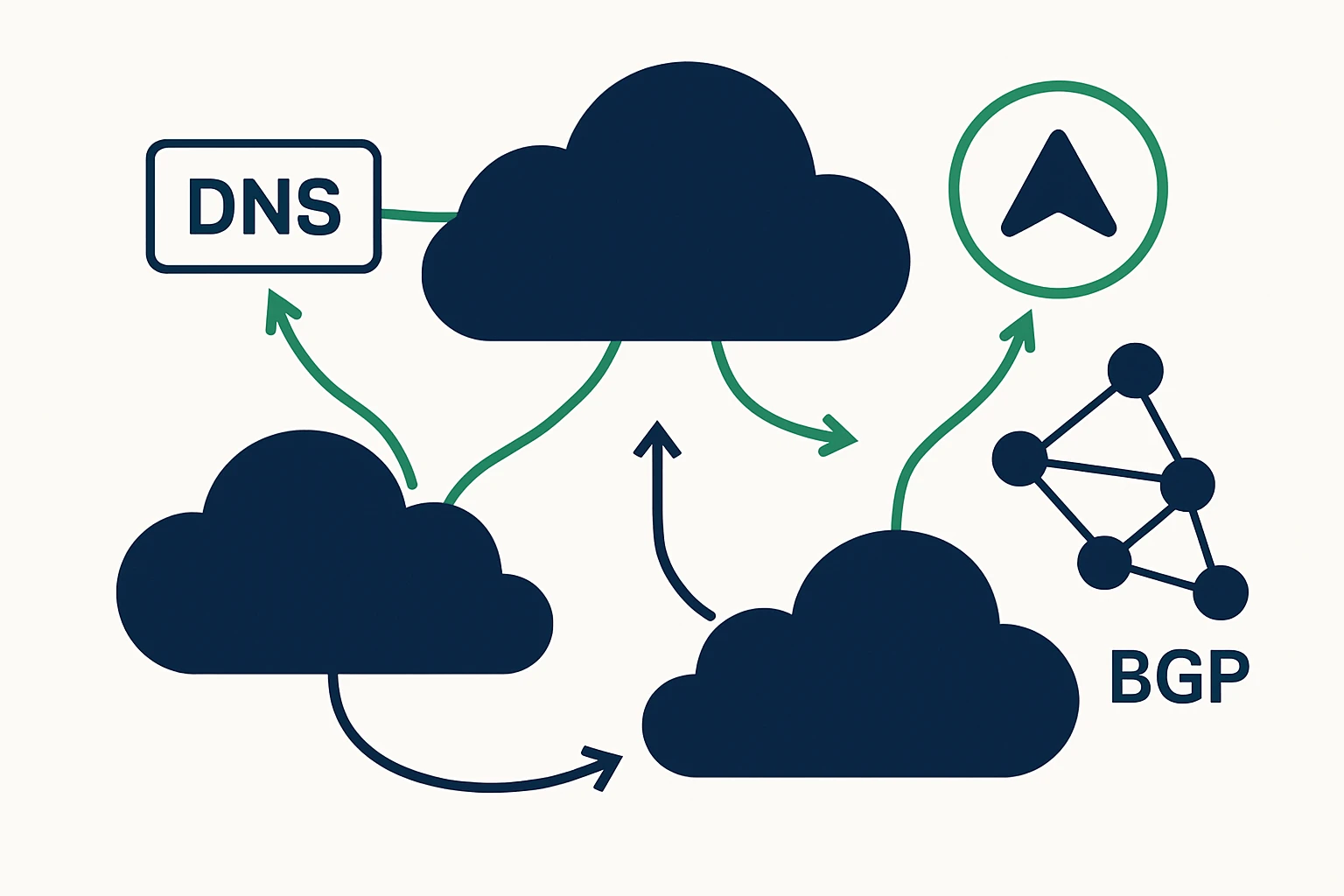
In a multi-cloud environment, applications commonly span multiple regions and clouds, with clients distributed globally. The path from a user to a service can traverse dozens of networks, ISPs, and interconnects, each with its own congestion and policy. Key challenges include: (1) locating the nearest available edge or regional endpoint, (2) balancing traffic across clouds to prevent overloading a single path, (3) handling failover without introducing user-visible interruptions, and (4) maintaining predictable performance as services scale across providers. Modern routing techniques - edge-focused delivery, global anycast addressing, DNS-based failover, and latency-aware routing - offer practical levers to address these concerns. For instance, anycast routing helps ensure user requests reach the closest available data center, even during regional outages, while DNS failover can redirect to healthy endpoints when an origin becomes unavailable. (cloudflare.com)
Core techniques that move the needle in multi-cloud routing
Anycast routing: route requests to the nearest data center
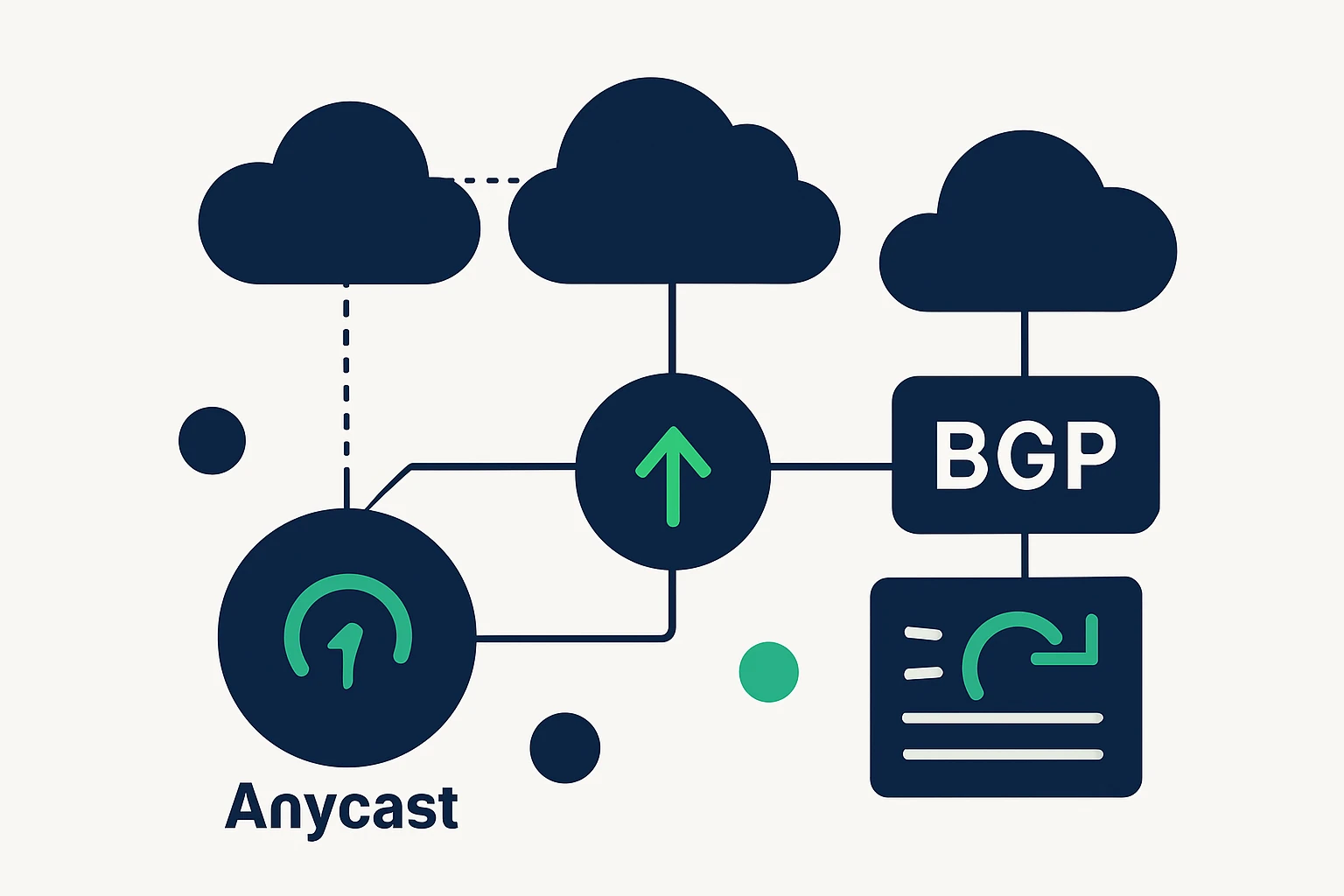
Anycast routing presents a simple yet powerful idea: the same IP address is advertised from multiple locations, and networks route a client’s request to the closest or least-loaded instance. In practice, this reduces end-to-end latency by leveraging the geography of the user’s network path. Cloudflare, a leading CDN and edge platform, explains how Anycast directs traffic to the nearest data center, which improves responsiveness and resilience when some facilities face load or outages. Implementations often accompany edge caching, so many requests are served without ever reaching the origin. This approach aligns well with multi-cloud strategies where edge presence is distributed across providers and regions. What is Anycast DNS? (Cloudflare) and Traffic flow and Anycast concepts provide practical context for how such routing behaves in real networks. (cloudflare.com)
DNS failover strategies: keep services available when endpoints falter
DNS-based failover complements edge routing by shifting user traffic at the domain name system level in response to health checks. When an origin or regional endpoint becomes unhealthy, DNS failover can redirect traffic to a healthy alternative, often in another cloud region or a different cloud provider. This pattern is particularly valuable in multi-cloud, where a single provider’s regional outage can be mitigated by a known-good endpoint in a separate cloud. Aligning DNS failover with health checks and prudent TTL values helps ensure failover is timely without destabilizing user experience. AWS Route 53 provides explicit guidance on configuring DNS failover, including failover health checks and automatic traffic re-direction to healthy resources. Configuring DNS Failover (AWS Route 53) and Best practices for Route 53 DNS offer concrete steps and considerations. (docs.aws.amazon.com)
Latency-aware routing: steering traffic to regions with the best reach
Beyond edge proximity, latency-based routing helps ensure users connect to the cloud region that offers the lowest end-to-end delay. Route 53’s latency-based routing selects endpoints that minimize client-to-region latency, a critical factor when workloads require low-latency paths across continents. This capability is particularly relevant for SaaS platforms delivering real-time features or high-velocity APIs. AWS documents latency-based routing as a core technique for optimizing user experience in multi-region deployments. Latency-based routing (AWS Route 53) and related resources explain how to configure latency-aware policies and interpret health checks to maintain performance. (awsdocs.s3.amazonaws.com)
A practical four-phase framework for deploying cloud routing optimization
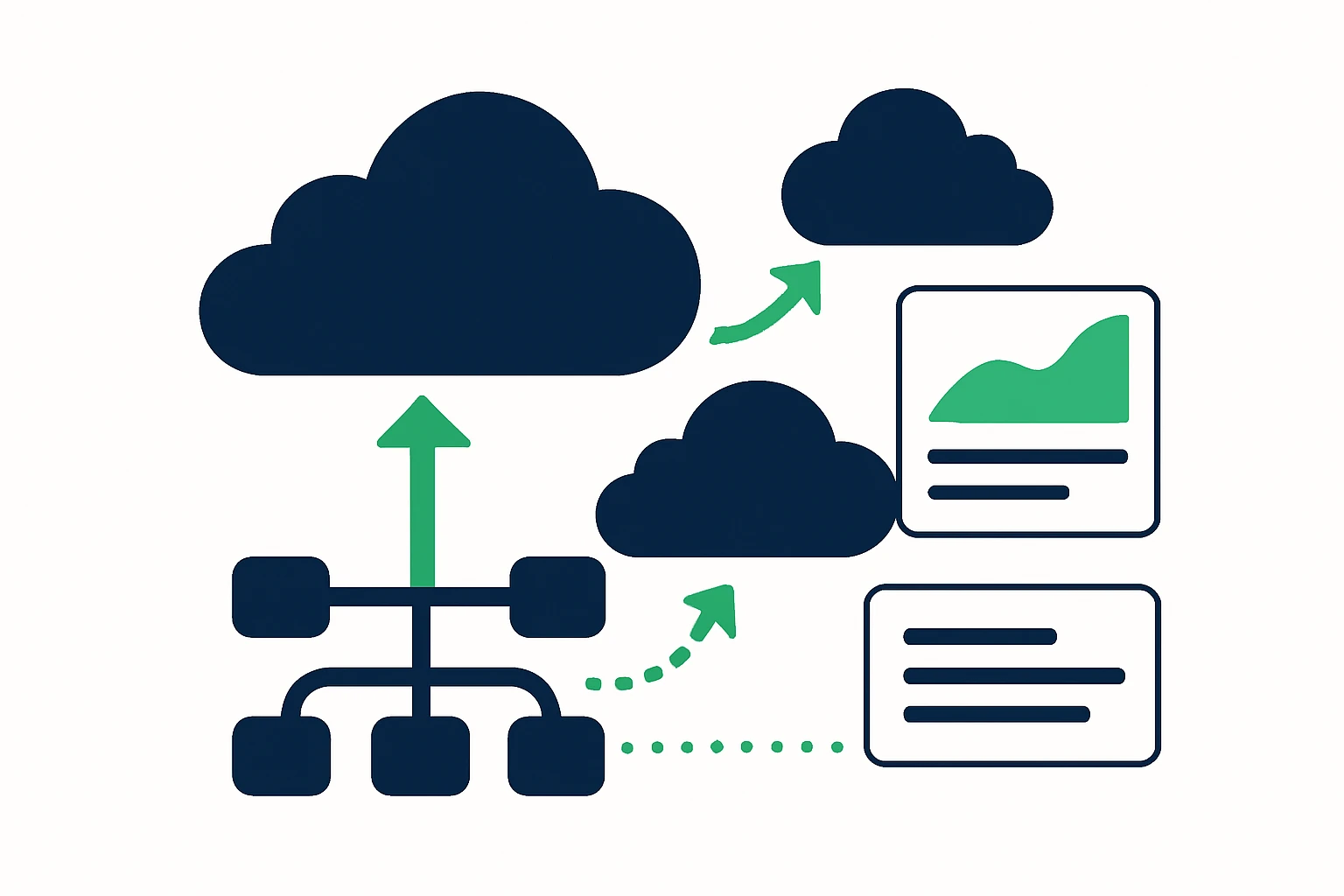
To translate these techniques into repeatable results, adopt a pragmatic framework that ties technical decisions to measurable outcomes. The four-phase framework below is designed for teams operating across AWS, GCP, and Azure, and it accommodates the need for both edge-based and DNS-based resilience patterns.
- Discover - Inventory workloads and endpoints across clouds, map user geography, and quantify latency sensitivity by workload. Establish a baseline of current end-to-end performance and uptime across regions. Identify critical data paths that, if optimized, would yield the largest user-visible improvements. This phase is about measurement and alignment with business priorities, not simply technology attraction.
- Decide - Choose a blended strategy that may include anycast at the edge, DNS failover for regional resilience, and latency-based routing where it makes sense. The most effective architectures often combine all three: anycast for nearest-edge reach, DNS failover for outage resilience, and latency routing to bias traffic toward the best-performing regions. In multi-cloud contexts, ensure the design accounts for egress costs, data residency, and peering arrangements across clouds. (For reference, see practical explanations of anycast benefits and DNS failover patterns from industry leaders.)
- Deploy - Implement the chosen mix in a controlled fashion. Start with a pilot workload, validate failover and latency routing under simulated failures, and monitor real user impact. This includes configuring DNS health checks and TTLs that balance rapid failover with resolution stability, along with anycast advertisements that do not expose your entire edge footprint publicly. In parallel, establish observability across clouds with consistent telemetry to compare performance before and after changes. Cloudflare’s architecture materials illustrate how anycast and smart routing interact with edge caches and origin pulls, which can guide your initial rollout. Traffic Flow and Anycast Concepts (Cloudflare) (developers.cloudflare.com)
- Detect & Optimize - Continuously monitor latency, error rates, and failover effectiveness. Iterate on routing policies, TTL values, and edge placement to squeeze out additional performance. The optimization loop should consider provider-specific nuances (for example, latency-based routing in Route 53 and health-check-driven failover) and be ready to adjust as cloud networks evolve. Real-world validation is essential, in practice, you’ll find that the most impactful gains come from small adjustments across multiple layers rather than a single “silver bullet.”
Practical considerations, trade-offs, and common pitfalls
As with any architectural pattern, cloud routing optimization involves trade-offs. Here are some practical considerations drawn from industry practice and provider documentation:
: DNS-based failover relies on health checks and DNS propagation. Short TTLs improve responsiveness but increase query load, long TTLs reduce churn but slow down failover. Plan TTLs in light of your traffic patterns and acceptable failover windows. AWS documents DNS failover behavior and related best practices to guide TTL decisions. DNS Failover (AWS Route 53) : Anycast shines when you can surface content at the edge, reducing origin load and latency. However, cacheability, cache size, and data consistency across edge nodes must be considered. Cloudflare’s reference architectures demonstrate how anycast works in concert with edge caching and broader security services. Load Balancing Reference Architecture (Cloudflare) : For operators managing multi-homed networks, BGP tuning can influence path selection and convergence. While BGP optimization is specialized and platform-dependent, Cisco’s technical resources illustrate how PfR and other techniques can help direct traffic toward preferred paths and improve convergence behavior in complex networks. Configure BGP Routers for Optimal Performance (Cisco) : Latency-based routing can bias toward certain regions, combine with geolocation policies when needed to meet regional compliance or user expectations. AWS’s latency routing guidance provides a concrete model for when to apply region-specific policies and how to interpret health checks. Latency-based Routing (AWS Route 53)
Limitation and common mistakes
Optimizing cloud routing is not a one-time optimization. Common mistakes include over-reliance on a single technique, misconfigured health checks, and underestimating DNS propagation delays. A few concrete cautions drawn from practitioner guidance and vendor documentation:
: Relying solely on latency routing or only on DNS failover can leave gaps in resilience. A blended approach typically yields the best results for multi-cloud workloads. AWS case guidance and Cloudflare’s edge-routing patterns illustrate the value of multiple complementary techniques. Latency-based Routing (AWS Route 53) Anycast DNS (Cloudflare) : If health checks lag or TTLs are too aggressive, failover may feel sluggish or unstable. Align health-check intervals with your expected failure modes and traffic patterns, and test failover under realistic scenarios. See AWS guidance on DNS failover configuration for practical considerations. DNS Failover (AWS Route 53) : Without consistent telemetry across clouds, it’s easy to miss latency spikes, jitter, or regional outages. Build an observability layer that tracks end-to-end latency by geography, provider, and edge node, so you can validate that routing changes produce the intended user-perceived improvements. Cloudflare’s reference frameworks emphasize observability and policy-driven routing. Traffic Flow (Cloudflare)
A small but powerful structured block: a practical routing framework at a glance
Below is a concise framework you can adapt to your organization’s maturity and risk tolerance. Think of it as a playbook you can generalize beyond one-time experiments.
- Decide: Blend anycast, DNS failover, and latency-based routing where they fit best. Consider egress costs and data residency in a multi-cloud plan.
- Deploy: Roll out in a controlled loop - pilot workload first, validate failover with simulated outages, and monitor edge performance and DNS propagation.
- Detect & Optimize: Continuously observe latency, uptime, and user experience, iterate routing policies as cloud networks evolve.
Editorial note on data sources and practical validation
The guidance above draws on established industry patterns and provider-specific capabilities. Anycast routing is widely used to route traffic to the nearest data center, an approach well-documented by Cloudflare and others. DNS failover is a standard technique to maintain service continuity by directing traffic to healthy endpoints, with AWS Route 53 offering explicit configuration guidance. Latency-based routing helps optimize user experience by biasing traffic toward regions with the best measurable performance. For teams looking to ground these patterns in real data, consider cross-referencing edge and DNS metadata with real-user measurements. See: Anycast DNS (Cloudflare), DNS Failover (AWS Route 53), and Latency-based Routing (AWS Route 53) for concrete configuration examples and rationale. (cloudflare.com)
Integrating domain data into routing decision-making (editorial context)
For teams exploring how to map global reach and performance, domain inventory data can provide a complementary perspective. Practical usage includes extracting regional presence signals from domain lists to approximate user distributions and service footprints. In this sense, partner datasets like a comprehensive domain catalog - such as the main client resource at download list of .pe domains and the broader catalog at list of domains by TLDs - can be useful in long-range capacity planning and regional strategy discussions. While domain lists themselves do not replace network telemetry, they can enrich regional strategy discussions when used alongside latency and reach metrics.
Limitations and common mistakes (recap)
Even with a robust framework, execution is non-trivial. DNS-based failover is not instant, propagation delays and TTL decisions influence perceived speed to recovery. Anycast improves edge reach, but it requires careful deployment and ongoing monitoring to avoid routing anomalies. In-depth BGP tuning, while powerful, is a specialized discipline and should be undertaken with caution and expertise. The most reliable routing optimizations emerge from a deliberate blend of techniques, paired with disciplined observability and frequent testing across cloud regions. For practitioners, a balanced, multi-technique approach consistently outperforms a single-policy strategy. See Cisco’s guidance on BGP optimization for the technically inclined and Cloudflare’s architecture references for edge-first designs. Configure BGP Routers for Optimal Performance (Cisco) Anycast DNS (Cloudflare) DNS Failover (AWS Route 53)
Closing thoughts
Multi-cloud networking presents both a challenge and an opportunity: with the right routing philosophy, you can reduce latency, improve uptime, and deliver consistently fast experiences to users around the globe. The four-phase framework - Discover, Decide, Deploy, Detect & Optimize - offers a practical path from abstract principles to operational reality. By combining edge-focused anycast placement, DNS-level resilience, and latency-aware routing where appropriate, organizations can build robust, globally distributed services with measurable, repeatable gains. For teams actively evaluating routing data and edge placement, remember that domain data is a helpful supplement to network telemetry, not a substitute for real-time performance measurements. If you’d like a ready-made resource to explore regional footprints, you can browse the domain catalogs mentioned above for additional context.
Author’s note: This piece reflects an editorial synthesis of industry patterns and provider guidance aimed at cloud routing and traffic engineering practitioners. The ideas herein are grounded in publicly available resources from Cloudflare and AWS, among others, and are intended to be actionable in typical enterprise, SaaS, and DevOps environments.