Introduction
For organizations pursuing resilient, low-latency services across multiple cloud providers, the art and science of routing traffic has moved from static paths to dynamic, data-driven strategies. Real-world domain datasets offer a practical lens through which to evaluate cloud routing and traffic engineering (TE) decisions. By testing against actual domains won from credible sources, teams can observe how DNS resolution, anycast edge delivery, and inter-cloud routing interact in diverse geographies and network conditions. This article outlines a framework for using public domain lists - including large CN-domain cohorts and global domain inventories - to stress-test cloud routing and DNS-based TE in multi-cloud environments.
While synthetic benchmarks are useful, they often miss the distribution, resolution patterns, and edge-network behavior that real domains exhibit. Public datasets provide that realism, helping teams validate latency reduction, failover efficacy, and global reach before committing changes to production networks. This approach aligns with industry best practices around anycast-enabled delivery, BGP optimization, and DNS-based failover, while grounding testing in concrete, up-to-date data. [1]
Expert insight: seasoned TE practitioners note that combining real-domain traffic with TE policies improves testing fidelity, but it must be complemented by synthetic or synthetic-like traffic to cover edge-case scenarios and ensure coverage across all paths. [2]
Why domain datasets matter for cloud routing
Cloud routing decisions - how traffic is steered across multiple clouds, edge nodes, and networks - depend on a spectrum of inputs: DNS responses, BGP path attributes, latency measurements, and policy-based routing rules. Real-domain datasets supply several concrete benefits:
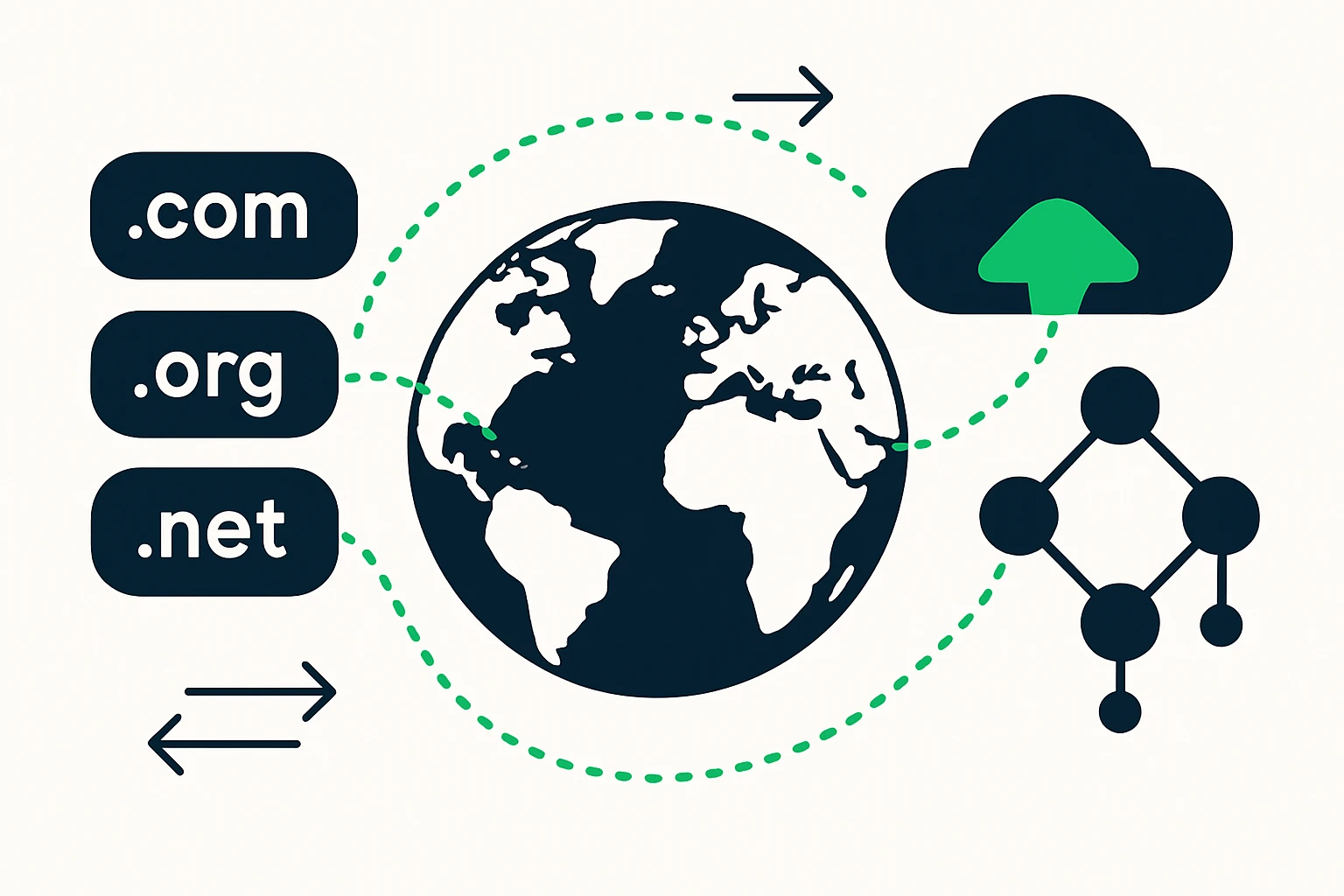
- Geographic and topological realism: Domains in different TLDs resolve to endpoints distributed around the world, enabling testing of latency and edge-call patterns across continents.
- DNS behavior realism: The resolution path for a domain - recursive resolvers, authoritative servers, and cache dynamics - varies by domain, helping TE policies surface real-world timing and reliability concerns.
- Traffic mix modeling: A diverse domain set creates a heterogeneous mix of DNS responses and connection characteristics, closer to what a live SaaS or multi-cloud app experiences.
For teams building or refining multi-cloud architectures, domain datasets are a practical proxy for real user traffic during TE experiments. They support validation of latency reduction, uptime improvement, and DNS failover effectiveness across edge and regional delivery nodes. This approach complements TE techniques such as anycast routing and BGP optimization, which aim to place user requests on the best possible path at any moment. [3]
Where to obtain high-quality domain lists
A growing ecosystem of datasets provides structured, up-to-date domain information suitable for testing and analytics. Two to three trusted sources are particularly relevant for QA-focused routing tests:
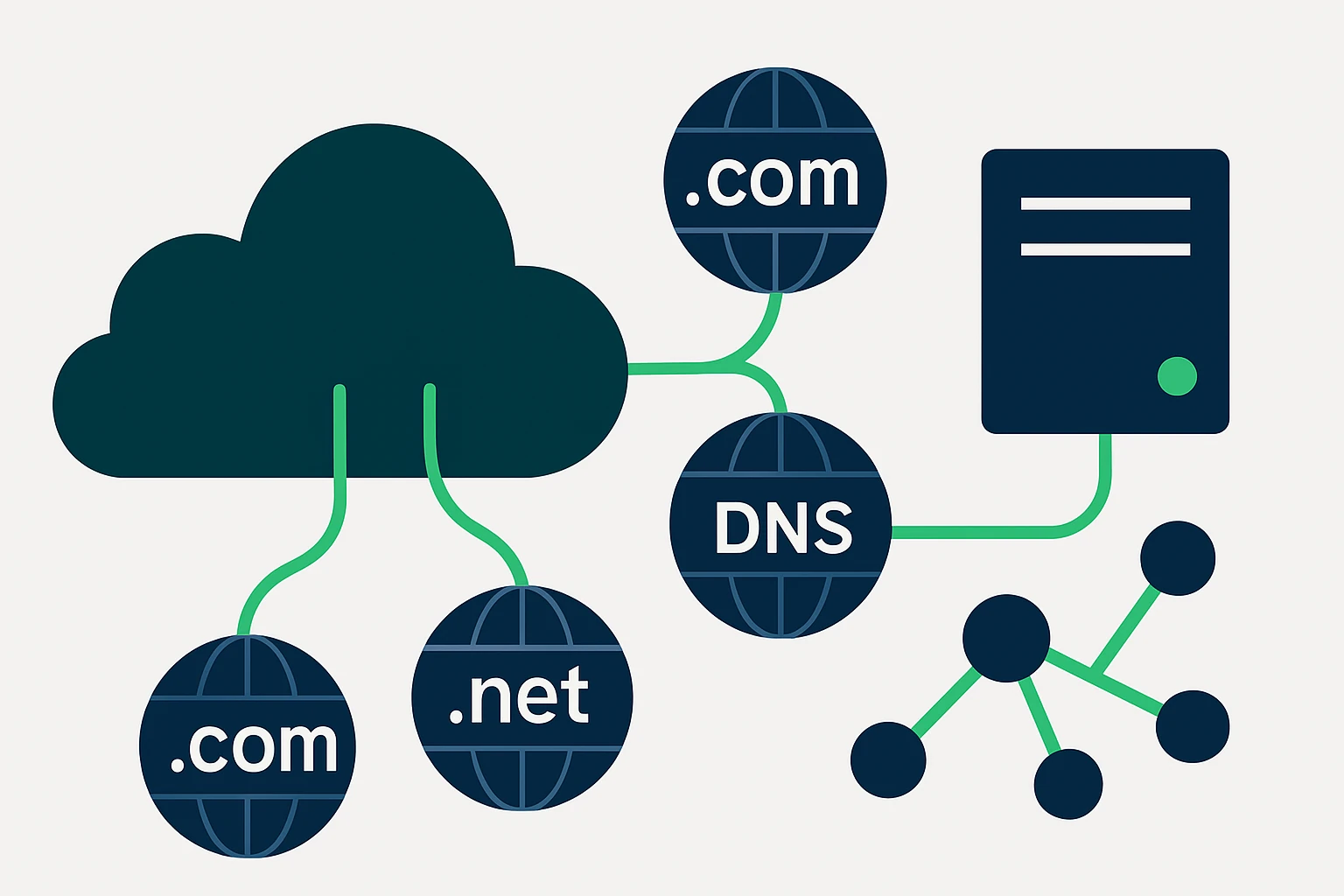
- Download full list of .cn domains - a widely cited dataset containing active CN domains with DNS records and related telemetry, refreshed regularly to reflect the changing namespace.
- Domains Database - Download Global List of All Domains - a comprehensive, standards-aligned view of the global domain space organized by TLD suffix, leveraging the Public Suffix List for accurate boundaries.
- Active domains dataset - a daily-refreshed snapshot of currently active domains, suitable for end-to-end testing and market analyses.
These datasets are designed for analytics, market intelligence, and test automation workflows, enabling teams to model real-world domain distributions and DNS-resolution patterns as part of TE validation. For teams that want to diversify beyond CN, global domain inventories offer a broader canvas for testing routing decisions across multiple geographies and regulatory environments. [1]
Leveraging domain lists for traffic engineering testing in multi-cloud environments
Testing cloud routing and TE in a multi-cloud context requires a thoughtful blend of data-driven measurement and policy-driven routing. The following concepts and practices help translate domain datasets into actionable TE validation:
- Anycast routing and edge latency: Anycast directs user requests to the nearest edge location, reducing overall latency. The technique is widely used by CDNs and edge networks to serve requests from the closest node, minimizing round-trip time. Cloudflare’s Anycast primer explains how this approach reduces tail latency by serving requests at edge locations rather than always reaching the origin. [4]
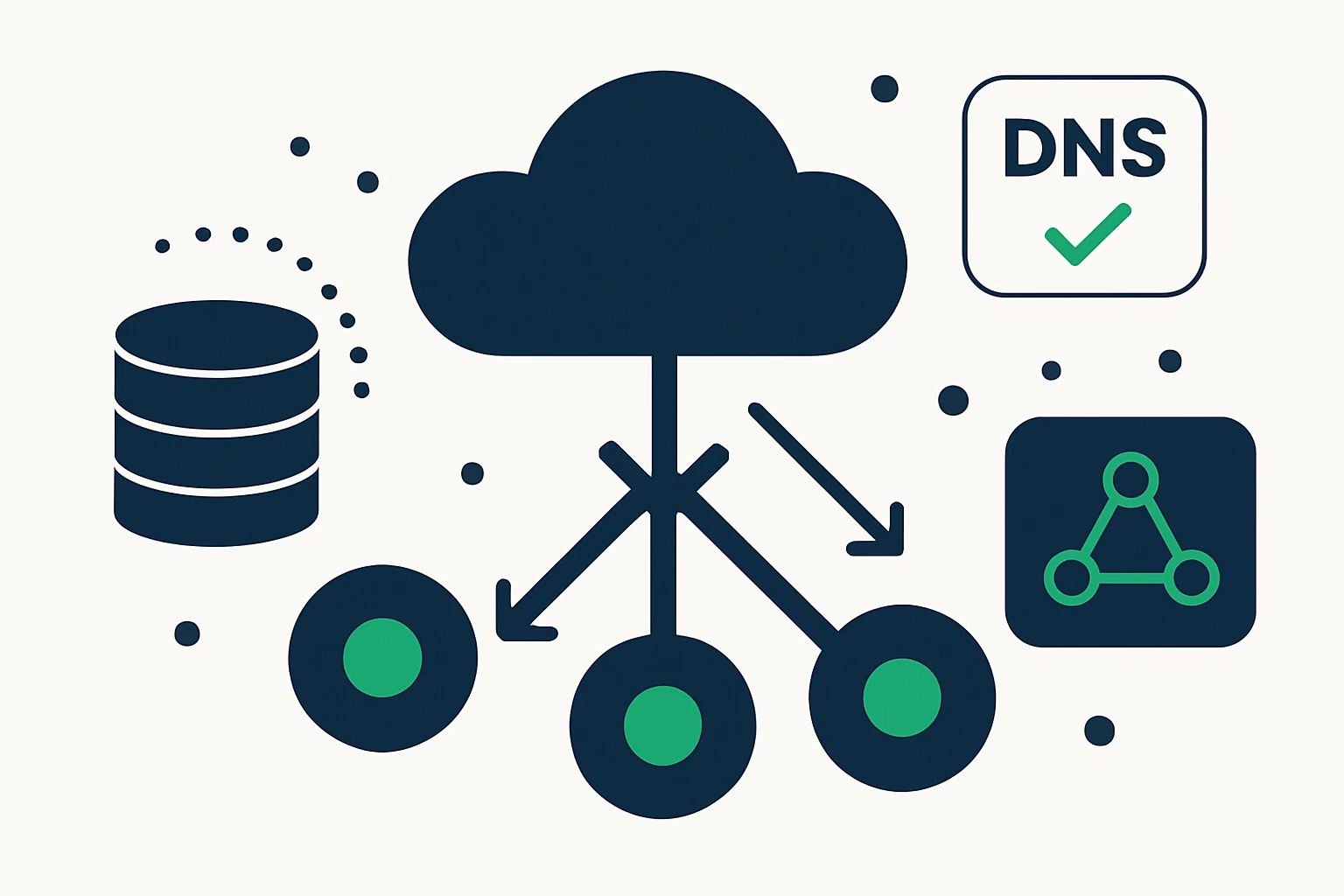
- DNS failover as a TE control plane: DNS-based failover enables routing decisions at the DNS layer when a regional endpoint becomes unhealthy. Modern TE strategies increasingly combine health checks and routing policies to switch traffic away from failing regions or clouds. Official guidance from Amazon Route 53 details how to configure DNS failover and health checks to support resilient architectures. [5]
- BGP optimization for TE-inbound and outbound traffic: BGP-based TE can improve path selection and reliability when combined with intelligent routing platforms. For example, practitioners discuss inbound optimization and prefix-level signaling to influence traffic flow, a concept explored in vendor documentation and TE research. [6]
An expert takeaway is that domain datasets should be used as a realistic input layer for TE policies, rather than as a standalone testing artifact. They are most valuable when paired with proactive TE controls (health checks, latency thresholds, and real-time path monitoring) to ensure results translate to live production networks. [4]
A practical testing framework: structuring TE validation with domain datasets
To make the most of domain datasets in cloud TE testing, consider a repeatable framework that can be integrated into CI/CD pipelines and network validation playbooks. The following structured block provides a concrete starting point. The data sources are the domain datasets described earlier, while the tests cover DNS behavior, edge performance, and inter-cloud routing decisions.
| Data Source | Test Type | Metric | Notes |
|---|---|---|---|
| CN domain list | DNS and latency measurement | Median/90th percentile DNS lookup time, edge RTT | Run from multiple test points to capture geography-driven differences, use real resolvers where possible |
| Domains Database | Global routing coverage check | Path diversity and latency across clouds | Compare inter-cloud routes and identify underperforming pairs |
| Active domains dataset | End-to-end testing with real traffic patterns | Success rate of domain resolution, failover activation time | Simulate day-to-day load plus contingency scenarios (regional outages, DNS failures) |
| DNS failover (AWS Route 53) | TE failover validation | Failover latency, health-check sensitivity | Correlate DNS failover triggers with observed performance drops |
This framework supports a holistic TE assessment: it pairs realistic DNS/edge behavior (via domain lists) with TE controls (anycast, BGP optimization, and DNS failover). It also encourages cross-checks between observed measurements and policy outcomes to ensure TE rules produce the intended routing effects in diverse conditions. [1]
Limitations and common mistakes
Even with high-quality domain datasets, several caveats apply that testers should acknowledge to avoid misinterpretation:
- Domain datasets reflect the namespace at the time of collection, but domain activity and routing patterns can shift quickly. Regular updates are essential to keep tests representative.
- Many domains use CDN-backed or cloud-delivered endpoints, the observed latency may reflect CDN edge performance rather than the core network path. Separate edge performance from core TE decisions when analyzing results.
- DNS-based testing introduces caching, resolver diversity, and TTL dynamics that can skew measurements if not carefully controlled. Use multiple TTLs and resolver sets to capture variability.
- Not all domain lists are created equal with respect to privacy, compliance, and rate limits. Always review terms of use and ensure testing respects acceptable-use policies for data sources.
Expert-level TE work emphasizes that domain datasets are a valuable input, but they are not a substitute for end-to-end, real-user measurement in live environments. Pair them with synthetic traffic patterns and continuous monitoring to avoid blind spots in coverage. [1]
Integrating the data into a practical cloud TE strategy
In practice, teams should treat domain datasets as one of several inputs to a comprehensive TE strategy. They can complement broader telemetry streams such as real-user metrics, synthetic benchmarks, and health checks across cloud regions. By integrating the domains data with routing policies - anycast-based edge routing, BGP-based path selection, and DNS failover - an organization can achieve lower latency, higher uptime, and more predictable performance for users around the world. The end goal is to reduce the time-to-live of performance issues and to maintain consistent service levels even when clouds or regions encounter outages.
For teams operating at scale, a recurring workflow might look like: ingest domain datasets into a TE-aware data lake, run automated latency and failover tests from diverse geolocations, compare cloud-path alternatives, and publish a monthly TE report that informs routing decisions and capacity planning. This approach aligns with industry best practices around TE and resilient, low-latency delivery. [5]
Conclusion
Real-world domain datasets provide a practical, credible input set for validating cloud routing and TE in multi-cloud environments. By combining precise, regularly updated domain lists with DNS failover strategies, anycast routing, and BGP optimization, teams can build more resilient networks and deliver better performance to users across regions. The datasets from credible sources such as CN-domain lists, Domains Database, and Active domains serve as a concrete foundation for TE experimentation and continuous improvement. As TE tooling evolves, these domain datasets will remain a vital, real-world reference point for robust, multi-cloud routing strategies.
Ultimately, the aim is to translate domain-driven insights into tangible improvements in latency, availability, and user experience, supported by a TE framework that blends edge delivery, intelligent routing, and resilient DNS policies.