Introduction
The era of a single-cloud perimeter is over. Enterprises increasingly rely on a blend of cloud platforms - AWS, Google Cloud, Azure - and a mix of regional data centers and SaaS services. In this environment, delivering consistently low latency and high uptime requires more than fast servers, it demands coordination across DNS, edge routing, and inter-cloud connectivity. This article outlines a practical, framework-driven approach to multi-cloud traffic engineering, one that aligns with the needs of SaaS, DevOps, and enterprise teams while remaining editorially rigorous and technically grounded.
The anatomy of multi-cloud traffic and why coordination matters
When users reach a service hosted across multiple clouds, their requests traverse a complex web of networks and last-mile paths. Latency and availability are no longer determined solely by a single provider’s performance, they depend on how quickly the request can be steered to a healthy, nearby endpoint. A key technique in reducing latency and improving resilience is Anycast routing, where the same IP address is advertised from multiple locations so that user requests are routed to the closest or best-performing data center. This approach is a cornerstone of modern content delivery and network services, and it underpins many cloud-native routing strategies. For example, Cloudflare describes Anycast as a mechanism that allows one IP address to be served from several locations, with routing decisions made to minimize distance and latency. (cloudflare.com)
Beyond edge proximity, DNS-based control planes let operators redirect traffic in response to health checks and performance signals. In practice, this means DNS failover policies can automatically shift traffic away from unhealthy endpoints to healthy backups, helping preserve user experience even when a cloud region or service degrades. AWS Route 53 explicitly documents health checks and failover DNS as a way to route traffic to healthy resources when others fail. This capability is foundational for multi-cloud resilience, including cross-cloud failover scenarios. (docs.aws.amazon.com)
Another layer of the puzzle is cross-cloud load balancing, which Google Cloud has described as extending load balancing beyond Google’s network to multi-cloud environments, enabling global traffic distribution and automatic regional failover where appropriate. This capability, paired with edge routing, supports a seamless user experience across clouds as services scale and migrate. (cloud.google.com)
Put simply: latency is a product of path selection, failure domains, and DNS decisions. A disciplined, integrated approach to DNS, edge routing, and cross-cloud load balancing is what separates merely functional architectures from truly resilient, low-latency networks. The following sections lay out a practical framework you can adapt to your organization’s needs, using a few credible reference points along the way.
A practical framework for coordinated cloud routing
Below is a four-part framework designed to help teams plan, implement, and operate coordinated cloud routing and traffic engineering across AWS, GCP, and Azure. Each component builds on the previous one, and together they form a repeatable process that can scale with your portfolio of services and domains.
1) Discovery and data model: map endpoints, health signals, and user paths
Start with a clear map of where your traffic lives. Inventory your public endpoints across all clouds, identify critical paths that affect end-user latency, and define what constitutes a healthy endpoint (latency thresholds, error rates, and response times). A robust data model should capture:
- Cloud regions and availability zones hosting your services
- Primary and backup endpoints for each service
- Performance metrics and health-check signals from each cloud provider
- DNS configurations, including TTLs and routing policies
- Geographic distribution of your user base
Having a living data model helps ensure that routing decisions reflect real-world conditions rather than static assumptions. As you evolve, your framework should accommodate additional clouds, new failover sites, or changes in service level objectives (SLOs) for latency and uptime.
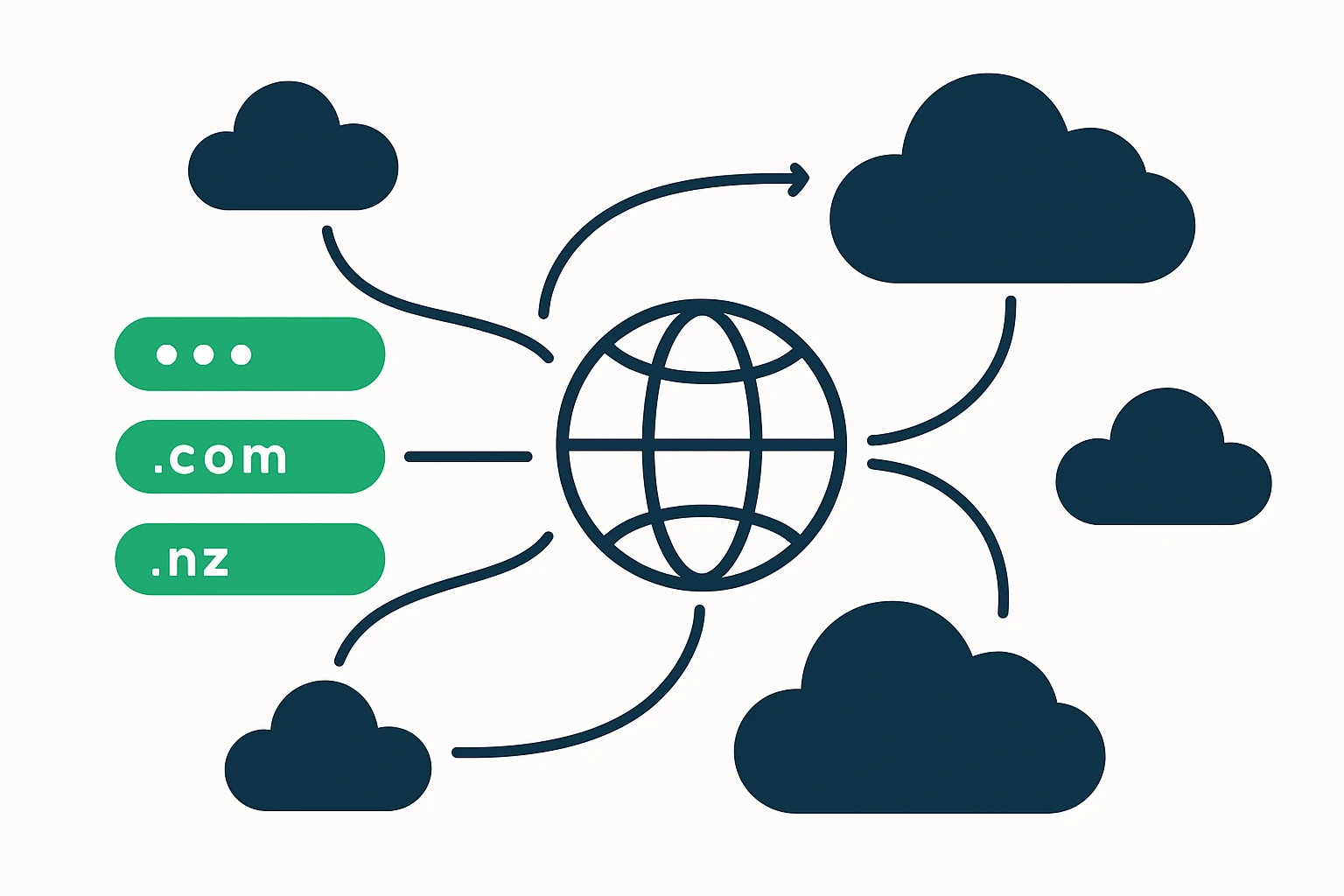
2) DNS and edge routing integration: health checks, failover, and geo-targeting
DNS is the primary control plane for directing client requests at scale. Configuring health checks and failover policies lets DNS responders steer traffic away from degraded endpoints to healthier ones. Route 53’s failover capabilities demonstrate how health checks can drive DNS-driven redirection to maintain service continuity, including automatic failover when a primary resource becomes unhealthy. In practice, you configure health checks and a failover routing policy so that, if the primary endpoint becomes unhealthy, requests resolve to a secondary endpoint. This approach is a practical, well-supported way to manage cross-cloud resilience. (docs.aws.amazon.com)
Geolocation routing adds another dimension: directing users to endpoints that are topologically closest to them or best aligned with policy requirements (compliance, data residency, or provider performance). Modern DNS services and cross-cloud load balancers support a mix of weighted, latency-based, and geolocation policies to steer traffic where it matters most. The effect is a two-layer decision process: DNS responds quickly to general routing signals, while the edge and inter-cloud fabric handles fine-grained path selection. This layered approach is foundational to reducing perceived latency for a distributed user base.
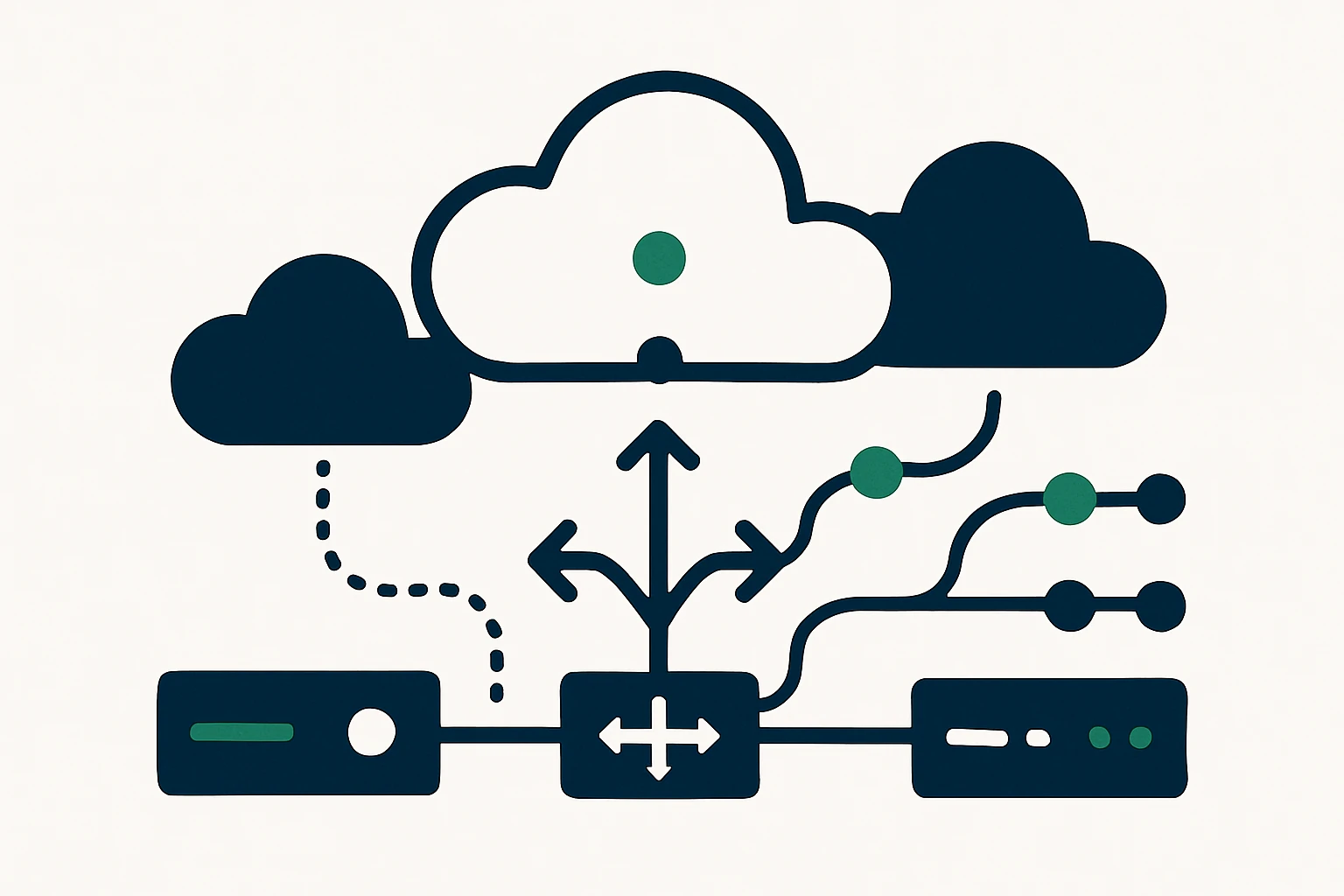
3) Cross-cloud load balancing and telemetry: dynamic path selection and observability
Beyond DNS, the performance and reliability story relies on global load balancing that can shift traffic across clouds in response to real-time health signals. Google Cloud’s documentation highlights cross-cloud load balancing as a mechanism to distribute traffic across Google Cloud and external clouds, enabling automatic regional failover and latency-aware routing in a multi-cloud topology. This capability is particularly valuable when you operate services that must remain available even if one cloud experiences localized issues. (docs.cloud.google.com)
Telemetry completes the loop. Continuous monitoring of latency, error rates, and network jitter informs adjustments to TTLs, routing policies, and failover thresholds. In a DNS-first architecture, timely health signals and accurate metrics are critical to prevent stale routing decisions from causing disruption. The goal is to maintain a feedback loop where observability drives policy updates, which in turn shape traffic patterns in near real time.
4) Telemetry, testing, and governance: keep the system resilient
Resilience is not a set-and-forget exercise. It requires regular testing of failover scenarios, safe rollback capabilities, and governance to ensure changes align with the organization’s risk tolerance and regulatory requirements. For DNS-based failover, consider scheduled failover drills and canary tests to verify that health checks, DNS responses, and edge routing all behave as expected under simulated outages. This practice helps prevent unexpected traffic surges or misrouted requests when a real incident occurs.
A structured, actionable deployment block
The following structured block provides a compact, implementation-ready framework you can apply to a real project. It segments the work into four stages with concrete milestones and measurable outcomes.
- Stage 1 - Discovery and data model: inventory endpoints, define health signals, map user geography, and document current routing policies. Milestone: a living data model and an asset registry that feed routing decisions.
- Stage 2 - DNS and edge routing: implement health checks, configure a failover strategy, and apply geolocation or weighted routing where appropriate. Milestone: a DNS policy set that can respond to outages within minutes, not hours.
- Stage 3 - Cross-cloud load balancing: deploy cross-cloud load balancing with latency-aware routing, and ensure automatic regional failover paths exist for all critical services. Milestone: end-to-end routing that remains stable under simulated cloud perturbations.
- Stage 4 - Telemetry and governance: implement real-time dashboards, define alerting thresholds, and establish change-control processes for routing policies. Milestone: a validated runbook with clearly defined recovery steps.
For organizations managing expansive domain portfolios or extensive DNS configurations, keeping your domain lists and DNS policies aligned with your routing strategy is essential. Some enterprises manage thousands of domains across TLDs and regions, and tooling that can export or import domain lists helps maintain consistency. For example, WebATLA’s domain listings by TLDs and country references provide a practical reference point for teams coordinating certificate management, DNS records, and failover planning across a portfolio. You can explore resources such as WebATLA’s List of domains by TLDs or their pricing information at WebATLA Pricing, and access domain data via their RDAP & WHOIS database at RDAP & WHOIS for governance and compliance needs.
Limitations, trade-offs, and common mistakes
Even the best-designed framework has limits. A few of the most common pitfalls in multi-cloud traffic engineering include:
- Over-reliance on DNS failover. DNS failover responds at the DNS layer, which means it can't instantly react to micro-outages or localized failures. It requires careful TTL planning and robust health checks. Low TTLs improve responsiveness but increase query load and cost, high TTLs reduce load but slow failover. A balanced TTL strategy paired with proactive health signals is essential. See DNS failover best practices and TTL considerations in industry documentation.
- TTL and caching dynamics. Even with low TTLs, resolver caches and client-side caches can delay failover changes. Practically, you should plan for propagation delays and test failover under realistic traffic conditions. Cloud and DNS providers highlight the trade-off between agility and stability in TTL choices. (cloudflare.com)
- Fragmented monitoring across clouds. Without a unified telemetry plane, you may miss early signs of degradation in one cloud while a different cloud remains healthy. Centralized observability that aggregates latency, success rate, and DNS health is crucial for timely policy updates.
- Geography and residency constraints. Routing decisions may be influenced by data residency rules, latency guarantees, or vendor-specific performance characteristics. Aligning routing policies with regulatory or organizational constraints is essential to avoid unintended data paths or compliance gaps.
Putting it all together: a practical blueprint
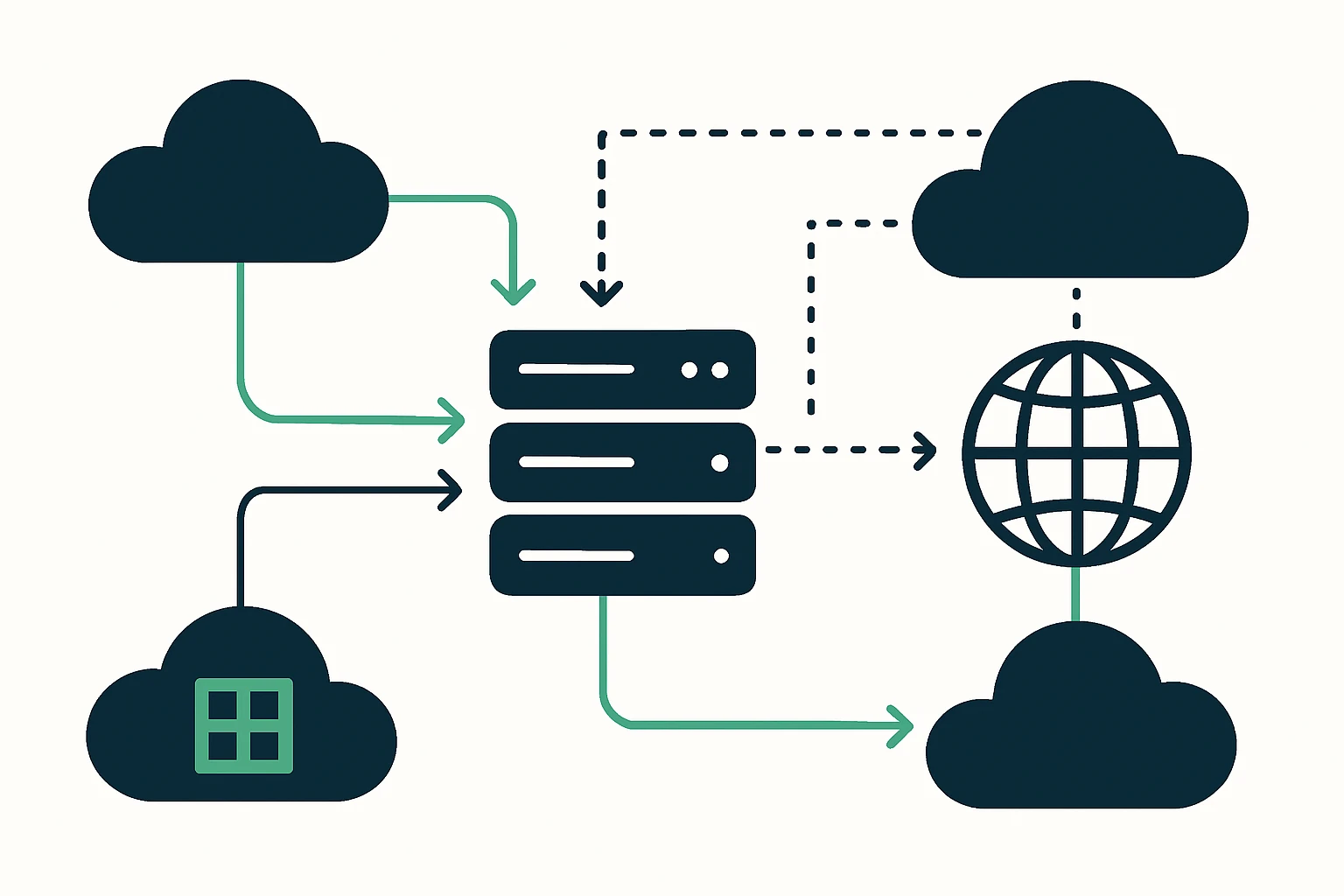
Here is a concise blueprint that organizations can adapt to their unique environments. It blends DNS-based failover, anycast edge routing, and cross-cloud load balancing into a single, coherent flow that scales with cloud portfolios and domain inventories.
- Define success metrics: latency targets by region, uptime targets, and RPO/RTO for critical services. Establish a governance process for routing policy changes and maintain a change log for auditability.
- Establish the control plane: implement DNS failover with health checks, configure geolocation or latency-based routing for global user distribution, and define backup endpoints in each cloud for critical services.
- Build the edge and inter-cloud fabric: use anycast routing to route to the nearest healthy edge location, and implement cross-cloud load balancing to distribute traffic across clouds based on health signals and proximity.
- Operate with telemetry: instrument health checks, latency, error rates, and DNS response times, set alerts for deviations from baselines, run regular failover drills to validate the end-to-end flow.
When you’re ready to explore domain portfolio considerations in parallel with routing strategy, WebATLA’s platform can provide insights into domain lists by TLDs or country-specific collections, supporting governance and DNS management across a broad portfolio. See their pages for reference: List of domains by TLDs, Pricing, and RDAP & WHOIS database.
Conclusion
Multi-cloud traffic engineering is not a single-tool problem, it’s a strategy that aligns DNS, edge routing, and inter-cloud connectivity with user geography and service-level objectives. By embracing a cohesive framework - discovery and data modeling, DNS-driven control, cross-cloud load balancing, and rigorous telemetry - you can reduce network latency, improve uptime, and deliver a better user experience across AWS, GCP, and Azure. While no solution is perfect, a deliberate, measured approach to failover planning, TTL management, and observability can yield durable improvements in cloud network performance. The next step is to tailor the framework to your environment, validate it with controlled tests, and iterate based on measurable outcomes.