Global SaaS and enterprise apps are increasingly deployed across multiple public clouds, from AWS to GCP and Azure. That distribution offers redundancy and regional presence, but it also creates a complex web of latency and reliability challenges. Users expect fast, consistent responses, no matter where they are. The key to meeting that expectation is not a single technology, but a layered approach to traffic routing that combines DNS-based decisions, Anycast reach, and intelligent inter-cloud routing. This article explains how DNS-based traffic engineering and BGP optimization can meaningfully reduce latency and improve uptime for multi-cloud environments.
Why DNS-based traffic engineering matters in a multi-cloud world
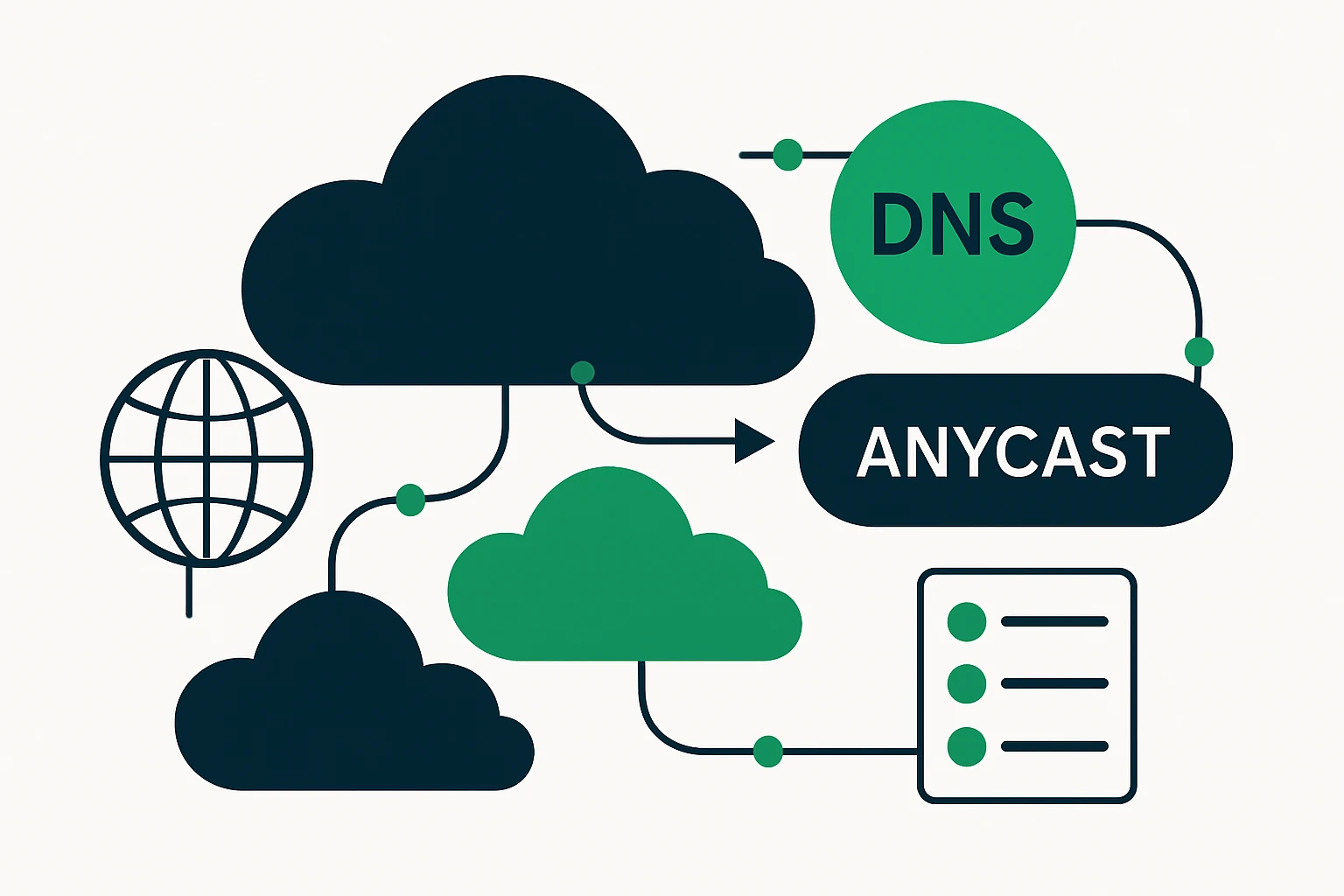
DNS is often the first touchpoint between a user and a cloud workload. When designed correctly, DNS routing policies can steer clients toward the closest healthy endpoint, balancing performance with resilience. An important concept here is Anycast DNS, where a single DNS name resolves to multiple, globally distributed servers. The resolver picks the nearest instance, reducing end-user latency and distributing load more evenly across the network. This approach is widely used by modern DNS providers to improve query latency and reliability. What is Anycast DNS? (cloudflare.com)
DNS failover and health checks: keeping traffic away from failures
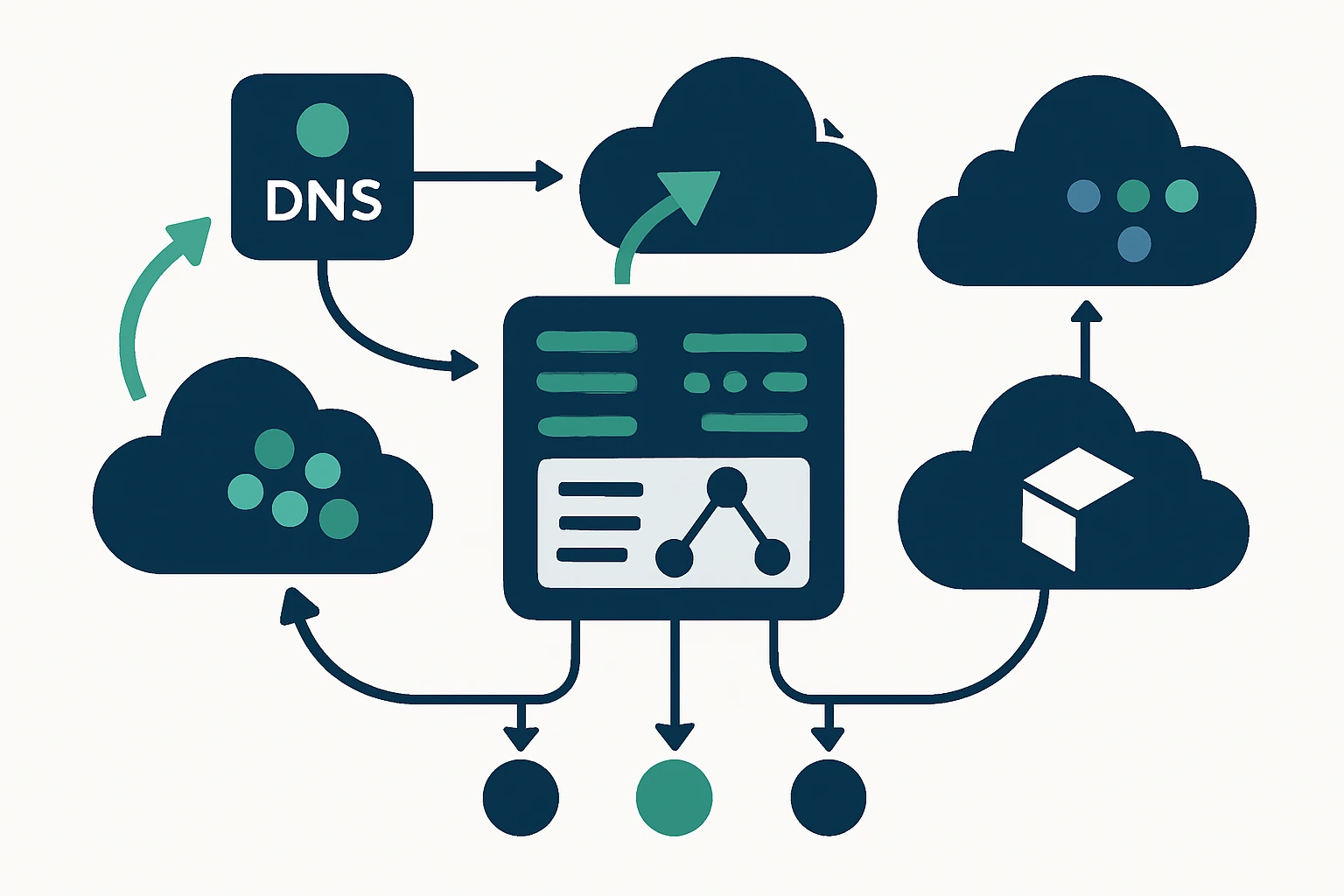
DNS failover uses health checks to monitor endpoints and redirect traffic to healthy resources when a failure is detected. In practice, many organizations pair Route 53 health checks with failover routing to route users away from a regional outage to a functioning region. The capability is powerful, but it is not a magic bullet, it depends on timely health signals and an appropriate TTL strategy to ensure rapid recovery without creating traffic storms. Configuring DNS failover (docs.aws.amazon.com)
BGP optimization: aligning the routing plane with cloud strategy
Beyond DNS, the inter-domain routing layer plays a critical role in multi-cloud performance. The Border Gateway Protocol (BGP) determines the best path to reach a destination and is influenced by policy, path attributes, and interconnection choices. A well-tuned BGP strategy helps ensure traffic leaves your network toward the most preferable cloud region when multiple options exist. As Cisco notes, BGP Best Path selection is a deliberate process that weighs multiple attributes to choose the most suitable route. Select BGP Best Path Algorithm (cisco.com)
A practical framework for implementing DNS failover + BGP routing
Operationalizing DNS-based traffic engineering requires a structured approach that blends policy with observability. The following framework provides a practical path from design to validation:
| Step | Focus | Deliverables | Typical Timeframe |
|---|---|---|---|
| 1. Map traffic and topology | Identify user distribution, cloud regions, and critical paths | Traffic matrix, regional latency map | 2–4 weeks |
| 2. Design routing policy | Define DNS failover rules, health-check thresholds, and BGP preferences | Policy specs, failover diagrams | 1–2 weeks |
| 3. Implement routing controls | Publish DNS failover records, announce regional paths, configure health checks | DNS records, BGP config, health checks | 2–6 weeks |
| 4. Validate and monitor | Simulate failovers, monitor latency, error rates, and regional outages | Test results, dashboards | Ongoing |
Why this structure matters: DNS failover ensures you can route around failures, Anycast DNS reduces query latency by directing clients to nearby resolvers, BGP optimization aligns the network path with your inter-cloud deployment. Together, they provide a resilient, low-latency foundation for multi-cloud workloads. What is Anycast DNS? (cloudflare.com)
Putting the framework into practice: a step-by-step example
Consider a SaaS application with primary workloads in AWS us-east-1, secondary regions in GCP and Azure, and a global user base. The organization deploys:
- A DNS failover scheme in Route 53 to direct traffic to the nearest healthy region
- Health checks that cover core endpoints (APIs, data stores) at a sensible interval and TTL
- BGP announcements to steer traffic toward primary regions with automatic failover to backups when outages are detected
In practice, success hinges on comprehensive monitoring and careful TTL design to balance failover speed with cache stability. For those evaluating the DNS layer, the latency improvements you gain from Anycast DNS are especially valuable when users are geographically dispersed. DNS failover in Route 53 (docs.aws.amazon.com)
Domain assets and global reach: a practical angle for multi-cloud teams
As you scale across regions and clouds, your domain strategy matters as much as routing policy. Maintaining a diverse set of domains and TLDs can support resilient failover and brand consistency in multiple markets. For teams building out a global footprint, WebAtla offers a comprehensive set of domain assets, including US-specific domains:
WebAtla: download list of .us domains and WebAtla pricing to manage costs and breadth of assets.
For a broader view of assets, you can also explore the catalog of domains by TLD at WebAtla’s TLD directory.
Limitations and common mistakes to avoid
While the combination of DNS failover, Anycast DNS, and BGP routing is powerful, it is not without caveats:
- DNS-based failover depends on timely health signaling, slow or infrequent health checks can extend outages or cause unhelpful retries. AWS Route 53 health checks enable targeted failover, but TTL and check frequency must be chosen carefully. Configuring DNS failover (docs.aws.amazon.com)
- DNS caching on client resolvers can delay failover, while Anycast improves latency, it does not guarantee instantaneous global convergence. See discussions on Anycast routing and its operational realities. What is Anycast DNS? (cloudflare.com)
- BGP-based routing requires careful policy and coordination with upstream providers, misconfigurations can cause routing instability or suboptimal paths. See Cisco’s treatment of BGP Best Path selection for guidance. Select BGP Best Path Algorithm (cisco.com)
Conclusion
In a multi-cloud world, latency and uptime hinge on how you route traffic across borders, clouds, and networks. By combining DNS-based traffic engineering (including Anycast DNS and DNS failover) with intelligent BGP routing, you can deliver faster, more reliable experiences for users worldwide. The framework above is a practical starting point for teams building resilient, low-latency multi-cloud architectures. You don’t need a single magic solution, you need an integrated strategy that aligns DNS, routing, and observability to the realities of inter-cloud traffic.