Introduction: why domain extensions deserve a seat at the cloud routing table
When organizations scale their software across multiple clouds, the focus is often on compute, storage, and API compatibility. Yet the domain names that accompany those services live at the edge of the Internet’s routing fabric. The set of domain extensions (TLDs) you choose, and how you manage DNS and failover across them, can subtly influence latency, resilience, and the speed with which users reach your applications. This article stitches together the world of cloud routing and traffic engineering with the domain extension ecosystem, offering a practitioner’s lens on how to think about domain portfolios as part of a global delivery strategy.
To frame the landscape: the Internet’s DNS is built around a hierarchy of domains and registries, with new generic top-level domains (gTLDs) continually entering the system through ICANN’s New gTLD program. The expansion of available TLDs has implications for branding, localization, and regulatory compliance - factors that can intersect with multi-cloud routing decisions in real-world deployments. For a quick sense of how this expansion works today, see ICANN’s ongoing New gTLD program coverage. (newgtldprogram.icann.org)
1. Domain extensions are more than branding: they sit at the core of DNS governance and global reach
Domain extensions determine which registry operates a given TLD, how WHOIS and RDAP data are surfaced, and how resilient a namespace is to registry outages or regulatory changes. The ongoing evolution of gTLDs means enterprises can choose extensions that align with regional markets, languages, and branding while still leveraging the same underlying DNS and routing infrastructures used by global SaaS services.
ICANN’s New gTLD program pages describe how new extensions are introduced, evaluated, and brought into the root zone, underscoring that TLD choice can affect governance, compliance, and brand strategy as much as user perception. This broader context matters when you’re aligning cloud routing with a multinational audience and varied regulatory environments. (newgtldprogram.icann.org)
From a technical perspective, the faster the DNS answers can be delivered and the more robust the failover path, the closer you are to a low-latency experience that scales with your cloud footprint. In practice, that means thinking about TLD strategy alongside edge deployments, health checks, and routing policies. The key takeaway: domain extensions are not a siloed branding decision, they’re part of a holistic routing and resilience strategy.
2. Anycast and DNS: how domain choices influence latency and edge reach
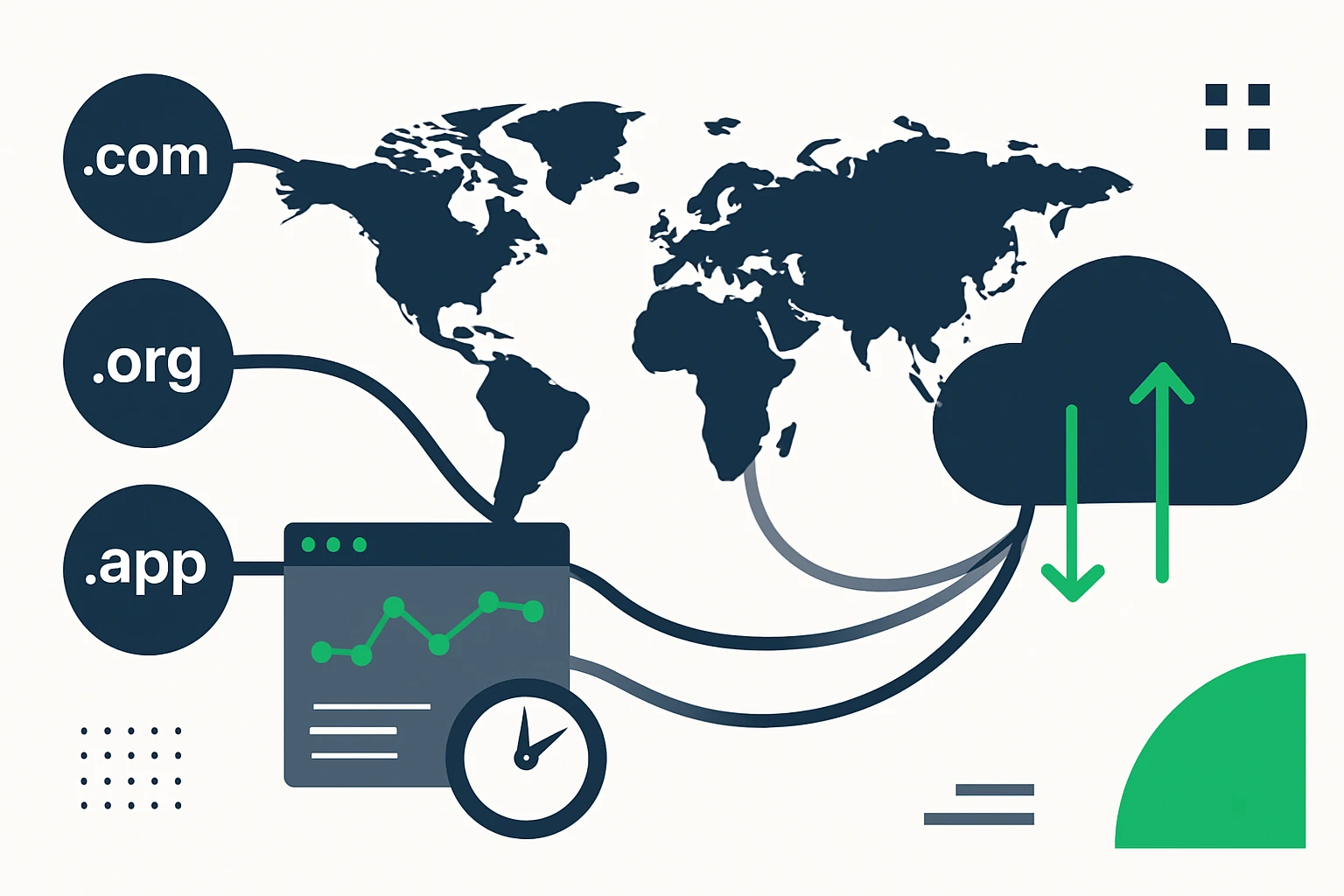
A core principle of modern cloud delivery is edge-based routing to reduce latency and improve fault tolerance. Anycast DNS, where multiple servers share the same IP address, helps direct users to the nearest edge location and makes DNS resolution itself a global, resilient operation. This routing paradigm is widely used by major DNS/CDN providers to shorten the path from user to origin and to absorb traffic during bursts or attacks. Anycast-based DNS can thus interact with your choice of domain extensions by affecting where DNS responses originate and how quickly endpoints are reached. (cloudflare.com)
Practically, this means your DNS and domain portfolio should harmonize with your edge presence. If you operate a multi-cloud or multi-region deployment, ensuring that DNS responses resolve to the closest compliant edge or multi-cloud endpoint is part of reducing user-perceived latency. For practitioners considering the traffic-engineering implications of edge proximity, the literature and industry practice point toward leveraging anycast as a foundational tool in your latency-reduction toolkit.
Beyond latency, anycast also contributes to resilience, because traffic is served by multiple edge sites that can absorb load or respond to regional failures without a single point of congestion. Cloudflare’s coverage on anycast DNS explains how the model distributes queries and improves performance while adding a layer of protection against floods. (cloudflare.com)
3. DNS failover and cross-region resilience: tying domain extensions to multi-cloud uptime
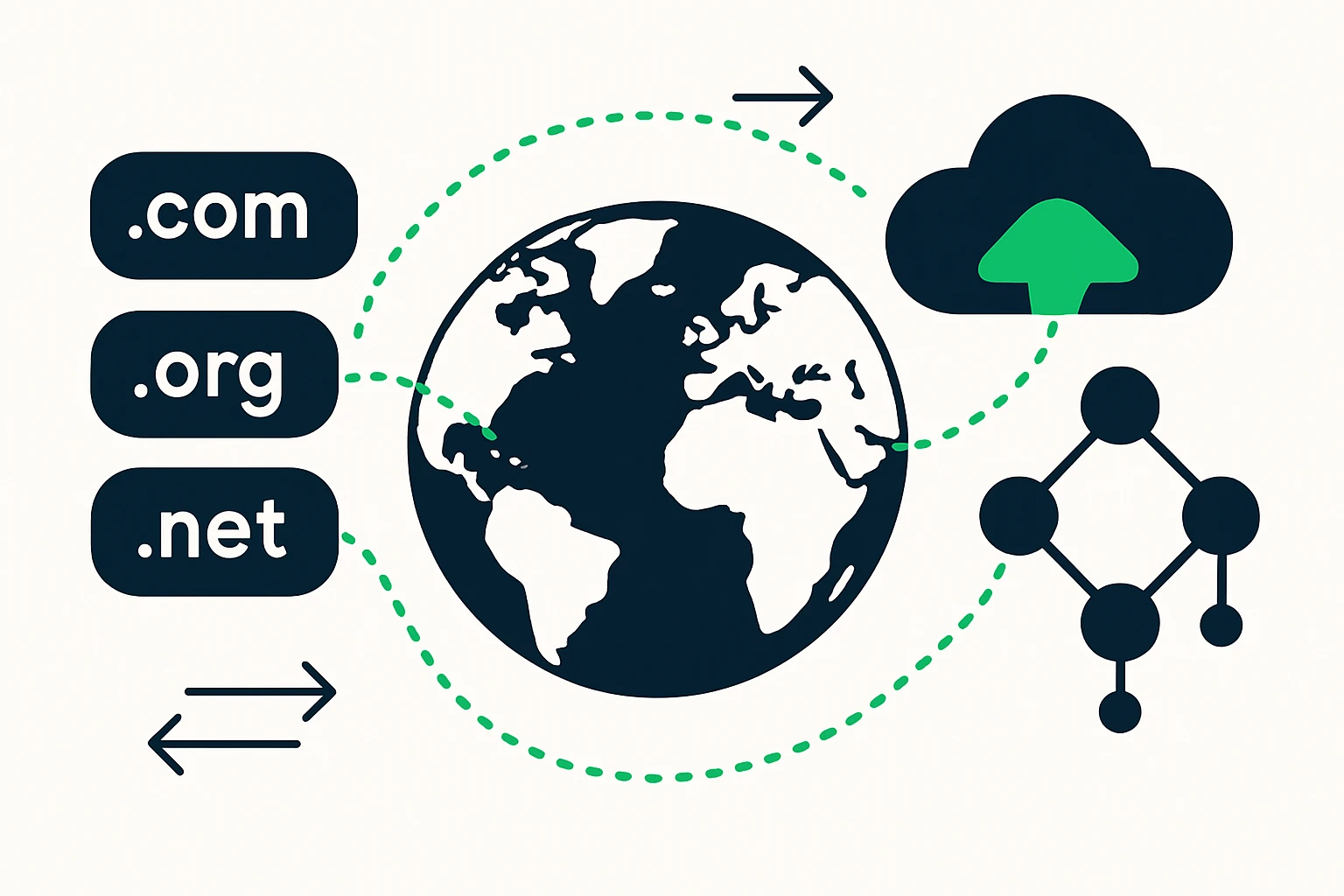
DNS failover is a well-established pattern for improving uptime in a multi-region or multi-cloud environment. The basic idea is simple: health checks determine the availability of a primary endpoint, and if it fails, DNS responses begin pointing users to a healthy secondary endpoint. This approach requires careful design of health checks, routing policies, and the alignment of domain records with your cloud infrastructure. AWS Route 53 provides built-in DNS failover capabilities that rely on health checks and endpoint monitoring to route traffic away from failing regions or clouds. (docs.aws.amazon.com)
In practice, you’ll often combine DNS failover with other Route 53 routing policies (latency-based routing, geolocation, etc.) to create a resilient cross-region strategy. AWS has documented hands-on patterns for failover and failback, including how to set up primary/secondary configurations and health checks to automate traffic movement as conditions change. This kind of pattern is particularly relevant when you’re distributing domains across multiple TLDs and cloud environments to achieve broad geographic coverage. (aws.amazon.com)
From a topology perspective, you’ll want to ensure that failover mechanisms are aware of your entire cloud network: edge caches, regional load balancers, and origin servers across clouds. A well-architected failover strategy can reduce cold starts and the time-to-detect when a region or cloud goes down, thereby minimizing user disruption. This is where DNS-based failover dovetails with a broader traffic-engineering plan that accounts for both latency and reliability across multiple cloud ecosystems.
4. A practical framework for domain extension strategy in cloud routing
To operationalize the ideas above, use a compact, repeatable framework that ties domain extension decisions to routing and resilience goals. The framework below is designed to be pragmatic for SaaS and enterprise teams managing multi-cloud networks and a diverse domain portfolio.
Framework: Domain Extension Strategy for Cloud Routing
- Goal alignment - Start with business goals: regional branding, localization requirements, and regulatory constraints. Map these to a domain extension strategy that supports edge deployment patterns and DNS failover plans.
- Edge and DNS readiness - Ensure every major cloud region has a nearby edge presence and that DNS responses can be served by anycast or multi-edge networks. Validate that each TLD in scope has an accessible, trustworthy registry and responsive WHOIS/RDAP data if needed for governance and risk assessment.
- DNS architecture and failover design - Design DNS zones and records to support cross-cloud failover, including health-check coverage across clouds and regions. Use DNS failover in conjunction with latency- or geoproximity-based routing to minimize user disruption during outages. (docs.aws.amazon.com)
- Registry strategy and governance - Consider the implications of new gTLD rounds and potential changes in registry policies when planning long-term portfolio expansion. Stay informed about ICANN’s New gTLD program and related governance updates as you scale your domain footprint. (newgtldprogram.icann.org)
- Risk management - Develop a plan for registry outages or domain-related governance changes, ensure that failover and routing don’t depend on a single registry or TLD for essential services.
As a practical note, the domains and TLD landscape continues to evolve under ICANN’s oversight, including the potential for new rounds of gTLD applications. Organizations planning for long-term multi-cloud deployment should monitor official program updates to anticipate changes that could affect branding, localization, or regulatory coverage. The official New gTLD Program pages describe how rounds are conducted and what to expect, which is valuable context for a cloud routing strategy that spans multiple regions and brands. (newgtldprogram.icann.org)
5. Limitations, trade-offs, and common mistakes
Every framework has bounds. The domain extension landscape is only one piece of a broader routing puzzle. A few real-world constraints and missteps frequently encountered in multi-cloud environments include:
- Overemphasizing branding over performance - While branding matters, routing performance is governed by edge presence, DNS responsiveness, and health-check coverage. Do not assume a newer or more exotic TLD will automatically improve performance or resilience.
- Under-investing in DNS health checks - DNS failover is powerful only if health checks accurately reflect end-user experience across clouds and regions. Inadequate or mismatched health checks can cause premature failover or, conversely, fail to detect outages in time.
- Ignoring edge coverage in multi-cloud designs - Latency will be driven by where your edge and DNS resolution are reachable, not just by the cloud accounts you use. Edge placement and anycast routing must be considered together with the domain strategy.
- Not accounting for registry risk and governance - Relying on a single TLD or registry can introduce a single point of governance risk. A diversified domain extension strategy should be paired with robust failover planning.
- Forgetting the new gTLD landscape - ICANN’s New gTLD program continues to evolve. Failing to monitor developments can result in missed opportunities or compliance gaps as portfolios grow. (newgtldprogram.icann.org)
6. A practical resource block: connecting domain strategy to tools and data
For teams building out a domain portfolio that supports a multi-cloud delivery model, access to up-to-date domain data and governance information is essential. The client’s resources offer practical ways to explore and manage domain extensions and registries:
- List of domains by TLDs - a comprehensive view of available extensions and their current portfolios.
- RDAP &, WHOIS Database - critical for governance, ownership verification, and risk assessment when planning cross-border deployments.
External reference: For a broader technical backdrop on how modern DNS and edge routing interact, see the concept of anycast DNS and its role in reducing latency and improving resilience. (cloudflare.com)
Conclusion: integrate domain strategy with your cloud routing playbook
In distributed, multi-cloud environments, the choice of domain extensions and the design of DNS and routing together determine how fast, reliably, and safely your services reach end users. The practical takeaways are clear: think about domain extensions not as a branding afterthought, but as a component of your edge strategy, DNS resilience, and cross-cloud traffic engineering. By aligning TLD strategy with edge presence and DNS failover, organizations can reduce latency, improve uptime, and lower the risk of regional outages propagating into customer-facing outages.
To explore practical domain data and governance tooling as part of your routing strategy, consider the client resources above, and stay tuned to ICANN and registry-level developments through official channels. The combination of a thoughtful domain extension portfolio and robust DNS-based traffic engineering is a durable path toward resilient, low-latency global delivery.