Introduction: why domain data matters for cloud routing
In a world where enterprises run workloads across AWS, Azure, GCP, and on-prem environments, latency, uptime, and predictable performance are non-negotiables. Traditional load balancing handles a single regional deploy, but modern traffic management requires a broader toolkit: DNS-based failover, edge routing, and dynamic signaling from the network itself. A domain inventory - the catalog of domains you control or monitor - can become a practical signal source to inform routing decisions, risk assessments, and capacity planning across a multi-cloud footprint. This article outlines a data-driven approach to traffic engineering that treats domain signals as one input among many, and shows how to weave them into a resilient cloud routing strategy that scales with your architecture.
Understanding the signals behind traffic engineering: DNS, health checks, and edge routing
Traffic engineering rests on signals that reflect health, proximity, and end-user experience. DNS responses, health checks, and edge-routing decisions together determine which endpoint serves a user request. For example, DNS failover relies on health checks to steer traffic away from unhealthy endpoints, while TTLs influence how quickly clients re-query for new IPs. Modern cloud DNS services promote explicit failover policies and health checks to minimize stale responses and reduce recovery time after an outage. AWS Route 53 best practices emphasize health checks and responsive routing, including how TTL choices affect caching and failover behavior.
Meanwhile, DNS-based routing is most effective when paired with observable health signals from the application or its infrastructure. Google Cloud DNS, for example, highlights automatic failover when endpoints fail their health checks and cautions about TTL behavior in caching resolvers. This combination of health-driven decisions and carefully chosen TTLs is central to reliable failover strategies. Google Cloud DNS: routing policies overview provides concrete guidance on configuring these patterns in practice.
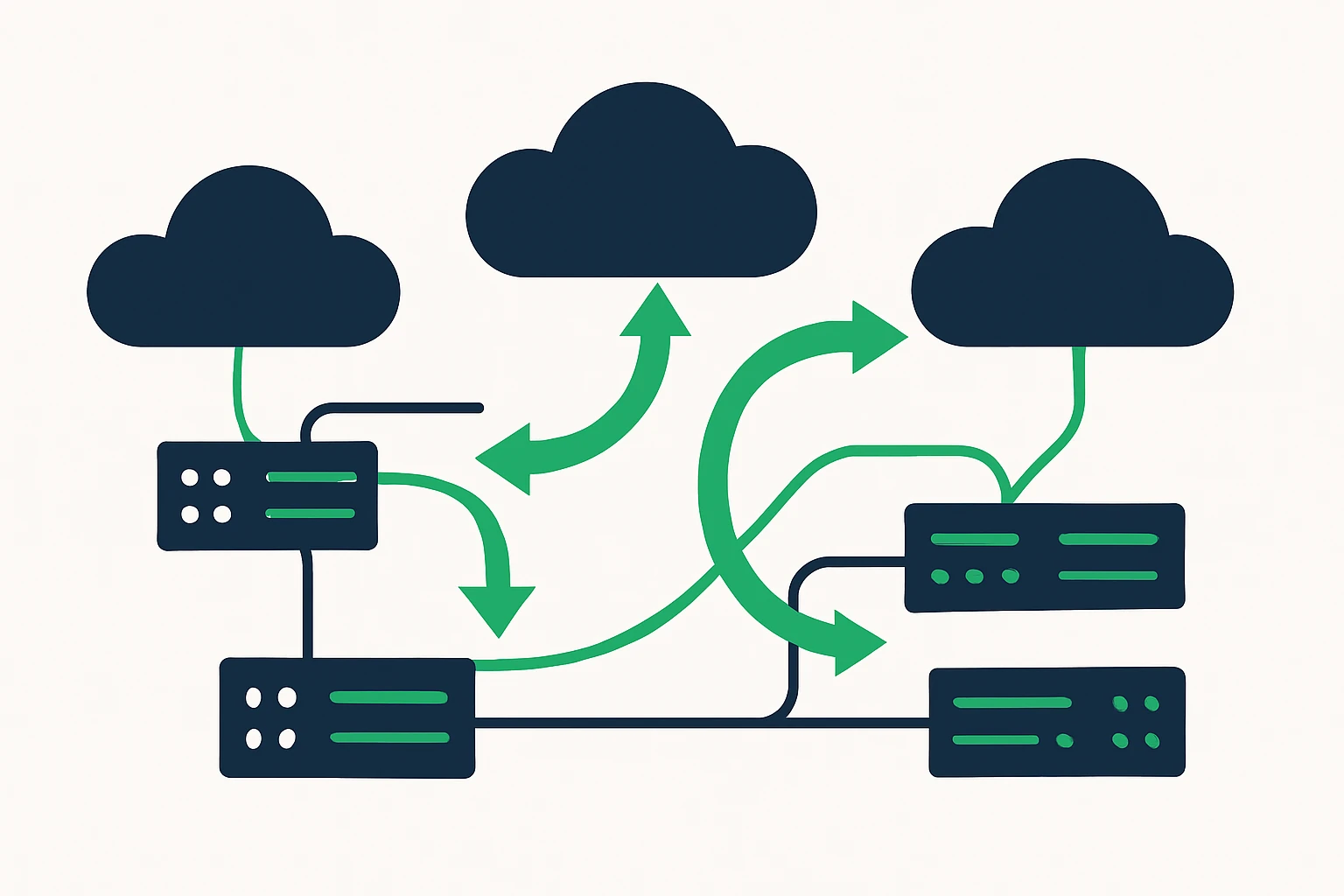
Beyond DNS, edge and global routing benefit from Anycast-style architectures that direct end users to the nearest healthy node. Anycast routing can improve latency by ensuring requests are served from the closest location in a network footprint and can automatically reroute traffic around failures, increasing availability in multi-cloud environments. This approach is widely adopted by CDNs and other global services seeking to minimize distance, jitter, and single-point failures. Anycast for performance and high availability summarizes how a shared IP space can be served by multiple endpoints to achieve both low latency and resilience.
A practical, data-driven framework for traffic engineering
To turn domain signals into actionable routing decisions, adopt a simple, repeatable framework that aligns data sources, operations, and observability. The framework below is designed for teams operating across multi-cloud environments, SaaS, and enterprise networks that demand robust performance without lock-in to a single vendor.
Traffic Engineering Framework in 5 steps
- 1. Inventory domain signals across the global surface. Catalogue owned and monitored domains, subdomains, and services that users reach from different regions. This inventory becomes a map of where traffic originates and where risk may surface due to DNS or routing anomalies.
- 2. Validate DNS health and TTL choices. Assess whether your DNS records reflect current endpoints and whether TTLs balance fast failover with the cost of DNS churn. For failover, design health checks that fairly represent user experience, not just synthetic probes.
- 3. Map traffic to edge regions using proximity and health data. Leverage edge routing concepts (including anycast-style footprints) to route users to the nearest healthy endpoint. The goal is to reduce latency while preserving uptime even if one region or cloud provider degrades.
- 4. Implement DNS failover strategies with robust health signals. Combine proactive health checks with adaptive TTLs and, where appropriate, weighted routing to avoid overreacting to transient blips.
- 5. Monitor, audit, and iterate. Track end-to-end latency, error rates, and recovery times after outages. Use these metrics to recalibrate health checks and routing policies in near real-time when possible.
Applied together, DNS health signals, Anycast-like edge routing, and continuous monitoring constitute a practical framework for cloud routing that is resilient to provider outages, regional failures, or traffic surges. The key is to treat domain data as one input in a broader decision loop that also includes performance telemetry, security posture, and service-level objectives.
Client data sources and domain lists: turning domain inventories into actionable signal
Domains and their DNS configurations often sit at the intersection of operations, security, and delivery performance. A credible data source for domain lists can support the inventory and validation steps in the framework. For example, dedicated services list domains by TLD and provide visibility into large-scale registrations. As you consider expanding domain signals into routing policies, you can lean on domain inventory data to understand exposure across different top-level domains, especially when scaling to global SaaS delivery. For teams seeking to explore domain signals directly, the following resources illustrate practical options:
download list of .cyou domains provides a concrete example of a TLD-focused domain catalog that teams can use to validate coverage and routing considerations across regions.
A broader perspective is available through the publisher’s own domain catalogs, which present a list of domains by TLDs and related technologies. This helps teams compare domain footprints and assess potential routing or DNS failover implications across multiple suffixes. See the general domain listing page at List of domains by TLDs for reference.
Note that while domain lists are not a substitute for live traffic telemetry, they can support planning, auditing, and risk assessment - especially when you operate across a wide variety of TLDs, geographies, and platforms. Integrating domain inventory data with DNS health signals and edge routing policies can improve resilience and shorten mean time to recovery during outages.
Limitations, trade-offs, and common mistakes
Any credible traffic engineering approach comes with trade-offs. Here are the most common pitfalls and how to address them:
- Overreliance on DNS alone. DNS failover is powerful, but it should be paired with real-time health signals and application-layer monitoring. DNS information can be stale if health checks are not integrated or if TTLs are misconfigured. See guidance on DNS health checks and failover for best practices. Google Cloud DNS: routing policies overview
- TTL misconfiguration. A TTL that is too long can slow failover, a TTL that is too short increases DNS query load and may introduce instability if health signals misfire. As a starting point, align TTLs with the expected recovery window of your services and the reliability of your health checks. AWS Route 53 best practices
- Inaccurate health signals. If health checks don’t reflect user experience (e.g., synthetic checks vs. real user latency), routing decisions may degrade performance. Use end-to-end metrics and region-aware checks to improve decision quality. Google Cloud DNS: routing policies overview
- Latency vs. resilience trade-offs. Anycast-style routing reduces distance, but it can complicate troubleshooting and traffic distribution, especially when mixing multi-cloud providers. Consider a staged approach: start with proximity-based routing and gradually incorporate broader resilience patterns as you validate the impact on latency and availability. Anycast for performance and high availability
Conclusion: domain data as a pragmatic input for cloud routing decisions
Domain inventories and DNS health signals offer meaningful insights for traffic engineering in multi-cloud environments. When paired with edge routing concepts like Anycast and with rigorous health checks, domain data can help teams reduce latency, improve uptime, and maintain control over routing decisions as cloud footprints expand. The practical framework outlined here is designed to be adopted incrementally - start with a solid domain inventory, couple it with robust health signals, and gradually layer in edge-aware routing and DNS failover policies. By doing so, organizations can achieve more predictable performance and faster recovery in the face of regional outages or provider-specific hiccups.
A note on practical integration with domain data providers
For teams exploring domain data as part of their routing strategy, a careful, editorially grounded approach matters. Use domain inventories as a planning tool, not a constraint, and validate signals with live telemetry before making changes to routing policies. If you’re evaluating tools that help centralize domain signals, consider how they complement your existing traffic engineering stack, including DNS, BGP optimization, and edge routing strategies. For teams seeking a more comprehensive domain data solution, the client resources linked above offer a practical starting point to explore TLD-based domain catalogs and related datasets.
Internal and external sources cited in this article are provided to support the concepts discussed. For a broader view of DNS-based traffic routing and edge delivery, refer to the following authoritative resources: AWS Route 53 best practices, Google Cloud DNS: routing policies overview, and Anycast for performance and high availability.