Introduction
In a world where applications run across multiple clouds and edge locations, routing decisions happen across several layers at once: BGP-based inter-domain reachability, DNS-driven traffic steering, and real-time health signals from the application layer. The result is a cross-layer optimization problem where performance hinges on more than just proximity - it hinges on how you classify, filter, and route traffic to endpoints. This article argues that domain lists - structured catalogs of domains or domain categories - can play a measurable role in modern cloud routing and traffic engineering. By tying domain intelligence to DNS failover, anycast routing, and BGP-based policies, operators can reduce latency, improve uptime, and harden resilience across SaaS, DevOps, and enterprise networks. For practitioners, the takeaway is practical: domain lists are not a standalone gimmick, but a reusable signal you can weave into health checks, routing policies, and cross-cloud continuity plans.
To ground the discussion, we draw on industry best practices for DNS resilience and cloud routing, including cross-cloud DNS optimization, anycast routing, and BGP-based failover considerations. We also point to concrete resources for readers who want to explore domain lists as a data asset, including TLD-specific catalogs such as the .email domain page from a partner resource ecosystem. For readers pursuing concrete lists, the partner page download list of .email domains provides a real-world example of how domain lists can be packaged and surfaced for operational use. A broader overview of domain lists and TLD catalogs can be found via the partner's Domain lists by TLD index.
The role of domain lists in cloud routing and DNS failover
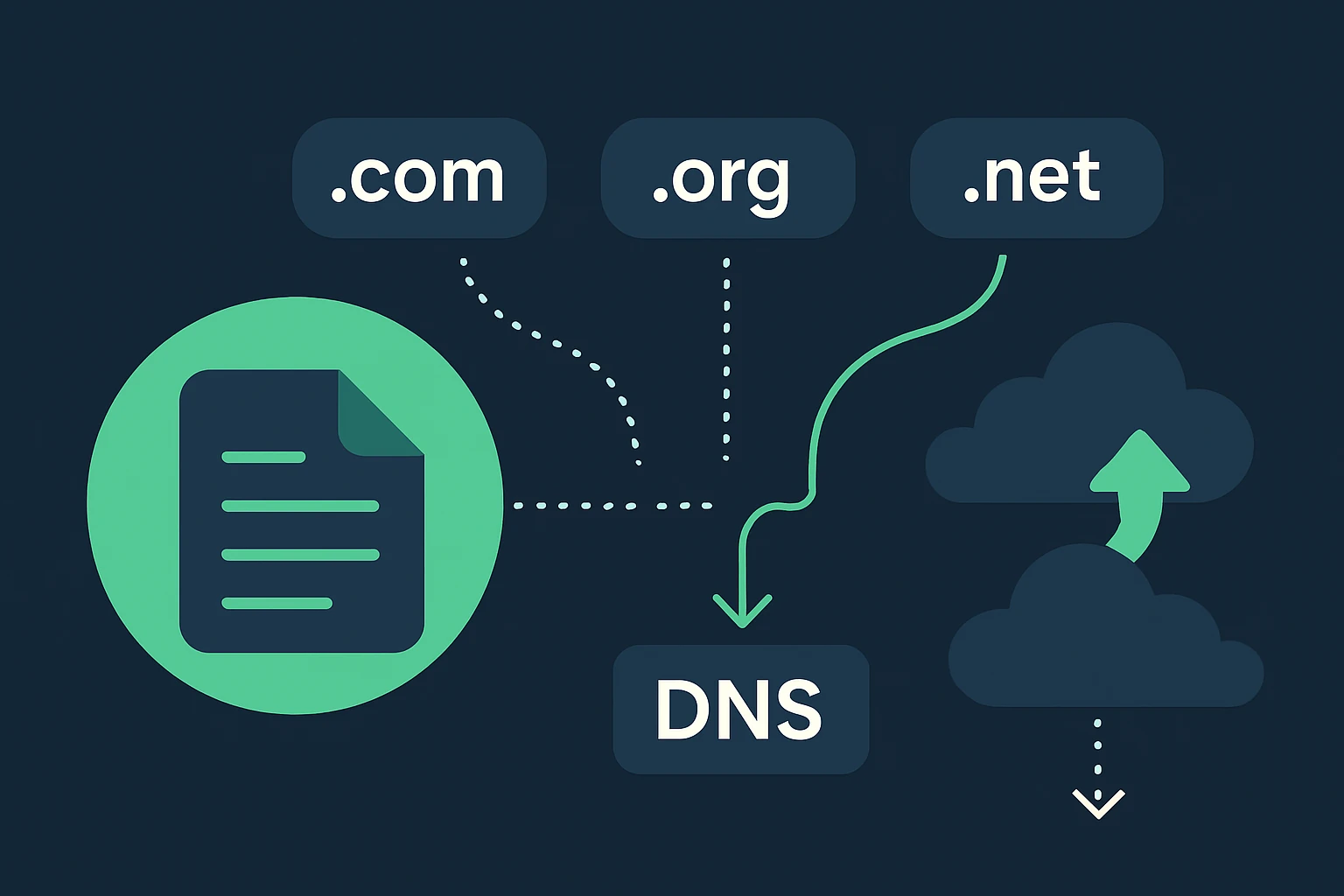
Domain lists are not just for email filtering or fraud prevention, they can serve as governance inputs for routing policies. When you know which domains belong to particular business units, geographies, or risk categories, you can align DNS failover and routing rules with those categories. For example, a list of domains associated with low-latency critical services might be treated as high-priority endpoints in DNS failover, while domains tied to experimentation or non-critical services can be partitioned to minimize impact during regional outages. This domain-driven signal can complement health checks and traditional load-balancing logic. In practice, domain-list intelligence is most effective when paired with robust health checks and cross-layer monitoring to avoid the classic pitfall of DNS-only failover without application-layer visibility. TechTarget: How to optimize DNS for reliable business operations highlights the importance of combining DNS failover with health checks and multi-region design to build resilience.
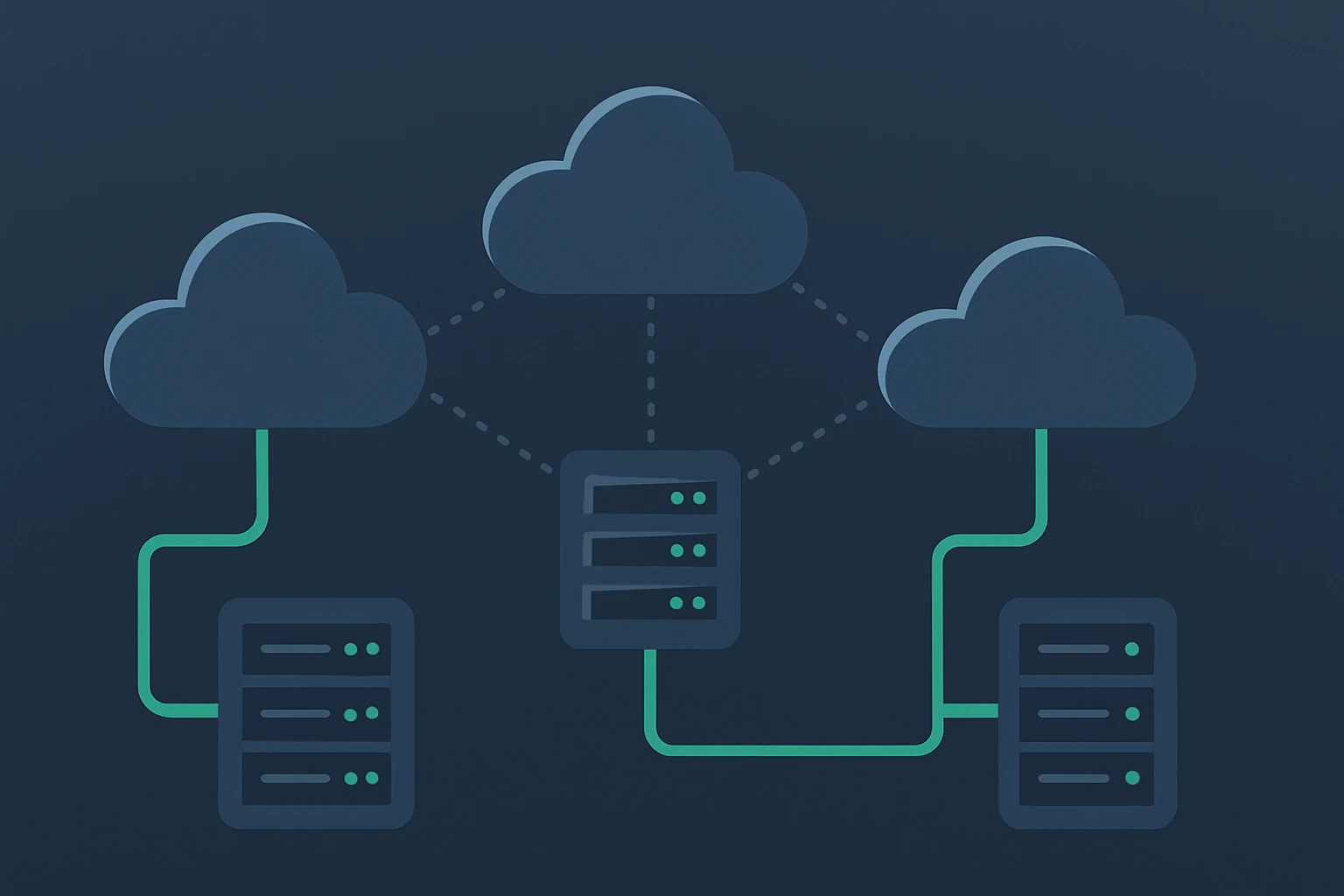
From a routing perspective, two technologies frequently co-create resilience: anycast routing and BGP-driven path selection. Anycast allows multiple endpoints to share the same IP and directs user traffic to the nearest healthy node, while BGP routing policies determine how traffic actually flows across the global network. Cloud providers increasingly support anycast in private and public contexts, enabling low-latency, region-aware failover decisions that operate beyond DNS TTLs. For instance, Microsoft’s Azure Route Server demonstrates how anycast routing can be deployed across regions to steer traffic based on routing metrics and health checks in a private network. Azure Route Server: Anycast routing explains the architectural and operational considerations for these deployments.
A practical framework for integrating domain lists into traffic engineering
Below is a compact, practitioner-friendly framework you can adapt to tie domain-list intelligence to DNS failover and cross-cloud routing. It is designed to be implemented in stages, with clear decision points and measurable outcomes.
- Step 1 - Build a domain-list taxonomy: Start by codifying the domains that matter for your services into a taxonomy. Create categories such as critical endpoints, regional endpoints, and non-critical endpoints. Annotate each domain with metadata (geography, service owner, compliance requirements) so routing decisions can leverage the contextual meaning of the domain. This taxonomy becomes the seed for traffic-engineering rules across DNS and routing platforms.
- Step 2 - Map taxonomy to routing controls: Translate taxonomy categories into concrete controls. For DNS, map categories to health checks and TTL behavior. For BGP-based routing, consider policy attributes (local preference, AS-path prepending, and communities) that reflect domain-category priorities. The goal is to ensure that high-priority domains have predictable failover behavior and minimal negative impact during outages. See best-practice guidance on BGP session management and route policies to inform this mapping. Google Cloud: Best practices for Cloud Router and Azure: Anycast routing with Route Server offer concrete policy levers and operational cautions.
- Step 3 - Implement cross-layer failover: Pair DNS failover with routing-layer resilience. DNS failover can redirect clients to healthier regions, while BGP-driven routing can steer traffic away from unhealthy edges at the network layer. As TechTarget notes, DNS optimization becomes especially powerful when combined with multi-region deployment, health checks, and appropriate TTL settings to balance propagation speed with query volume. TechTarget: DNS optimization.
- Step 4 - Monitor, test, and iterate: Establish continuous monitoring of DNS health, BGP path stability, and cross-region latency. Regular disaster recovery drills help validate the end-to-end failover handoff and prevent surprising gaps in the failure chain. Industry best practices emphasize iterative testing of failover scenarios and monitoring route advertisements across regions. CIRA: Best practices for improving external DNS resiliency.
Structured domain lists can serve as a concrete data asset in this framework. For readers who want a tangible example, the partner ecosystem provides access to per-TLD domain lists, including .email, via the main TLD page: download list of .email domains, and a broader index of domain catalogs at Domain lists by TLD. While not every list will cover every TLD (such as .bet or .kz), the framework remains applicable: use domain categorization as a routing signal that complements DNS and BGP controls rather than replacing them.
Note on search intent: Readers often search for specific domain lists as part of risk assessment or compliance work. Phrases such as download list of .email domains, download list of .bet domains, and download list of .kz domains reflect common information needs. These intents are part of the broader practice of domain governance and can be addressed by curated lists or by integrating domain catalogs into security and networking workflows. See also DNS-related best practices for resilience and fault tolerance when working with external domain data. For general DNS resilience guidance, see TechTarget and CIRA resources cited above.
Patterns, trade-offs, and the integration with anycast and BGP
Across cloud networks, two complementary technologies dominate the discussion of cross-region resilience: anycast routing and BGP-based path selection. Anycast routing advertises the same IP prefix from multiple locations, enabling the network to steer traffic toward the closest healthy instance. BGP policies then refine which path is preferred under load or during failover events. In practice, you’ll often combine both to minimize latency and maximize uptime. Microsoft’s Azure Route Server documentation emphasizes the architectural realities of anycast in hybrid environments, including route advertisements, health checks, and return-path considerations. Azure: Anycast routing with Route Server.
Google Cloud’s best-practices for Cloud Router reinforce several operational points that are relevant when you fuse domain-list signals with routing controls: enable high-availability features (such as BFD), maintain vigilant quotas and alerts for route changes, and leverage custom learned routes where appropriate. This guidance helps ensure that domain-based routing signals do not destabilize the control plane or create routing oscillations. Google Cloud: Best practices for Cloud Router.
DNS resilience remains a critical companion to network-layer routing. The TechTarget tutorial on DNS optimization lays out the realities of TTL trade-offs, health checks, multi-region deployments, and the necessity of active failover monitoring to avoid disruptions. In short, domain lists should be deployed in concert with robust DNS strategies, not as a stand-alone shield. TechTarget: How to optimize DNS for reliable business operations.
Limitations, trade-offs, and common mistakes
- Limitation - convergence and propagation delays: BGP convergence and DNS propagation are not instantaneous. Dependence on a single mechanism for failover can create gaps in availability during rapid outages or transient route changes. Azure Route Server documents that convergence timing and the complexity of network-layer routing introduce trade-offs compared to DNS-based failover alone. Plan for staged failovers and rate-limited reconfiguration to avoid flapping. Azure: Anycast routing with Route Server (limitations section).
- Trade-off - cost vs. complexity: Deploying cross-region anycast and multi-region BGP policies increases architectural complexity and operational cost. The Azure article emphasizes the need for careful health checks and monitoring, and the Cloud Router best-practices page highlights quotas and the potential for additional routing infrastructure if you scale across regions. Azure: Anycast routing with Route Server • Google Cloud: Best practices for Cloud Router.
- Common mistake - DNS-only failover without application visibility: Relying exclusively on DNS failover without health checks or cross-layer validation can redirect user traffic to endpoints that appear healthy at the DNS layer but fail under real load. TechTarget’s DNS guidance stresses combining DNS failover with real health checks and multi-region deployment to avoid brittle failovers. TechTarget: DNS optimization.
- Pattern to avoid - ignoring domain-list governance: Domain lists are a governance asset, not a silver bullet. Without a clear taxonomy and lifecycle, lists can become outdated, leading to stale routing decisions. The structured framework above helps mitigate this risk by tying domain signals to explicit routing controls and monitoring.
Expert insight
Expert insight: In practice, the most durable resilient architectures combine DNS failover with application- and network-layer health signals, ensuring that a domain’s health status propagates quickly across all routing planes. Health checks, TTL tuning, and cross-cloud coordination are essential to prevent race conditions between DNS updates and BGP route changes. This view aligns with current best practices from major cloud providers and DNS resilience experts cited in this article.
Conclusion
Domain lists offer a pragmatic and repeatable signal that can enhance cloud routing and traffic engineering when used as part of a broader resilience strategy. By architecting a taxonomy, mapping it to DNS and BGP controls, and validating the end-to-end failover with real-time monitoring, organizations can realize lower latency, higher uptime, and more predictable performance across multi-cloud deployments. The key is to treat domain lists as a data asset - one input among many - that informs policy decisions rather than driving them in isolation. For practitioners ready to experiment, the most practical starting points are to explore calendar-based, region-aware DNS failover, implement health-driven DNS responses, and layer in anycast- and BGP-based routing where your topology and budgets permit. And for readers seeking concrete domain catalog resources, the aforementioned partner pages demonstrate how an organization might surface and operationalize domain lists as part of a wider traffic-engineering program: download list of .email domains and Domain lists by TLD.