Introduction: Why domain lists deserve a seat at the table of cloud routing
When enterprises design resilient, low-latency networks across multiple clouds, they often focus on virtual machines, storage, and service meshes. Yet the unseen директива guiding end-user experience is DNS and the domain lists that feed it. A well-constructed domain-list strategy informs where to route traffic, how to fail over between regions, and how to tailor responses to audiences by geography. In practical terms, domain lists help define which endpoints should be considered in a geolocation or latency-aware routing decision, and they can dramatically affect cloud network performance when coupled with modern DNS and traffic-engineering techniques. This article unpacks how domain data - especially top-level domain distributions and country-domain distributions - can be used to enhance cloud routing and traffic engineering in a multi-cloud world. For teams seeking actionable guidance, we balance editorial insight with real-world constraints and a 4-step framework you can apply today.
Understanding the core concepts: how domain data fits into cloud routing
At a high level, DNS-based routing decisions rely on where queries originate and which endpoints respond fastest. Two concepts dominate the practical world of cloud routing and traffic engineering: Anycast routing and DNS failover. Anycast allows a single IP address to be served by multiple locations, letting users reach the nearest healthy endpoint. DNS failover lets you automatically redirect traffic away from unhealthy regions or services. Together, these mechanisms enable global applications to maintain uptime and reduce user-perceived latency across a multi-cloud footprint. Cloudflare explains how Anycast routing expands the effective radius of a service and how it contributes to performance and resilience in practice. source
On the provider side, DNS failover is commonly paired with health checks and policy-driven routing to shift traffic away from failing regions. AWS Route 53, for example, supports health-checked failover and a variety of routing policies that can be combined with cross-region health signals to sustain availability. This approach is especially relevant in multi-cloud architectures where not all services are co-located with a single cloud provider. AWS Route 53 DNS Failover documentation highlights how to configure failover to improve resilience across regions. source
Beyond the mechanics, domain data also informs routing policy decisions. For example, if analysis shows a high concentration of users in a given country, you may choose geolocation-based routing or geoproximity strategies to steer that traffic toward the nearest healthy data center. While DNS is only one piece of the puzzle, it is a critical lever in aligning network topology with user distribution and service-level objectives. For teams new to this approach, ICANN’s DNS fundamentals resources provide foundational context on how DNS works within the broader Internet governance landscape. ICANN: DNS Fundamentals and learning resources (overview of DNS concepts and their role in global Internet stability). source
Why domain lists matter in a multi-cloud routing strategy
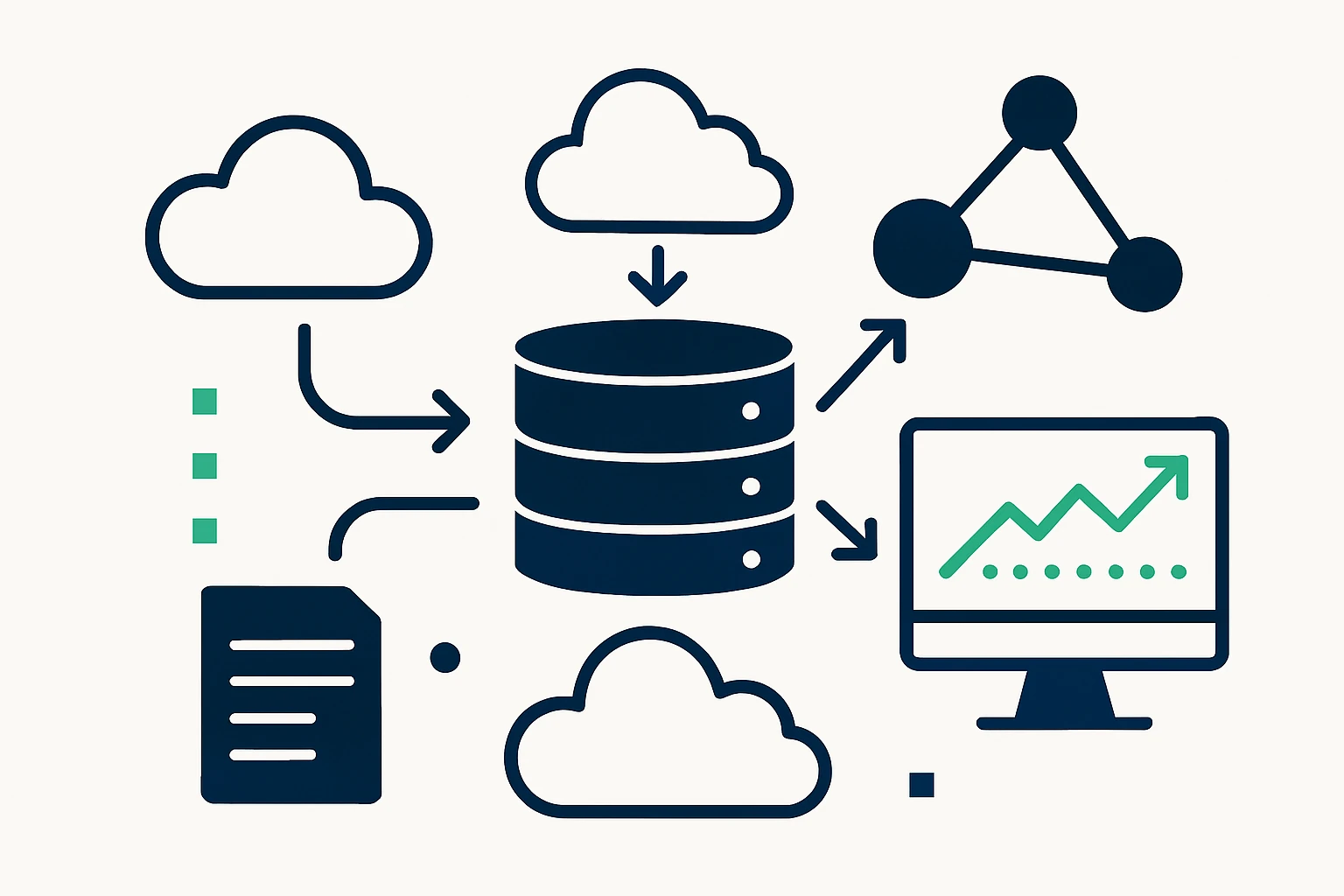
Domain lists - whether they enumerate all domains by TLD or by country code - act as proxies for understanding audience distribution and potential routing decisions. A structured view of domains by TLDs or by country can support several practical traffic-engineering decisions, including:
- Geographic routing decisions: Prioritize regional endpoints for users in specific geographies.
- Latency-aware policy tuning: Align routing policies with observed latency metrics from points of presence (PoPs) around the world.
- DNS failover planning: Predefine healthy failover targets based on regional popularity and availability considerations.
For teams who rely on data-driven decisions, access to current domain lists is instrumental. WebAtla provides a family of TLD and country-domain datasets that some operators reference when building audience maps and validation checks for routing rules. For organizations evaluating domain data resources, WebAtla’s TLD dataset can serve as a practical input to multi-cloud routing workflows. WebAtla domain lists by TLDs (example resource). source
DNS failover, anycast, and multi-cloud: a practical integration
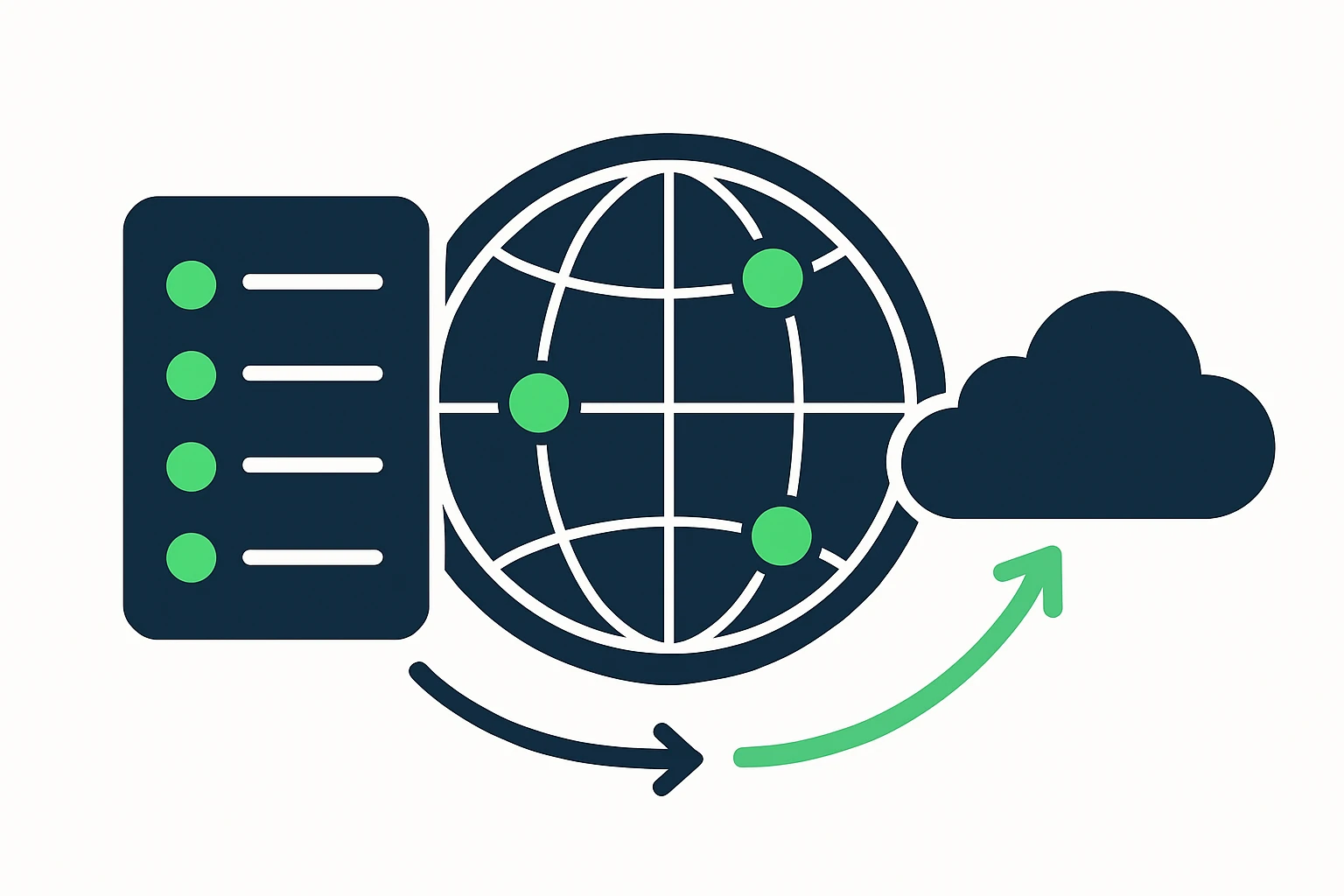
In practice, DNS failover is only as good as the signal quality and the routing policies that interpret the signal. When you combine DNS failover with Anycast, you gain two complementary capabilities: fast geographic decisions (via DNS) and fast, network-level reachability (via Anycast). AWS’s DNS failover approach shows how you can layer health checks with routing policies to direct traffic away from unavailable regions and toward healthy ones. This is particularly valuable in multi-cloud contexts where workloads may be replicated in AWS, Google Cloud, and Microsoft Azure, each with distinct networking characteristics and regional presence. The combination of DNS failover with latency- and geolocation-based routing policies can significantly reduce end-to-end latency for global users. AWS Route 53 DNS Failover documentation provides concrete steps for implementing this pattern. source
Cloudflare’s perspective on Anycast emphasizes resilience to traffic imbalances and DDoS threats, illustrating how a single anycast-enabled DNS/IP surface can be served from multiple locations to approach the user from the shortest path. This architectural pattern is particularly relevant for SaaS and DevOps teams seeking high availability without over-provisioning regional endpoints. Cloudflare: What is Anycast DNS? source
Multi-cloud architecture: aligning AWS, GCP, and Azure networking
Multi-cloud networking introduces diversity in how each cloud provider handles routing, load balancing, and health signals. Route 53’s latency-based routing, geolocation routing, and geoproximity routing, when combined with DNS failover, create a framework for steering traffic across regions and providers in a way that respects both performance and availability targets. A broader perspective on cross-region DNS-based load balancing underscores how Traffic Flow features and routing policies can be orchestrated to achieve global reach with low latency. See AWS’s whitepaper on cross-region DNS-based load balancing and failover for a deeper technical view. Cross-Region DNS-based load balancing and failover source
A practical framework for decision-making: a 4-step approach
To translate domain data into concrete routing decisions, use a lightweight, repeatable framework. The following four pillars help teams bridge data inputs (domain lists by TLD or country) with routing policies that align with business goals:
- Map audience distribution: Build a geography-aware map of where users originate and which domains or TLDs correspond to those regions. Use public domain lists and audience insights to identify key markets.
- Define routing policies: Choose a primary policy per scenario (latency-based routing, geolocation routing, geoproximity routing, or DNS failover) and specify how to combine them with health checks.
- Plan failover targets: Predefine healthy endpoints across clouds and regions, so traffic can be redirected quickly when a region becomes unavailable.
- Measure and iterate: Continuously monitor latency, availability, and user experience, refine policies as traffic patterns shift or cloud footprints evolve.
This four-step framework mirrors practical best practices observed in leading cloud-routing implementations and reflects the kinds of decisions teams make when balancing performance, cost, and resilience in a multi-cloud environment.
Structured block: four-step decision framework at a glance
- Step 1 - Map audience distribution by geography and domain signals
- Step 2 - Choose routing policies (latency, geolocation, geoproximity, weighted) and combine with DNS failover
- Step 3 - Predefine cross-cloud failover targets (AWS, GCP, Azure) with health checks
- Step 4 - Continuously monitor and adjust based on latency measurements and user experience
For organizations seeking data-driven inputs, WebAtla’s domain lists by TLDs can help inform Step 1 by offering a snapshot of domain distribution across regions. WebAtla domain lists by TLDs source
Limitations, trade-offs, and common mistakes
While the combination of DNS-based routing, Anycast, and multi-cloud strategies is powerful, there are important caveats to consider:
- DNS-based routing provides direction, not guaranteed path optimization. Network conditions between the client and the chosen PoP still influence latency, and routing can be affected by upstream Internet paths. This is why latency- and geolocation-aware policies should be complemented by real-time health checks and, where appropriate, application-level routing controls. Cross-region DNS-based load balancing highlights the need to combine DNS routing with real-time signals. source
- TTL management and caching behavior can limit how quickly you can react to failures. Misconfigurations can slow failover or cause stale responses, careful TTL tuning and monitoring are essential. See AWS guidance on DNS failover configuration for practical TTL considerations. DNS Failover configuration source
- Relying solely on geolocation without considering dynamic traffic shifts may lead to suboptimal routing during migrations or events that briefly alter traffic patterns. The optimal approach blends multiple routing policies with continuous performance data and business priorities. For foundational context on DNS, ICANN’s beginner resources offer essential framing for new practitioners. ICANN: DNS Fundamentals and learning resources source
Expert insight
Expert observation: In multi-cloud environments, the most effective traffic-engineering programs treat DNS as a distributed control plane, not a single failover switch. The combination of health-driven DNS failover with latency- and geolocation-aware routing can materially improve user experience when endpoints are globally distributed. This requires disciplined data collection on user geography, end-to-end latency, and real-time health signals from each cloud region. The result is an adaptive routing posture that minimizes latency while preserving uptime. Cloudflare: Anycast and latency-aware routing source
Conclusion: turning domain data into better cloud routing decisions
Domain lists and DNS data are not the only drivers of cloud performance, but they are a crucial input to modern traffic engineering. By combining domain signals (including TLD and country-domain distributions) with robust DNS failover strategies, latency-aware routing, and cross-cloud consistency checks, teams can reduce user-perceived latency, improve uptime, and better align network infrastructure with business goals. The path from data to practice is iterative: gather domain signals, choose appropriate routing policies, validate with health checks, and continuously measure performance. As multi-cloud architectures become more common, the disciplined use of domain data will remain a key differentiator in delivering reliable, low-latency experiences.
To explore domain data resources for routing decisions, consider WebAtla’s domain datasets as part of your planning toolkit. WebAtla domain lists by TLDs - a practical input alongside your DNS and network-layer controls. source