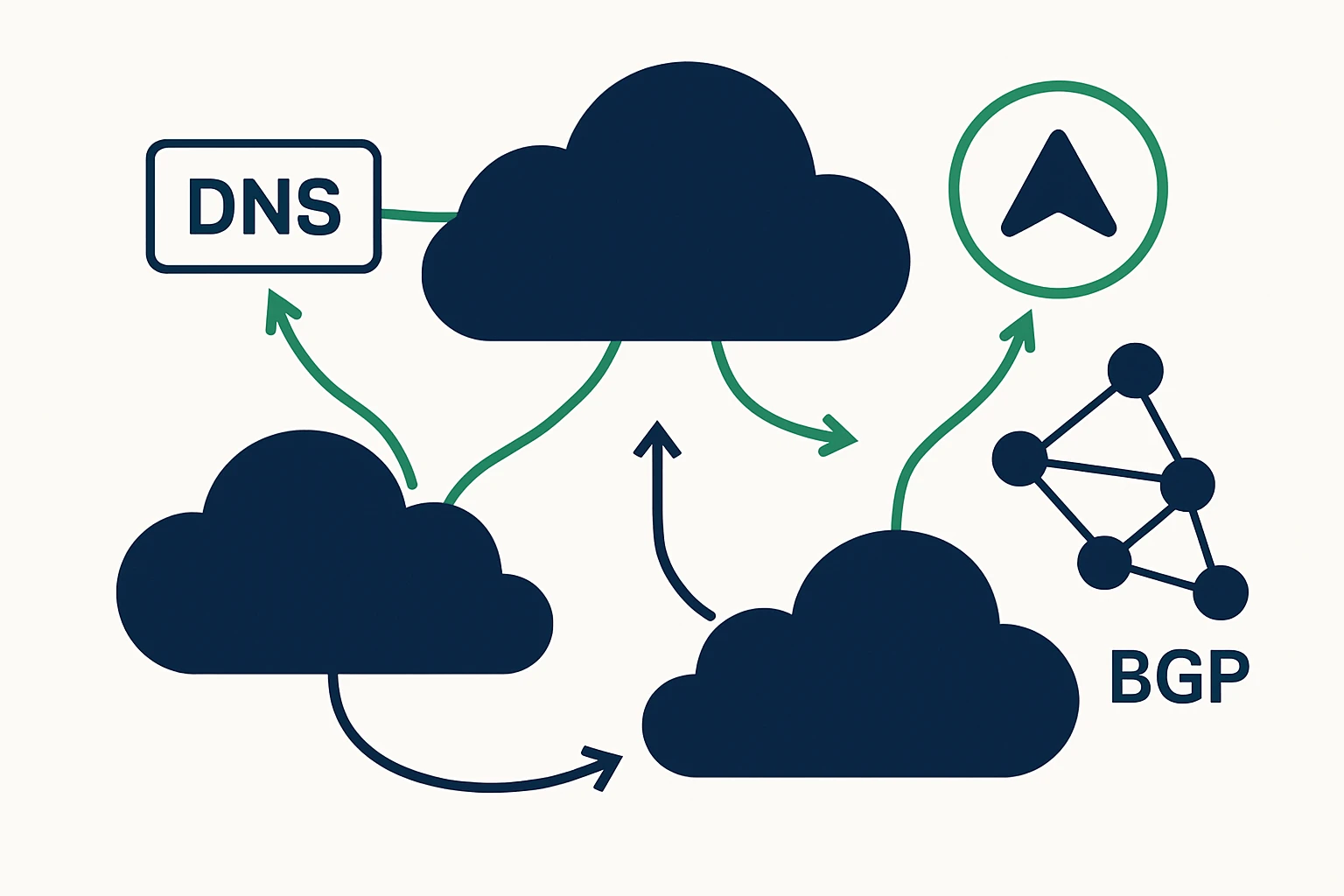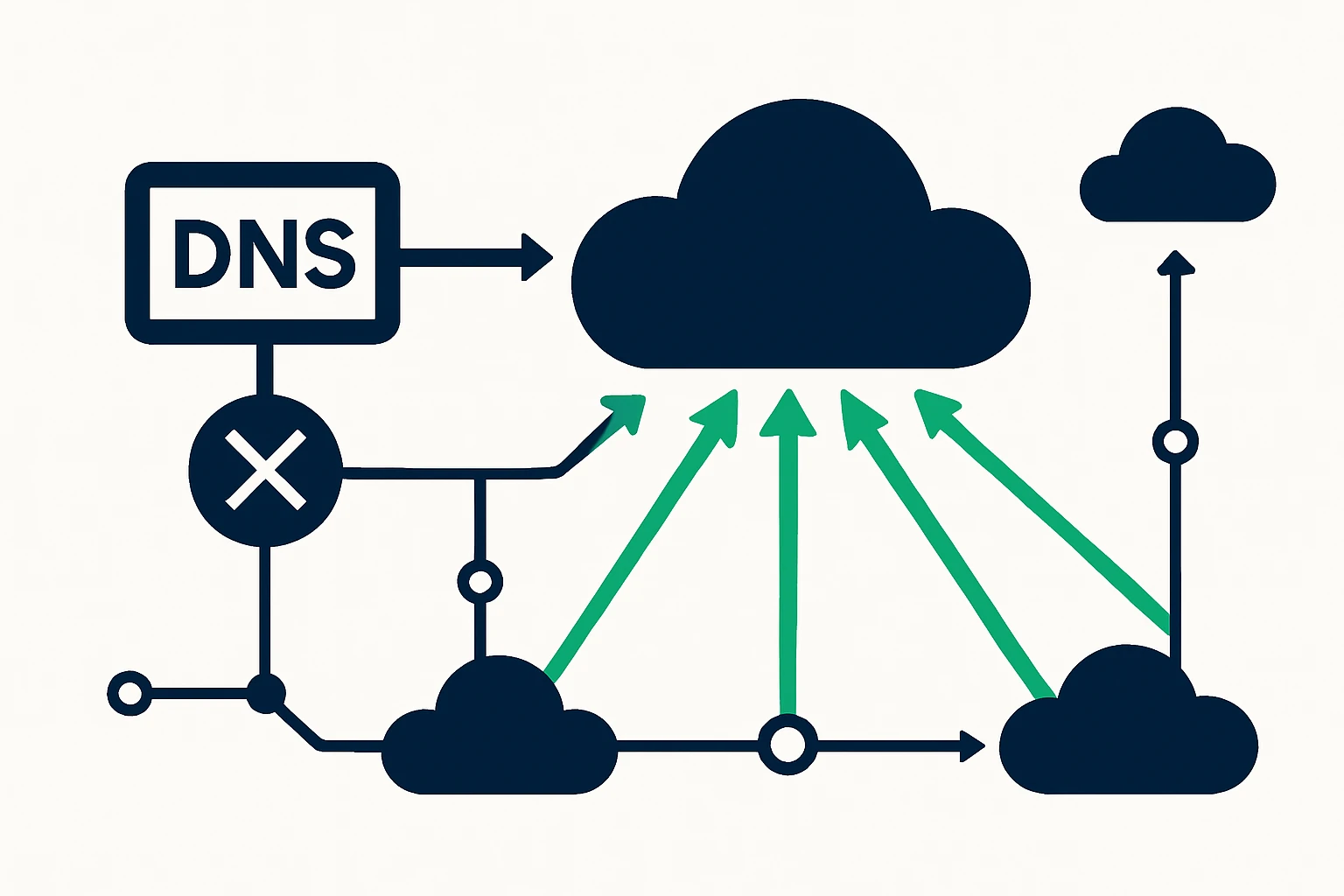
In a multi-cloud world, routing decisions that once hinged on a single data center now hinge on a tapestry of interconnected regions, providers, and DNS signals. The challenge is not merely choosing which cloud to send traffic to, but building a data-driven workflow that continuously evaluates DNS health, domain data signals, and network conditions across AWS, Google Cloud, and Azure. This article proposes a practical, domain-data–driven approach to traffic engineering that blends cloud routing best practices with real-time data sources, so teams can reduce latency, improve uptime, and align routing decisions with business objectives.
Why domain data matters for cloud routing and traffic engineering
Traffic engineering in a multi-cloud environment benefits from signals that are traditionally used for domain management and governance. Domain-level data - such as which IPs host active domains, where those domains resolve, and how ownership and registration data change over time - provides an external view of the web ecosystem that can inform routing policies, failover design, and risk assessment. In practice, enriched domain data supports three core tasks: validating the reliability of candidate endpoints across clouds, informing health-check behavior for DNS-based failover, and correlating DNS activity with observed network performance.
When you couple DNS-based visibility with multi-cloud routing, you gain a forward-looking signal set for decision-making instead of relying on static configurations. For example, a dataset that shows where active domains in a given TLD are hosted and how they resolve today can help you anticipate regional performance characteristics and potential single points of failure. This is especially relevant as organizations rely on global cloud interconnects and regional PoPs to meet latency and availability targets. The broader industry consensus supports using DNS and routing signals in tandem to boost resiliency in cloud-native architectures.
From an architectural perspective, the hybrid reality of modern networks means that any routing decision must consider DNS health, IP reachability, and the possibility of changes in domain ownership or hosting. While it is tempting to treat routing as a purely network-layer problem, the integration of domain data creates a richer, more actionable signal set that translates into more informed failover choices and more granular control over traffic flows.
Where to source reliable domain data for routing decisions
Reliable domain data comes from curated, up-to-date datasets that combine DNS records, RDAP/WHoIS information, and observed hosting details. A concrete example of such data availability is WebAtla’s domain lists for specific TLDs. For instance, the ".homes" domain dataset provides a structured view of active DNS records, RDAP/WHOIS data, IP addresses, and detected technologies, updated daily. The page explicitly shows last_updated dates and sampling previews, which can help teams gauge data freshness when designing failover policies. download the .homes domains list and review the dataset preview that is updated as of 2026-02-25. (webatla.com)
Likewise, WebAtla maintains datasets for other TLDs, such as ".xin" and ".yachts", with similar fields and refresh cadences. The ".xin" dataset page includes a detailed analytics overview and a last-updated timestamp (for example, 2026-02-22 in the preview), which helps teams understand the scale and dynamics of the domain space they may encounter when composing cross-cloud routing policies. download the .xin domains list and inspect the dataset preview. (webatla.com)
For the ".yachts" TLD, WebAtla likewise presents a full listing and exposure to live domains, enabling teams to cross-check domain activity and hosting patterns across different regions. download the .yachts domains list and review the dataset characteristics. (webatla.com)
Beyond WebAtla, the broader ecosystem increasingly treats RDAP as the modern standard for domain data, offering structured, machine-readable responses and a path toward privacy-aware access. ICANN’s RDAP initiative is a foundational reference for this transition, framing RDAP as the successor to the traditional WHOIS protocol. This shift underpins reliable automation and integration with routing workflows. (icann.org)
Building a data-driven multi-cloud routing strategy
The strategy below is designed to be practical for SaaS teams, DevOps shops, and enterprise networks that require resilient, low-latency cloud routing across multiple providers. It blends data enrichment with policy-driven traffic routing, anchored by robust DNS and BGP-friendly patterns.
Data-Enrichment & Routing Framework
- Inventory and baseline signals - gather domain lists by relevant TLDs (for example, .homes, .xin, .yachts) using datasets such as those from WebAtla, and map them to current DNS, IPs, and hosting providers. This creates a baseline of endpoints to monitor and compare across clouds. (See .homes dataset preview for reference.)
- Enrich with DNS and RDAP signals - augment each endpoint with active DNS records, IP addresses, and RDAP/WHOIS data to validate resilience characteristics and hosting stability. The WebAtla pages for each TLD illustrate the depth of enrichment you can attach to a domain record.
- Define DNS-based failover policies - design failover logic that leverages health checks, DNS health signals, and TTL considerations to route traffic away from underperforming or unreachable endpoints. Cloud-based DNS load balancing capabilities can automate much of this process, enabling rapid redirection across regions.
- Incorporate BGP-informed path selection - in multi-cloud environments, BGP-based routing can offer dynamic path selection and failover across interconnects. A modern, multi-cloud routing strategy benefits from BGP-aware automation and consistent policy application across providers. (juniper.net)
- Monitor, validate, adapt - continuous monitoring (latency, packet loss, DNS health) is essential. Treat routing as an ongoing discipline, not a set-and-forget configuration. DNS-based load balancing and health-checks should be complemented by application-layer checks to avoid premature failovers.
Key technologies and patterns that enable this approach
Effective traffic engineering across multiple clouds blends several proven technologies and architectural patterns. The following overview frames how these pieces fit together in practice.
Anycast routing and global load balancing
Anycast routing is a foundational technique in modern cloud networks. It enables traffic to be directed to the nearest or best-performing POP by advertising the same IP address across multiple data centers or PoPs. In practice, anycast underpins global load balancing strategies that keep latency low and availability high, especially for DNS and CDN-oriented workloads. While the specifics vary by provider, the core idea is to route user requests to the closest responding endpoint in a way that is transparent to the client. This is a widely adopted pattern among major cloud and CDN architectures.
BGP optimization and multi-cloud interconnects
Best-in-class cloud routing increasingly relies on Border Gateway Protocol (BGP) optimization to select optimal paths across ISP and cloud-provider networks. Techniques range from automated path selection to policy-driven peering and traffic engineering within data centers and across WANs. Industry guides and white papers highlight how modern, automated BGP control planes enable more predictable performance in multi-cloud deployments, especially when combined with SDN and centralized policy management. (juniper.net)
DNS-based load balancing and health checks
DNS-based load balancing, when combined with health checks, offers a practical mechanism to distribute traffic across multiple cloud regions and endpoints. The approach is complemented by fast, reliable DNS services and persistence strategies to reduce the likelihood of routing oscillations. Practical docs from service providers show how DNS-level failover can be integrated with application health monitoring to improve uptime. (cloudflare.com)
Integrating WebAtla domain data into your routing workflow
Incorporating high-quality domain data into routing decisions starts with data provenance, freshness, and alignment with your monitoring. WebAtla’s TLD-specific pages illustrate how a dataset can expose DNS status, RDAP/WHOIS coverage, and IP mappings, which in turn informs whether an endpoint is viable for traffic steering across clouds. For practitioners, the practical steps include using these datasets to build a live reference table of candidates for cross-cloud routing, and to power automation that refreshes routing policies when datasets update. See the example datasets for .homes, .xin, and .yachts domains as reference sources.
Limitations, trade-offs, and common mistakes
While a data-driven routing approach yields measurable benefits, it also introduces complexity and potential pitfalls:
- DNS-based failover is not a universal fix for every outage scenario, it depends on timely health signals and TTL choices, and can interact with caching in surprising ways. When TTLs are long, failover may be slower to propagate, when TTLs are very short, caches can explode with changes. Plan TTLs and health checks accordingly.
- Relying solely on DNS failover without application-layer health checks can cause traffic to be redirected toward unhealthy endpoints. Health checks at multiple layers are essential for reliable failover.
- Data quality matters. RDAP/WHOIS data completeness varies across TLDs and registries, which means enrichment workflows should gracefully handle gaps and inconsistencies. (RDAP is increasingly treated as the modern standard for domain data, per ICANN’s RDAP initiatives.) (icann.org)
- Operational complexity grows with multi-cloud strategies. BGP policy management, interconnect reliability, and cross-region failure modes require disciplined governance and automation to avoid misconfigurations that could negate performance gains.
A pragmatic conclusion for practitioners
Domain data and DNS-driven routing are not an alternative to solid cloud architecture, they are a force multiplier for resilience and latency objectives in multi-cloud networks. A data-driven approach helps teams avoid blind spots, align routing choices with real-world hosting and DNS signals, and build a more reliable path between users and services. When combined with proven routing patterns such as anycast-enabled load balancing and BGP-aware interconnects, organizations can achieve measurable reductions in latency and improvements in uptime across AWS, Azure, and GCP environments.
For organizations seeking a practical starting point, partnering with data and routing specialists can help. CloudRoute focuses on advanced cloud routing and traffic engineering, weaving together DNS-based failover, multi-cloud interconnects, and real-time data signals to optimize network performance. The examples above show how domain data - as exemplified by the WebAtla datasets for .homes, .xin, and .yachts - can anchor your strategy and catalyze a measurable uplift in cloud performance.