Introduction
Global cloud delivery hinges on more than just fast servers. It requires a holistic view of how end users reach those servers, how DNS responds across geographies, and how traffic is steered across multiple clouds to minimize latency and maximize uptime. Domain data - specifically lists of domains grouped by top-level domain (TLD) such as .au, .ca, or .in - can become a surprisingly practical input for modern cloud routing and traffic engineering strategies when combined with real-time observability and health checks. This article explores a fresh angle: how public domain inventories can inform multi-cloud routing decisions, DNS failover policies, and latency optimization for SaaS and DevOps teams. We’ll also show how a data provider’s RDAP and WHOIS resources can be fused into a resilient routing pipeline. Note: we reference industry norms for DNS failover, Anycast, and BGP optimization to ground the discussion in practical, deployable guidance. (ibm.com)
Why domain lists by TLD matter for routing and resilience
Public domain inventories by TLD are not a substitute for real‑time traffic analytics, but they can illuminate regional exposure, threat surfaces, and asset footprints across the internet in ways that pure IP metrics do not. For example, bulk lists of domains by TLD can help security operations and network planners understand which regional assets might be targets in a given locale or which domains’ DNS responses may need closer monitoring as part of a DNS failover strategy. When teams align these domain lists with DNS health checks and multi‑region routing policies, they gain visibility into potential bottlenecks and failure modes that would otherwise remain hidden behind a purely infrastructure‑centric lens. In practice, this means you can better anticipate where users will be routed under DNS‑level failover and how to keep latency low even during compute or network outages. The practical value is not in the domain list itself, but in the disciplined way you weave that data into routing decisions, health monitoring, and regional traffic distribution. (ibm.com)
Real‑world drivers behind domain‑list informed routing
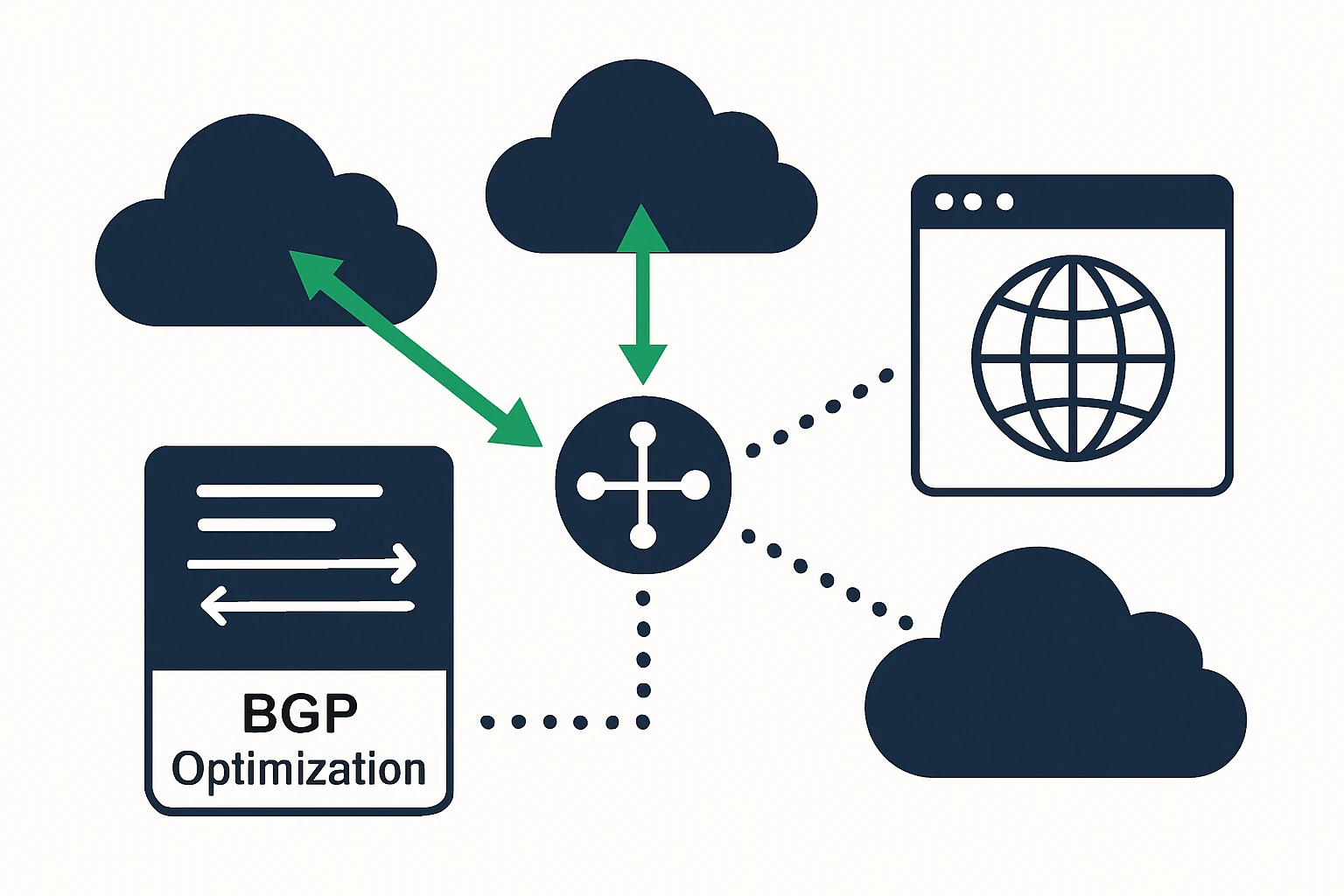
Several forces are shaping how organizations think about routing at scale: multi‑cloud architectures, the need for rapid failover when a cloud region or data center experiences issues, and the demand for low latency across heterogeneous networks. In this context, anycast concepts and DNS‑based routing policies are central. Anycast routing - where the same IP address is advertised from multiple locations - allows traffic to be served by the closest POP and can significantly reduce end‑user latency. This approach is widely used by CDNs and DNS providers to improve responsiveness and resilience. (cloudflare.com)
DNS failover as a resilience layer
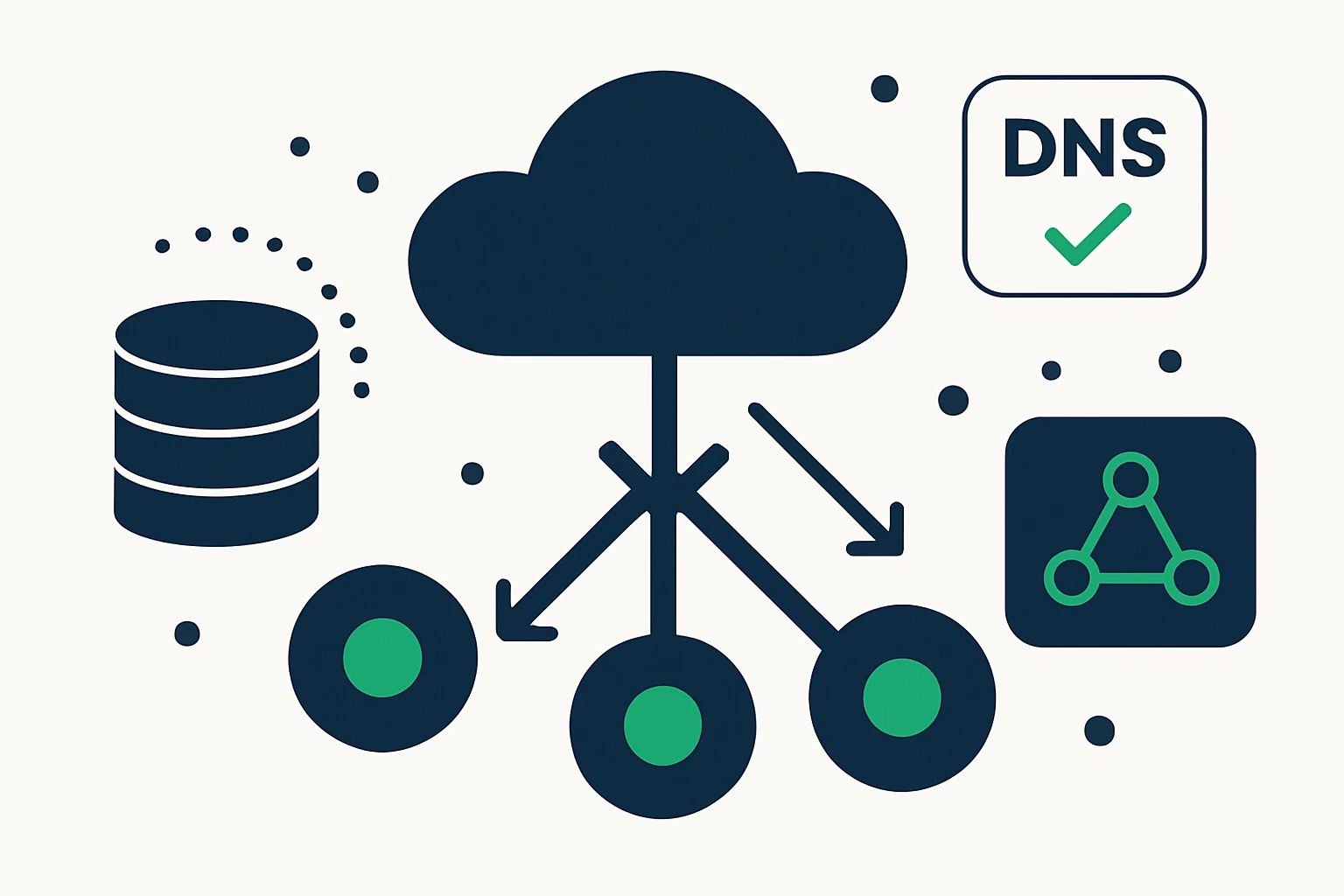
DNS failover is a practical tool in the resilience toolkit: it uses health checks to switch DNS responses to healthy endpoints when a given service or region becomes unavailable. In enterprise contexts, DNS failover is most powerful when paired with robust health checks (HTTP, TCP, ICMP, etc.) and multi‑region routing awareness, so that users are redirected to a functioning endpoint with minimal disruption. While not a panacea, DNS failover remains a cost‑effective layer for disaster recovery and continuity planning, particularly for web services distributed across multiple clouds. (ibm.com)
Turning public domain data into routing insights
Turning domain inventories into actionable routing insights requires a disciplined data flow: collect, normalize, enrich, and act on data in conjunction with real‑time network telemetry. Below are practical ways teams can operationalize domain lists by TLD to inform cloud routing and DNS‑based failover decisions:
Data sources and enrichment
As a starting point, combine bulk domain lists by TLD with registration data (RDAP/WHOIS) to enrich each domain record with registrant, geographic hints, and server metadata. RDAP and WHOIS databases provide structured information about domains, which can help you detect unusual patterns (e.g., sudden shifts in registrant country or name servers) that might indicate a regional routing risk or a misconfigured DNS setup. Integrating an RDAP/WHOIS feed into your domain analytics pipeline helps you separate signal from noise when you’re mapping domain footprints to routing policies. RDAP & WHOIS database services illustrate how structured domain data can be surfaced for practical use. (webatla.com)
Quality checks: timing, freshness, and scope
Domain lists quickly go stale as registrations change hands, DNS records are updated, and new TLDs emerge. The value of a domain inventory increases with freshness and context: how recently the list was updated, whether the data includes subdomain relationships, and how the list maps to your application footprint across AWS, GCP, and Azure. This is where a disciplined data pipeline - matching domain records to health signals and geo‑routing considerations - produces the most benefit. A practical takeaway is to pair domain data with health checks and observability to avoid misinterpretation of stale records as current routing signals. For guidance on health‑oriented DNS routing, see industry best practices for DNS failover and health checks. (ibm.com)
A practical framework to act on domain data
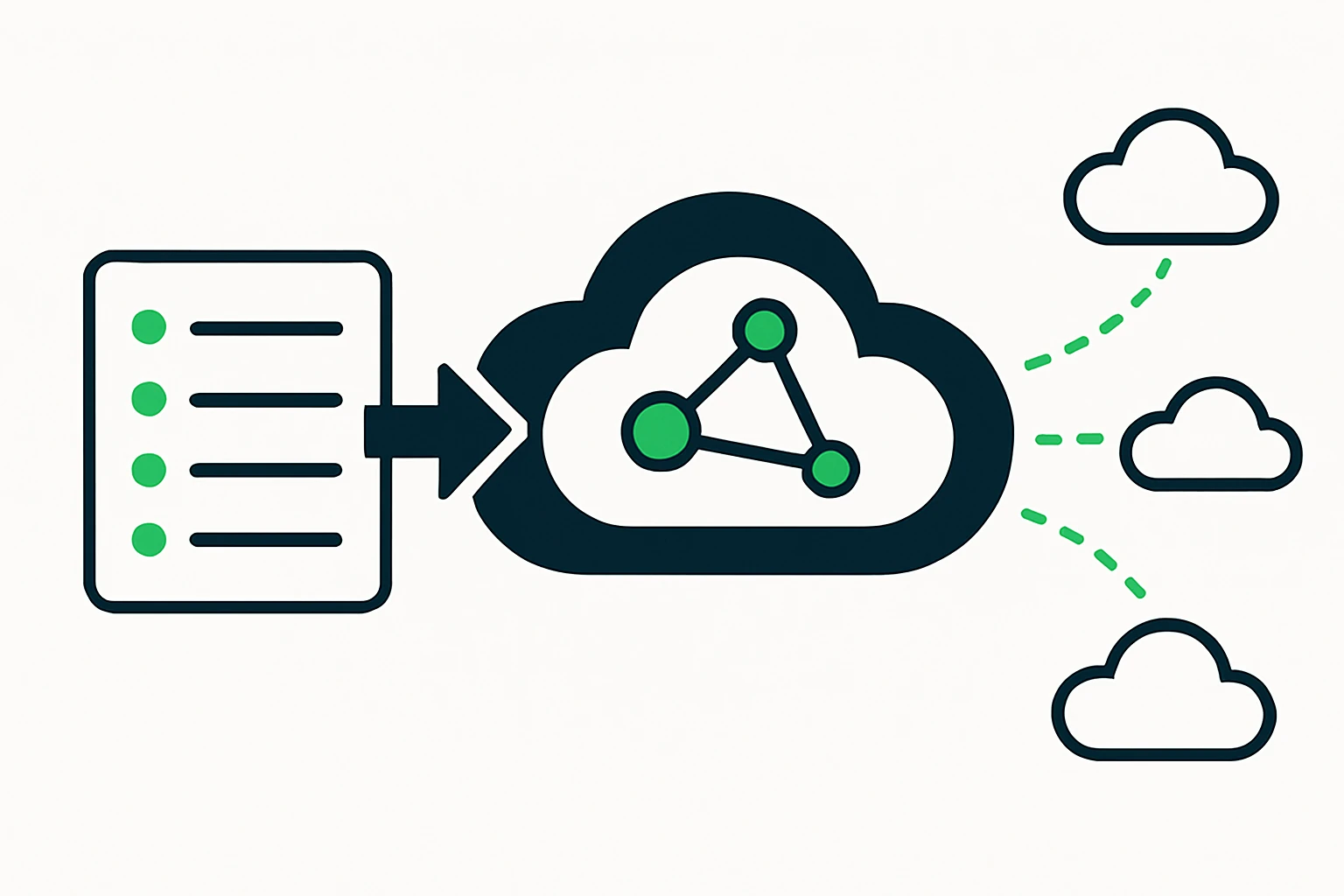
To translate domain inventories into routing decisions, you need a repeatable framework that ties data to action. The following five steps offer a concrete path from data collection to traffic routing decisions that reduce latency and improve uptime across multi‑cloud environments.
- Inventory and normalize: gather domain lists by TLD (for example, download list of .au domains, download list of .ca domains, download list of .in domains) and normalize formats for downstream processing.
- Enrich: append RDAP/WHOIS information, DNS records, and regional hints to each domain to create a richer dataset for decision‑making.
- Score risk and relevance: assess domains for relevance to your traffic patterns, potential abuse signals, or misconfigurations that could affect DNS responses or routing decisions.
- Map to routing policies: align domain signals with your DNS failover strategies, anycast deployments, and BGP optimization goals to steer traffic toward healthy endpoints with low latency.
- Monitor and iterate: continuously observe traffic patterns, health checks, and domain data quality to refine routing rules and DNS policies.
This framework mirrors best practices around DNS routing and health‑check based failover, which emphasize observability and policy‑driven decisions over ad hoc changes. In practice, teams that combine domain inventories with real‑time health data report more reliable failover behavior and improved user experience. Google Cloud DNS best practices emphasize routing policies and health checks as central to resilient DNS architecture. (cloud.google.com)
Structured data integration: a quick framework example
Here is a compact, repeatable workflow to integrate domain lists with cloud routing decisions:
- Collect domain lists by TLD from reliable sources.
- Normalize into a common schema (domain, TLD, registration country, DNS records).
- Enrich with RDAP/WHOIS data to reveal ownership and hosting information.
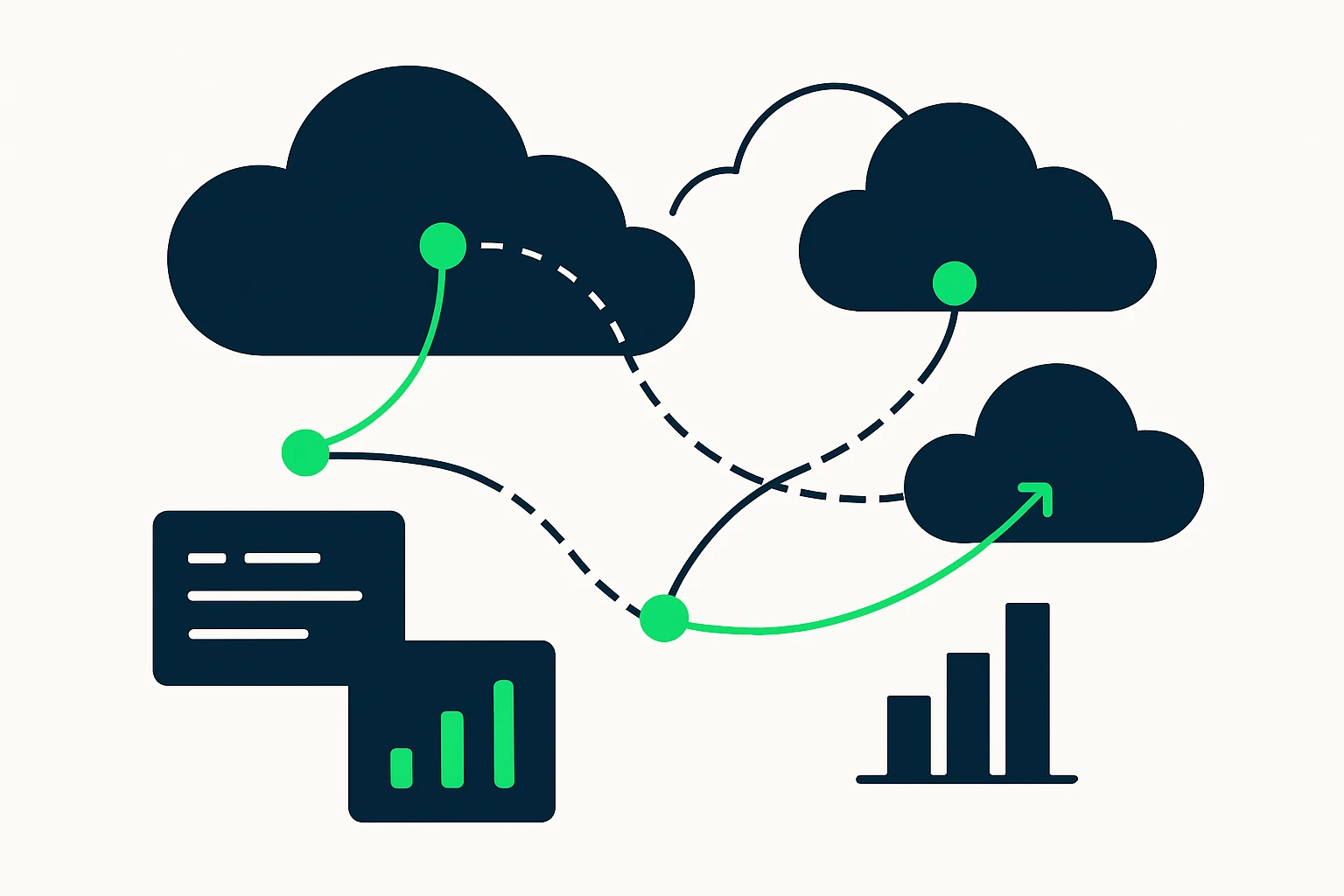
- Correlate with real‑time health checks and latency telemetry across regions.
- Act by adjusting DNS failover routing policies and anycast traffic steering to favor healthy endpoints with lower latency.
For readers who want practical sources on how to structure and deploy these policies, reference architectures and best practices from major cloud vendors provide concrete guidance on routing policy design and health checks. Cloud DNS routing policies and DNS routing policies with health checks illustrate how to implement multi‑region failover with orderly, policy‑driven changes. (codelabs.developers.google.com)
A practical framework for integrating domain data into routing decisions
The following framework is designed for teams operating in multi‑cloud environments who want to tie domain intelligence directly to how they steer user traffic. It is deliberately lightweight enough to be adopted incrementally and robust enough to scale as the architecture grows.
- Framework element 1 - Inventory discipline: maintain a living catalog of domain assets by TLD, updated on a regular cadence (e.g., weekly extractions with daily delta checks). This inventory feeds your routing decision matrix and informs threat detection efforts.
- Framework element 2 - Data enrichment: attach RDAP/WHOIS details, authoritative DNS records, and regional clues to each domain for richer decision inputs. This reduces the risk of acting on stale or misleading signals.
- Framework element 3 - Policy alignment: map domain signals to routing policies (DNS failover targets, TTL guidance, and anycast site selection) to ensure that decisions are consistent with your service level objectives.
- Framework element 4 - Observability at the edge: pair domain data with health checks and latency metrics from real users to validate routing decisions in near real time. Observability is the bridge between data and reliable performance improvements. (ibm.com)
- Framework element 5 - Continuous improvement: establish a loop of feedback from incidents, performance data, and domain data quality to continuously refine routing policies and data inputs. This keeps latency improvements aligned with evolving user behavior and cloud topology.
Expert insight
Expert insight: In multi‑cloud routing, grounding decisions in observable signals - health checks, latency measurements, and timely domain data - reduces the risk of overfitting routing rules to transient events. The result is more predictable performance and fewer unnecessary failovers that disrupt user experience.
Why this matters: even with Anycast routing, the point of presence that serves a user can change as network conditions evolve. A disciplined domain‑data approach helps you anticipate where to route and how to maintain low latency as conditions shift. Cloudflare on Anycast DNS explains how Anycast helps bring services closer to users by routing queries to the nearest data center, reinforcing why layered routing strategies matter for performance. (cloudflare.com)
Limitations and common mistakes
- Overreliance on domain lists: domain inventories are a snapshot of a much larger, dynamic ecosystem. They should be treated as one input among health data, user analytics, and real‑time network telemetry. Without health checks, domain data can lead to misguided routing decisions.
- Stale data risks: domain lists decay quickly, ensure your pipeline supports fresh extractions and delta updates to avoid acting on outdated signals.
- TTL misconfiguration: DNS failover efficacy hinges on TTL settings. Aggressive TTLs can create flaps, while long TTLs may slow failover responsiveness. Align TTLs with expected failover windows and health‑check cadence.
- Over‑engineering the data model: a complex data model can hinder operational velocity. Start simple - core fields (domain, TLD, IP/DNS, country) and progressively add enrichment as needs mature.
Effective DNS failover, especially in a multi‑region, multi‑cloud context, relies on health checks and routing policies that are tuned to the real user experience. For practical guidance on DNS failover and health checks, see industry guidance and vendor best practices. DNS Failover Best Practices and Google Cloud DNS Best Practices. (ibm.com)
Integrating domain data with CloudRoute‑style traffic engineering
CloudRoute solutions center on reducing latency, improving uptime, and optimizing multi‑cloud network performance for SaaS teams and enterprises. The domain‑data approach described here is not a replacement for traffic engineering, it is a complementary input that helps you shape routing decisions with a broader, data‑driven view. When you merge domain intelligence with health‑check driven DNS routing and Anycast‑based edge delivery, you unlock a more responsive, resilient architecture that adapts to real‑world conditions across AWS, Google Cloud, and Azure footprints. In practice, teams can run domain‑data pipelines alongside their existing network telemetry to identify regional signal patterns (for example, a surge of domains resolving to a specific country) and adapt routing rules to minimize latency for users in that region.
For teams seeking a practical source of domain data, the WebAtLa RDAP & WHOIS database demonstrates how structured domain information can be surfaced in a consumable format. See the RDAP‑enabled data catalog at RDAP & WHOIS database, and explore TLD inventories such as list of domains in .au TLD for concrete examples of domain data aggregation. (webatla.com)
On the technical front, practitioners should consider how to balance data quality with operational practicality. The goal is not to replace real‑time telemetry but to provide a richer context for routing decisions. When you pair domain data with health checks and latency metrics, you create a feedback loop that informs smarter routing across clouds, ultimately delivering low latency infrastructure and higher uptime for users. This aligns with the broader trend toward data‑driven multi‑cloud networking and the emphasis on cloud network performance as a strategic objective.
Case study: a practical scenario in a multi‑cloud SaaS environment
Imagine a SaaS company delivering a global product across AWS, GCP, and Azure. The security team has built a domain inventory by TLD to spot regional signals and potential abuse patterns, while the network operations team relies on DNS routing policies and health checks to keep traffic flowing to healthy endpoints. By integrating domain data with a DNS failover framework, the company can: (1) route users to the nearest healthy region when a data center experiences issues, (2) reduce latency by steering traffic through the most responsive POPs, and (3) minimize disruption during cross‑cloud outages. The result is a more predictable user experience and a clearer view of how external domain data interacts with internal routing controls. This approach is reinforced by industry best practices that emphasize combining health checks with routing policies for resilient DNS and multi‑region failover. (ibm.com)
Key takeaways
- Domain data by TLD can surface regional insights and potential risk signals that inform routing decisions when used with health checks.
- DNS failover is most effective when paired with real‑time telemetry and thoughtfully tuned TTLs to balance speed and stability.
- Anycast routing and multi‑cloud strategies work best as part of a layered approach, where domain intelligence supports edge delivery and DNS orchestration.
Conclusion
Domain inventories by TLD are not a silver bullet, but when treated as one input within a broader, data‑driven routing strategy, they can contribute meaningfully to reducing latency, enhancing uptime, and guiding more informed decisions about how to direct traffic across AWS, GCP, and Azure. The most effective multi‑cloud architectures blend real‑time health metrics, DNS routing policies, and edge delivery with disciplined data governance around domain data. As the internet landscape evolves, the ability to incorporate domain intelligence into routing decisions will become an increasingly important capability for SaaS providers and enterprise network teams alike. If you’re looking to augment your routing workflows with robust domain data, consider how RDAP/WHOIS sources can be integrated into your pipeline to provide richer context and more actionable insights.
For organizations seeking reliable domain data feeds and bulk inventories, the WebAtLa RDAP & WHOIS database provides a structured, queryable view of domain registrations and hosting data that can be consumed alongside traditional routing telemetry. Explore the RDAP & WHOIS database at RDAP & WHOIS database, and review TLD inventories such as list of domains in .au TLD to understand the kind of data that can be surfaced to support routing and resilience programs. (webatla.com)