Global cloud routing and DNS-driven traffic engineering: a practical guide for multi-cloud SaaS
Latency is not just a metric - it’s a competitive differentiator. For SaaS teams delivering across geographies, the path a user’s request takes depends on a constellation of routing choices, DNS behavior, and where workloads live in public clouds. A robust routing and traffic-engineering strategy must blend edge proximity (to minimize physical distance) with intelligent control planes (to steer traffic based on health, load, and policy). In this guide, we break down how cloud routing optimization, anycast and BGP-based routing, and DNS failover strategies come together in multi-cloud environments. We also show how geo-targeting and country-code domains can play a meaningful role in performance, reliability, and SEO - without sacrificing user experience.
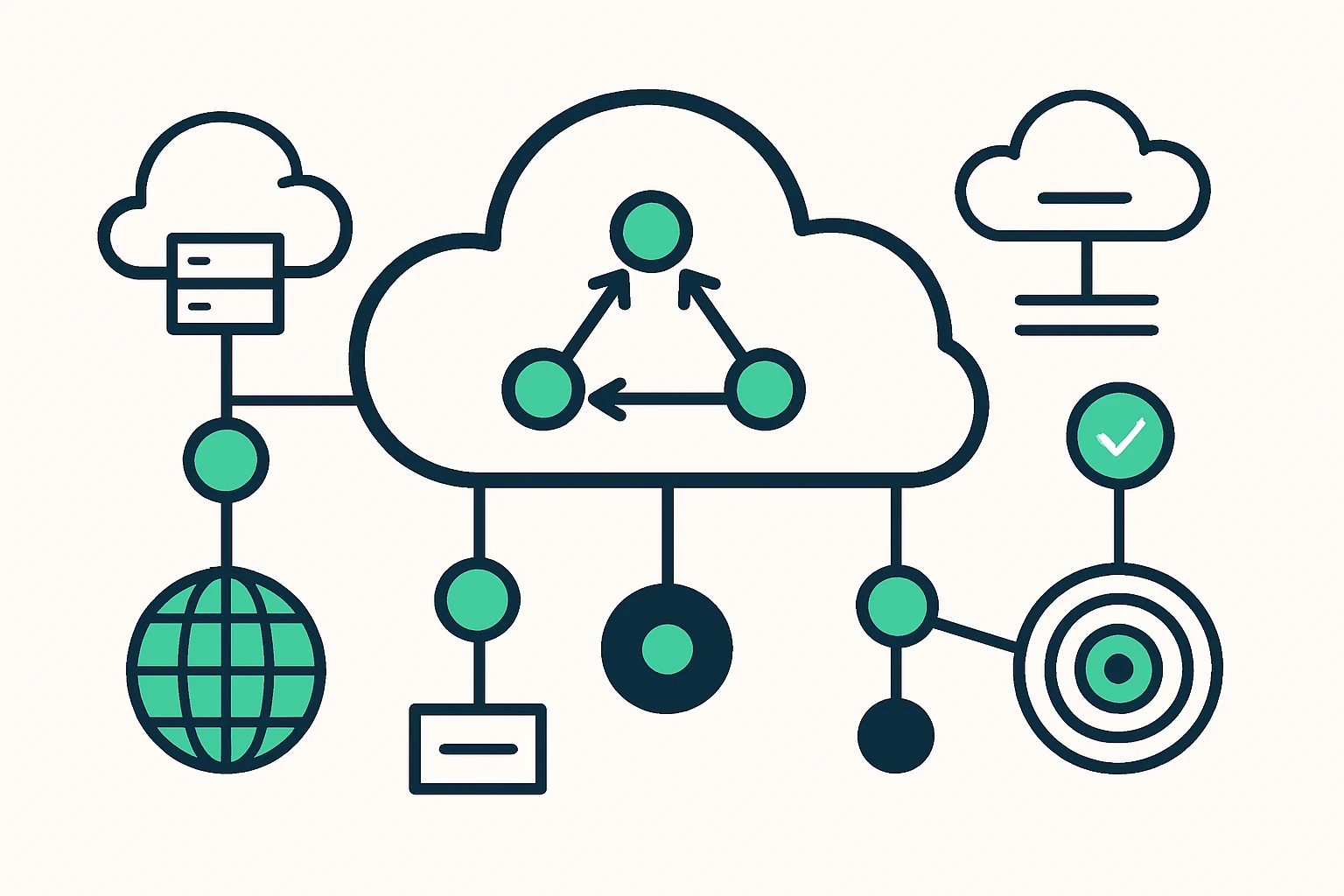
For organizations pursuing global footprints, the combination of edge routing, anycast delivery, and DNS-aware decision-making is increasingly the baseline for low latency infrastructure. Cloudflare, AWS, and Google Cloud all illustrate how to push traffic toward the closest healthy edge while maintaining visibility and control across regions. In short: your routing stack should know where your users are, how your services are deployed across clouds, and how to fail over gracefully when disturbances occur. Cloudflare’s Anycast DNS overview and AWS Global Accelerator documentation provide foundational context for edge-aware routing, while Google Cloud’s global load balancing demonstrates the power of a single anycast IP across regions.
Understanding the core primitives: how modern routing tech reduces latency
Anycast at the edge: routing users to the nearest healthy point
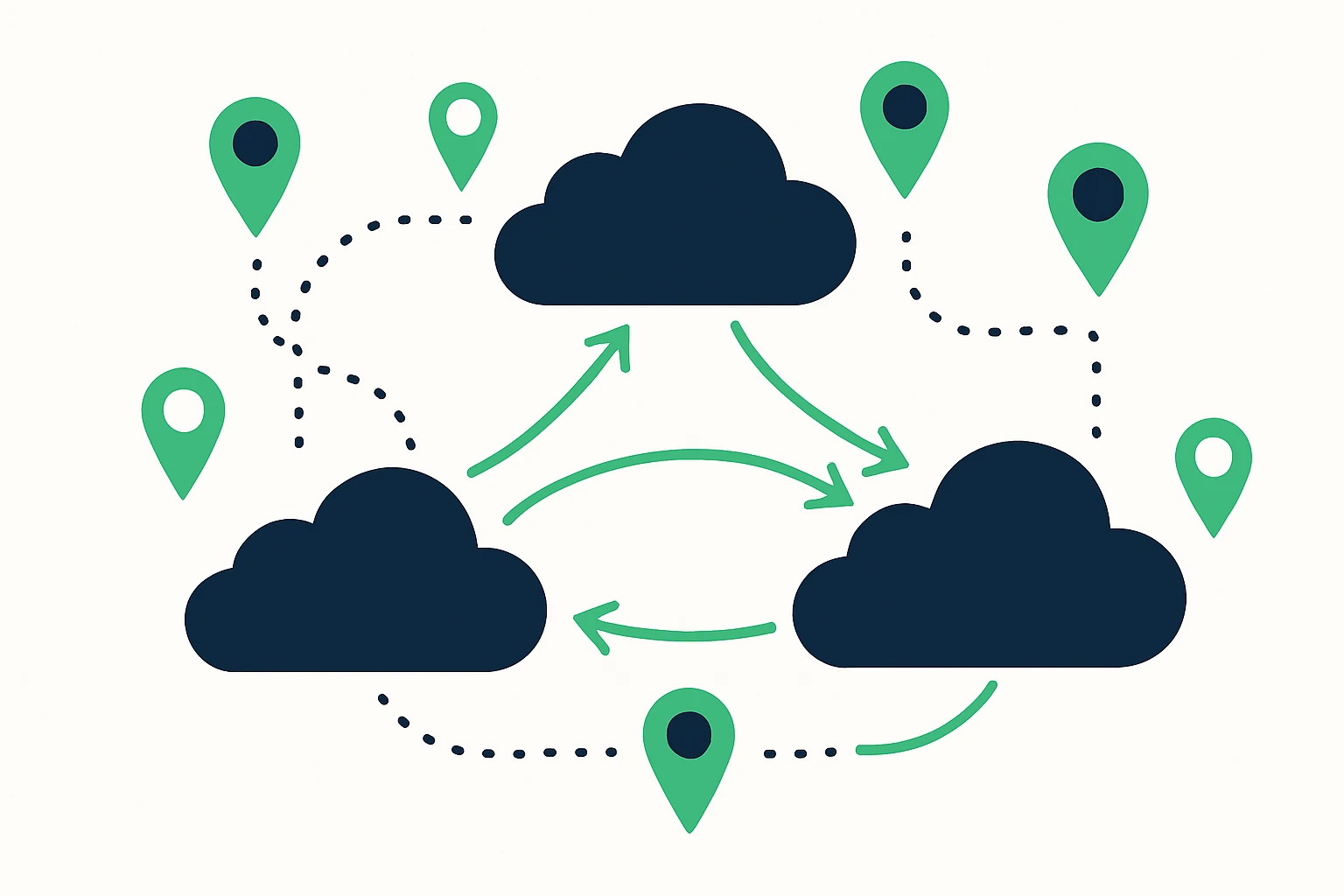
Anycast allows multiple geographically distributed servers to share the same IP address. When a client initiates a request, the network routing infrastructure directs it to the nearest data center or edge location that advertises that address. This mechanism is a foundational enabler for ultra-low latency delivery and fast failover, because traffic is steered by network topology rather than by a central application endpoint. This approach is a core component of Google Cloud’s Global External HTTP(S) Load Balancer and its Maglev-based edge distribution, which routes traffic to the closest available edge location via a single anycast VIP. Google Cloud Load Balancing overview.
Similarly, the AWS Global Accelerator uses the AWS global network to select regional endpoints based on health, location, and configured policies, delivering improved availability and performance for global applications. What is AWS Global Accelerator?
BGP optimization and traffic engineering: steering at the network layer
BGP-based traffic engineering lets operators influence inbound and outbound paths by manipulating routing policies, AS-path preferences, and prefix announcements. While BGP alone cannot guarantee perfect latency minimization, it provides a control plane to prefer nearer, healthier paths and to react quickly to outages. Combined with health-based routing and edge reach, BGP optimization reduces time-to-travel for critical workloads and improves resilience. For more context on the principles and the role of traffic engineering in dynamic networks, see technical primers and practitioner guides in the field of Anycast and BGP-enabled routing.
DNS failover and health-aware DNS steering: intelligent resolution, not just fast servers
DNS failover strategies partner with edge routing to divert traffic away from failing regions or clouds. When a target becomes unhealthy, DNS-based redirection can point users to healthy endpoints in another region or cloud, dramatically reducing disruption time when incidents occur. It’s important to couple DNS failover with real-time health checks and to keep TTLs in a sensible range to avoid stale resolutions. In practice, DNS failover should be part of a broader reliability strategy that includes synthetic monitoring, active-active deployments, and cross-cloud redundancy.
Practitioners increasingly rely on managed DNS services and DNS failover patterns as part of a layered resilience plan. Industry perspectives and case studies discuss practical approaches to DNS-based redirection and the role of DNS in disaster recovery.
Geo-targeting, country-code domains, and their role in routing and SEO
Beyond pure performance, geo-targeting signals - such as language, locale, and country-specific content - play a meaningful role in user experience and SEO. Country-code top-level domains (ccTLDs) and region-targeted content can align with local regulations, currencies, and marketing programs, while routing strategies ensure that users access the nearest, compliant, and fast-hosted version of a service. The synergy between geo-targeting and traffic engineering becomes particularly potent when workloads are distributed across multi-cloud infrastructures, with edge nodes and regional POPs delivering localized experiences. For insights into how domain strategy and local availability affect performance, see reputable sources on anycast and global load balancing as well as DNS resilience best practices.
For teams exploring country-targeted content, projects like WebAtla’s country-focused domain lists offer a practical map of where domains exist and how they can be organized by country or by TLD. This kind of data can inform decisions about where to place regional edges, how to structure DNS failover, and how to comply with local data regulations. WebAtla: Websites by country and WebAtla: Domains by TLD provide concrete references for geo-aware strategies.
A pragmatic framework for multi-cloud routing and traffic engineering
Successful multi-cloud routing is not a single technology, it’s a disciplined approach that blends edge delivery, routing policies, DNS intelligence, and continuous measurement. The following framework is practical for teams starting from a middle-ground position - neither purely DIY nor fully managed - while staying aligned with the keywords and intent in this topic.
-
Define objectives and constraints
- Latency targets by geography and cloud region
- Uptime and disaster-recovery requirements
- Compliance, data locality, and cost considerations
-
Profile the workload and geography
- Map workloads to primary regions in AWS, GCP, and Azure
- Characterize user distribution by country and language preferences
- Identify critical paths that determine end-user experience
-
Choose routing primitives that align with goals
- Anycast deployment at edge for fastest routing to the nearest PoP
- BGP policy customization to favor optimal interconnects
- DNS-based failover for rapid redirection during regional outages
-
Institutionalize health and performance visibility
- End-user latency metrics, synthetic checks, and real-user monitoring
- Region- and cloud-specific health dashboards
- Change-management guardrails for routing adjustments
-
Test, iterate, and harden
- Run controlled failover drills across clouds and regions
- Validate DNS TTLs and failover timing against SLAs
- Assess edge capacity and peering diversity to avoid single points of failure
-
Operationalize and monitor continuously
- Automated health checks and alerting for routing changes
- Regular reviews of latency and uptime against targets
- Ongoing alignment with geo-targeting and ccTLD usage
This framework reflects a practical path from strategy to execution, balancing the editorial goals of multi-cloud routing with the realities of global traffic management. For additional context on global routing and edge deployment, see Cloudflare’s Anycast primer, AWS Global Accelerator docs, and Google Cloud’s Global Load Balancing overview.
Practical integration with WebAtla’s domain data: country-first routing in the wild
Geo-aware routing benefits from reliable signals about where domains are registered, hosted, or targeted. For teams evaluating how to structure content delivery around country-specific audiences, WebAtla’s country-focused domain catalog offers a real-world resource to map domain presence to geographic strategy. By understanding which markets host country-code or country-branded domains, teams can design edge and DNS strategies that respect locality, language, and regulatory considerations while preserving performance. WebAtla: Websites by country provides a concrete reference point for this planning, and the broader WebAtla: Domains by TLD view helps illuminate how ccTLDs map to regional content strategies.
Limitations, trade-offs, and common mistakes
No routing strategy is free of trade-offs. Some of the most common missteps include over-reliance on DNS failover without robust application-layer health checks, or assuming that a single anycast IP can perfectly balance load across dozens of regions. DNS failover depends on timely health signals and DNS TTLs, misconfigurations can cause delayed failover or flapping between endpoints. For complex multi-cloud deployments, a lack of visibility into cross-cloud latency and inter-region dynamics can lead to suboptimal routing decisions. A measured approach - combining edge delivery, health-aware DNS, and policy-driven BGP optimization - tends to deliver the best balance of latency, resilience, and control. DNS-based failover best practices and External DNS resiliency best practices offer practical guardrails to avoid common pitfalls.
Limitations and trade-offs in practice
- Edge placement and peering vary by region, a data center in one city may not always be the fastest for a given country, due to interconnect congestion or ISP routing changes.
- TTL tuning for DNS failover is a double-edged sword: shorter TTLs enable faster failover but increase query load and potential DNS cache churn.
- Anycast improves latency for many users but can complicate troubleshooting, since the traffic path is determined by the network and may not map neatly to a single data center.
- Cross-cloud routing adds complexity in policy management, cost, and compliance, it requires clear ownership of routing decisions across clouds.
Expert insight
Expert perspective from a seasoned network architect emphasizes the practical reality: edge proximity paired with health-aware routing and DNS intelligence is the gatekeeper of low latency in multi-cloud deployments. The combination of edge distribution (anycast), intelligent path selection (BGP optimization), and resilient DNS routing provides the most reliable foundation for latency-sensitive SaaS experiences across geographies. This triad, when orchestrated well, minimizes cold-path travel time and shortens the recovery window during outages.
Conclusion
As SaaS platforms scale globally, the expectation is simple: users experience fast, reliable access no matter where they are. Achieving that experience requires a deliberate architecture that blends edge routing, network-level optimization, and DNS-driven traffic steering with geo-aware content strategies. By integrating anycast and global load balancing with DNS failover, and by using country-focused domain data to inform localization and routing decisions, teams can reduce latency, improve uptime, and deliver consistent experiences across AWS, Google Cloud, and Azure footprints. For organizations exploring country-targeted content and ccTLD strategies, WebAtla’s country-focused domain data can be a valuable input for planning edge deployments and DNS routing decisions.
Key takeaways: start with a clear latency and uptime goal, deploy edge-aware routing and health checks, align DNS failover with real-time health data, and leverage geo-targeting signals to optimize both user experience and SEO. The modern routing stack is not a single lever but a coordinated set of controls that must be monitored and refined over time.