Introduction: the why and the what of multi-cloud traffic engineering
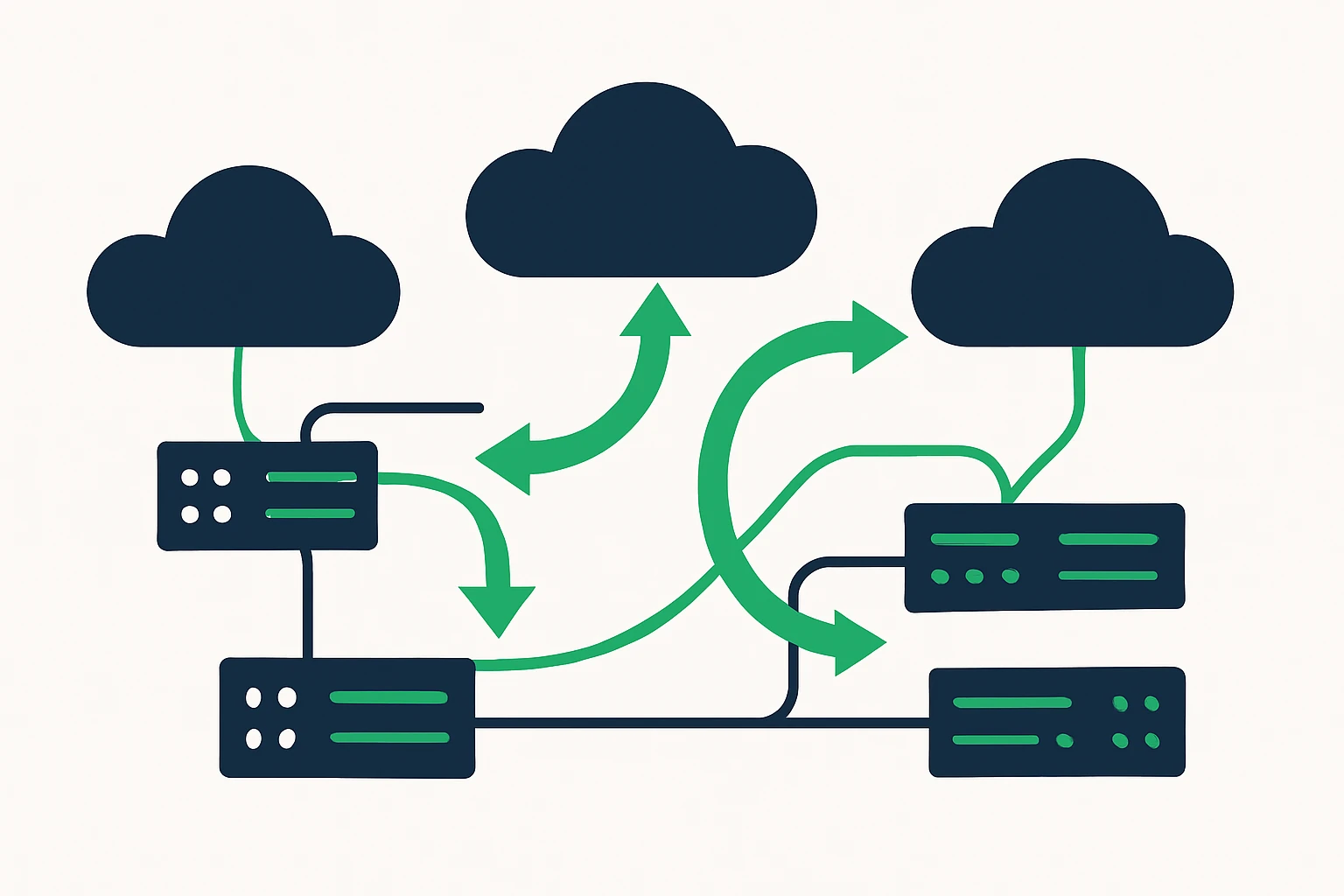
Today’s SaaS and enterprise environments routinely span multiple cloud providers - AWS, Google Cloud, and Azure among them - plus regional colo facilities and edge nodes. This diversity is a strategic advantage for resilience and performance, but it also creates complexity: traffic can wander across long, suboptimal paths, failover can be slow or inconsistent, and latency can spike without warning. A disciplined, layered approach to traffic engineering - one that blends inter-domain routing (BGP), edge delivery (anycast routing), and DNS-based failover - can materially improve user-perceived performance and uptime. This article lays out core levers, a practical implementation framework, and the realities teams should expect as they orchestrate multi-cloud routing at scale.
To ground the discussion, note how industry practice views the key building blocks: anycast routing directs users to the nearest edge, improving latency and resilience, DNS failover adds a complementary control plane for continuity during regional outages, and BGP optimization remains essential when steering traffic across cloud-provider networks. For a concise take on these concepts, see Cisco Umbrella’s perspective on anycast for high-availability, which emphasizes proximity-based routing and global edge presence. Meanwhile, modern cloud routing best practices for core connectivity, including fast failure detection, are outlined by Google Cloud’s Cloud Router best practices, and DNS resiliency and failover considerations are covered by TechTarget. These sources frame the practical context for the framework below.
Rethinking routing in a multi-cloud world
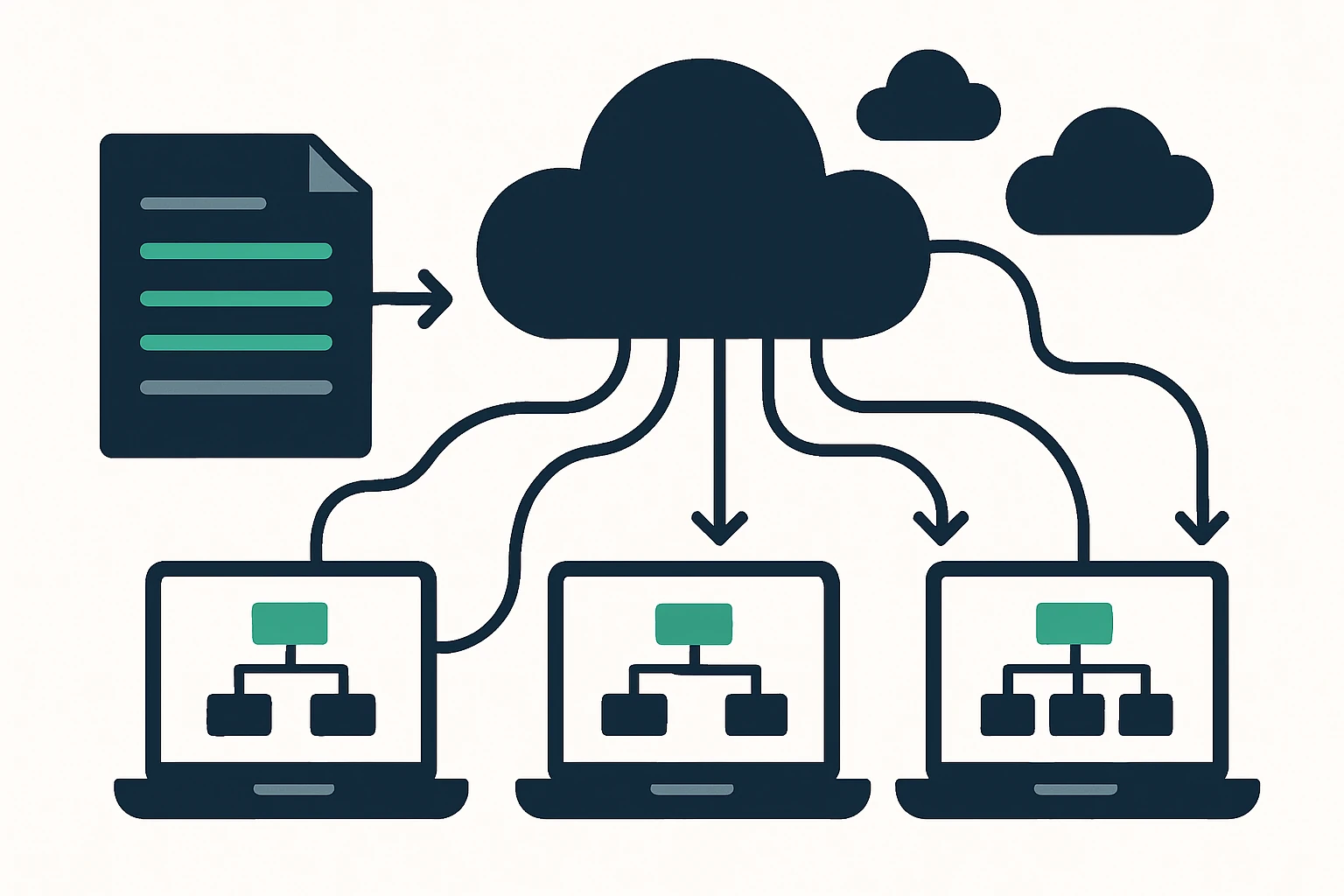
In a multi-cloud environment, routing decisions happen at several layers, each with its own dynamics and failure modes. The network layer (inter-domain routing via BGP) governs how traffic exits and enters cloud networks, the edge layer (anycast and CDN behavior) determines which data center or PoP ultimately serves a client, and the application/DNS layer shapes how clients are directed during events such as outages or congestion. Relying on a single mechanism - say, DNS TTL adjustments alone - can leave performance and reliability gaps, especially when global reach and real-time health are critical. The practical takeaway is to combine multiple, complementary controls so that a failure in one layer doesn’t derail the entire service. DNS optimization and failover strategies provide a concrete example of how these layers interact in real-world deployments.
Core levers of traffic engineering
Anycast routing: proximity and resilience
Anycast routing uses the same IP address served from multiple, geographically distributed edge locations. BGP then directs client requests to the nearest or best-performing instance, effectively reducing the distance data must travel and shortening recovery times when a location becomes unavailable. This model underpins many DNS servers and CDNs and is a practical way to improve latency for globally distributed users. Cisco’s own experience with anycast highlights how identical IPs published at multiple sites enable fast, local responses while maintaining global failover capability. Cisco Umbrella: High Availability with Anycast Routing illustrates how proximity-based routing translates to measurable resilience and latency benefits. In operational terms, anycast does not remove the need for health checks or monitoring, it simply raises the likelihood that traffic lands at an optimal site. A complementary technical explainer from Cisco further shows how anycast can be deployed in modern data-center fabrics. Anycast in Cisco documentation.
BGP optimization for cloud connectivity
Border Gateway Protocol (BGP) remains the backbone for inter-domain routing in multi-cloud networks. Optimizing BGP path selection - through shorter AS paths, careful route filtering, and fast failure detection - helps ensure traffic takes the most reliable path across cloud-provider networks. Best practices in this space include enabling rapid failure detection (for example, Bidirectional Forwarding Detection, or BFD) and employing policies that reflect business intent (latency, cost, and redundancy). Google Cloud’s Cloud Router best practices specifically call out enabling BFD to provide a rapid signal when a link fails, thus improving convergence times and overall uptime. In multi-cloud contexts, a disciplined BGP strategy is essential to avoid slow convergence and black-holing during outages.
DNS failover strategies: complements to routing
DNS failover is a critical control-plane mechanism for continuity, redirecting traffic to healthy endpoints when a region or data center becomes unavailable. DNS failover is most effective when paired with active health checks and a well-considered TTL strategy, used in combination with edge-based routing, it can dramatically shorten perceived outage windows. TechTarget’s guidance on DNS optimization emphasizes pairing load balancing with a DNS failover approach and benchmarking DNS performance to tailor it to your location and users. This layered approach helps ensure that DNS-based redirection aligns with real-time network conditions rather than relying on static fallbacks. TechTarget: How to optimize DNS for reliable business operations.
Latency-aware routing decisions and observability
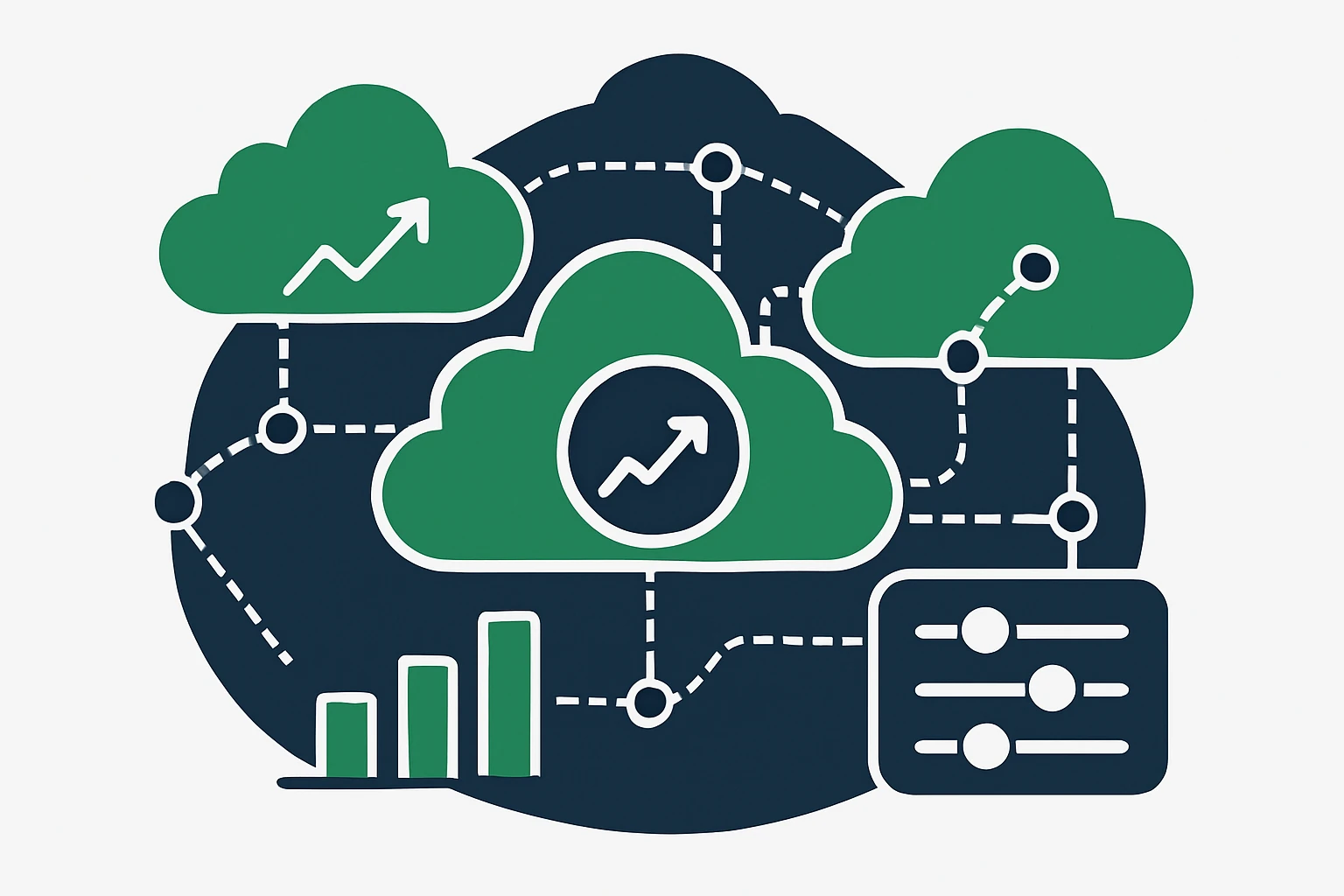
Ultimately, the effectiveness of any routing strategy rests on visibility. Latency, jitter, packet loss, and regional congestion must inform routing decisions, and teams should instrument synthetic measurements alongside real-user monitoring to validate that changes yield the intended improvements. While the literature on advanced TE (traffic engineering) is rich, the practical approach for most teams is to implement a repeatable cycle of measurement, testing, and adjustment - starting with the most latency-sensitive workloads and expanding as confidence grows. Industry discussions point to the importance of evaluating multiple layers (BGP, anycast, DNS) in concert rather than in isolation to avoid optimization silos.
Framework: Assess → Decide → Activate → Monitor
Adopt a lightweight but rigorous framework to implement traffic engineering without becoming overwhelmed by complexity. The following four phases provide a practical, repeatable approach that can scale across many services and providers:
- Assess current posture
- Inventory all traffic flows by service (e.g., auth APIs, data APIs, static assets) and map them to the clouds and regions that serve them today.
- Measure baseline latency between client regions and cloud-region endpoints, identify bottlenecks and single points of failure.
- Document uptime/slo requirements for each service and the acceptable window for failover events.
- Decide on the optimal mix of controls
- For latency-sensitive front-ends with global reach, consider anycast-enabled edge routing to shorten client paths.
- For regional or provider-specific outages, plan BGP topology and policies that favor rapid convergence and robust failover.
- Pair DNS failover with monitoring so that DNS redirection complements, not contradicts, routing changes.
- Activate the chosen controls
- Configure anycast addresses at edge locations and align BGP announcements with your cloud providers’ policies for fast convergence.
- Implement health checks and BFD-based failure detection where supported, so routing devices react quickly to outages.
- Establish DNS failover with appropriately tuned TTLs and health-based reconfigurations that reflect real network reachability.
- Monitor and adjust
- Operate dashboards that show RTT, regional latency, failover events, and DNS performance in real time.
- Run quarterly failover tests and annual architectural reviews to validate that the routing posture still aligns with business goals.
- Continuously refine TTLs, health checks, and routing policies based on observed behavior and evolving cloud-network characteristics.
Structured decision block: a practical framework you can adopt
To make sense of the levers above, use a compact decision framework that teams can apply during planning and incident response. The framework below is designed as a reusable guide rather than a one-off checklist:
- Latency sensitivity - If latency is the primary concern, prioritize edge-based delivery and anycast routing, then layer in DNS failover for regional outages.
- Failover criticality - For services where downtime causes material business impact, ensure rapid BGP convergence and second-failover mechanisms (DNS + health checks) to minimize downtime.
- Cloud provider mix - In diverse provider environments, coordinate routing policies across clouds to avoid counterproductive routing decisions and misconfigured announcements.
- Operational complexity - Start with a small, recoverable subset of services and gradually extend, avoiding a wholesale re-architecture until confidence and tooling are in place.
- Cost vs. resilience - Measure the marginal latency gains against the added complexity and cost of multi-layer routing strategies, justify deployments with quantifiable user-impact improvements.
Limitations and common mistakes (the hard truths)
No framework is free of caveats. For teams pursuing multi-cloud traffic engineering, watch for the following pitfalls:
- Over-reliance on DNS failover - DNS-based redirection can be slow to react due to TTL and recursive resolver caches. Use DNS failover as a complement to, not a replacement for, routing-layer controls. DNS failover is powerful but not a silver bullet.
- Misaligned TTLs - Aggressive TTLs can cause churn and load on the DNS system, long TTLs can slow failover when fast rerouting is needed. Balance TTLs with the observed failover latency and your operational tempo.
- Fragmented visibility - When BGP, anycast, DNS, and application health feed separate dashboards, teams lose context. A unified observability layer is essential for timely decisions.
- Underestimating convergence time - BGP convergence and DNS propagation both contribute to failover latency. Predictive testing helps, you should simulate outages to understand real-world timelines.
- Scope creep - It’s easy to chase the most aggressive optimization. Start with a minimal viable routing posture for the most critical workloads and scale thoughtfully as confidence grows.
Expert insights that shape practical decisions
Industry practitioners consistently highlight a balanced approach. For instance, Anycast routing can materially reduce end-user latency and improve resilience when deployed with robust health checks and precise routing policies. As Cisco notes, anycast routing routes users to the nearest edge, but it requires careful implementation and ongoing monitoring for it to deliver the promised benefits. Cisco Umbrella’s anycast discussion underscores this point. In parallel, cloud-native routing best practices stress fast failure detection (e.g., BFD) and policy-driven route optimization to maintain performance across multi-cloud networks. Google Cloud’s Cloud Router best practices provide concrete guidance on aligning routing behavior with business objectives.
Why this matters for CloudRoute and its clients
CloudRoute stands at the crossroads of performance, reliability, and scale. Our cloud routing hub is designed to orchestrate the intersection of BGP optimization, anycast edge routing, and DNS failover across AWS, GCP, and Azure. Rather than forcing a single solution, CloudRoute enables teams to deploy a measured mix of controls tailored to each workload and provider. The aim is not to replace existing provider-native capabilities but to coordinate them so traffic behaves predictably under load and during failures. For teams exploring where to start or how to extend a current architecture, a structured, phased approach reduces risk while delivering tangible improvements in latency and uptime. CloudRoute’s cloud-routing hub can serve as the central orchestration layer that makes this approach practical at scale.
Conclusion: a pragmatic path to faster, more reliable multi-cloud apps
In multi-cloud environments, performance and resilience hinge on more than one technique working in concert. Anycast routing reduces path length and speeds failover at the edge, BGP optimization ensures traffic finds the best routes across provider networks, DNS failover provides a safety valve when outages occur. Together, these controls create a layered, observable, and repeatable framework that can scale with your organization’s needs. By starting with a focused, measurable plan and gradually extending coverage, teams can reduce latency, improve uptime, and deliver a more consistent experience to users - without getting lost in a labyrinth of configuration traps.