Introduction
For cloud-native teams building SaaS and multi-cloud architectures, the choice of domain extensions is more than branding - it touches resilience, regional trust, and even SEO. The current TLD landscape is expanding rapidly, with more than 1,400 delegated top-level domains (TLDs) in circulation as of mid-2025, and hundreds of millions of domain registrations across all TLDs. In 2025, total domain registrations across all TLDs rose to 386.9 million, underscoring a marketplace where both classic and novel endings compete for visibility and reliability. DNIB Q4 2025 highlights this growth trajectory and its implications for operators who must plan for multi-cloud resilience and regional user experiences.
Understanding the TLD Landscape in 2026
What counts as a top-tier TLD today goes beyond popular perception. The root-zone ecosystem managed by IANA/ICANN continues to expand as new gTLDs enter the market and country-code TLDs (ccTLDs) proliferate across markets. As of mid-2025, ICANN’s IDN (Internationalized Domain Names) report notes the continued growth and diversification of delegated TLDs, with well over a thousand extensions in operation and more expected as registries apply for new registrations. This expansion means enterprises can tailor their domain portfolios to regional branding, regulatory environments, and customer expectations, but it also raises complexity for global DNS and traffic routing strategies. For a sense of the scale, Verisign’s DNIB updates show the total domain base across all TLDs trending upward into 2025, with quarterly figures indicating continued growth across the board. IANA Root Zone Database and the official ICANN IDN report provide the ongoing context for how many TLDs are delegated and actively used.
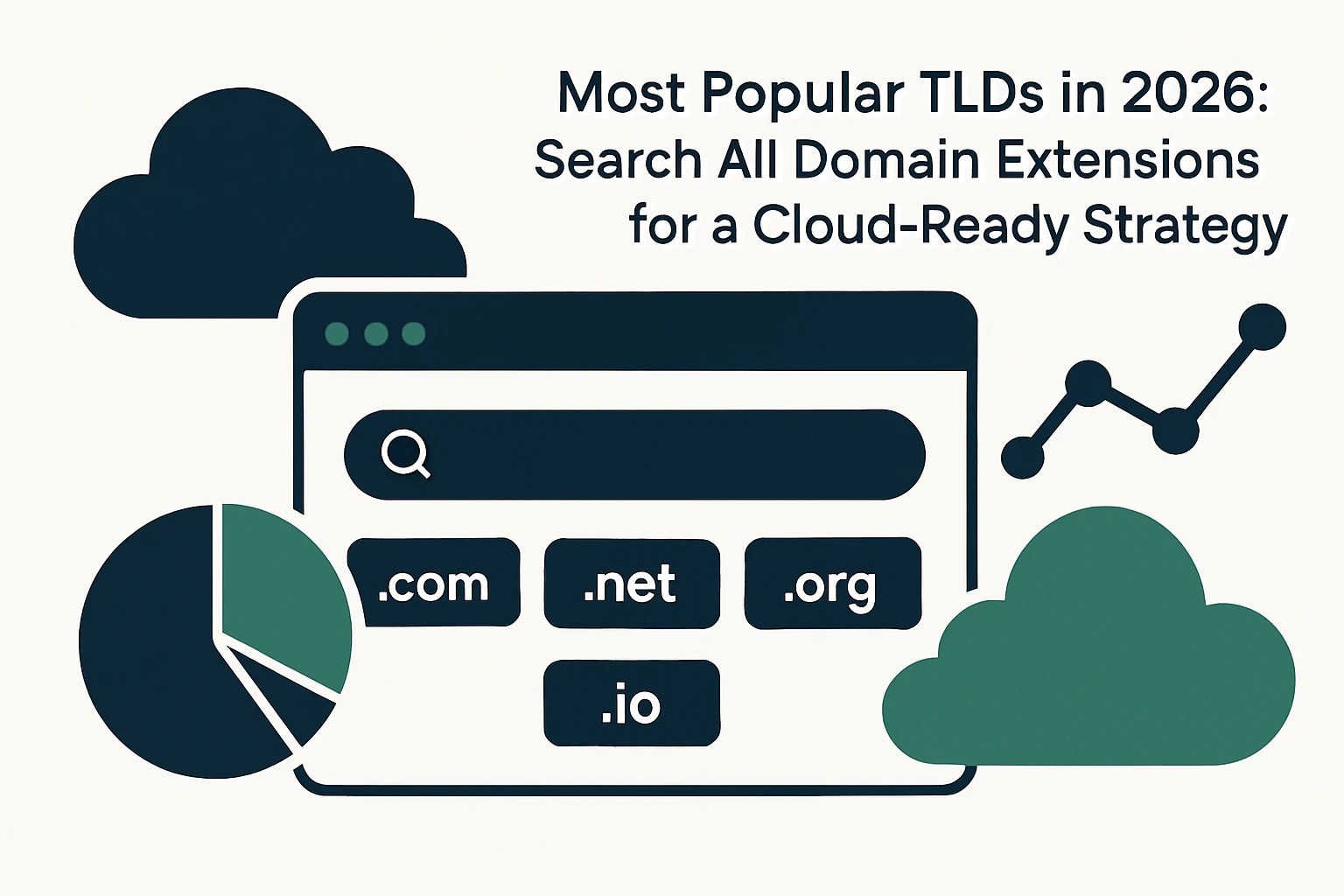
From a numerical standpoint, the market continues to be led by .com, even as new gTLDs gain traction. Market analyses often cite .com’s enduring dominance while highlighting accelerating growth among non-.com endings driven by branding opportunities and niche targeting. Industry coverage and official quarterly summaries consistently point to .com as the anchor, with other TLDs expanding in both volume and variety. For example, a broad overview of 2025-2026 trends shows .com remains the most популярных extension, even as newer TLDs report meaningful gains in registrations and market share. Statista: most popular TLDs provides a snapshot of these dynamics, complementing registries’ data.
Why Popular TLDs Matter for Cloud-Ready Businesses
Cloud operators live at the intersection of performance, reliability, and brand trust. The choice of TLDs can influence regional branding, perception of legitimacy, and even user behavior in local markets. While DNS routing and traffic engineering determine how requests travel across networks, the domain end itself often serves as the first signal to users and partners about where to find services and which regulatory environment governs data processing. A few practical implications for cloud-native teams include:
- Brand strategy and regional targeting: Using ccTLDs or regionally popular gTLDs can reinforce local presence and compliance signals, which can in turn affect user trust and conversion in specific markets.
- SEO and local search signals: While search engines index pages across TLDs, user familiarity and local relevance can influence click-through by geography, so a balanced mix of TLDs may support regional visibility.
- DNS and performance considerations: The DNS provider and resolvers behind each domain are critical to latency and uptime. TLD selection can interact with registrar and DNS ecosystem choices, which is why operational resilience matters as much as branding.
Recent market data confirms the continuing dominance of .com in the overall namespace, even as non-.com TLDs grow in popularity. This trend is particularly relevant for cloud operators who must decide where to invest management effort and budget for domain portfolios, SSL/TLS, and DNS services. Statista’s overview of TLDs highlights .com’s long-standing lead while documenting broader expansion across other endings.
A Practical Framework to Search All Domain Extensions
One of the core challenges for cloud teams and startup founders is not merely identifying popular TLDs, but systematically searching all domain extensions to safeguard branding, minimize risk, and plan for future growth. Below is a simple, repeatable framework you can apply when evaluating extensions for a cloud-first business. It’s designed to be editorially pragmatic, not overly theoretical, and it aligns well with a multi-cloud, global deployment approach.
- Step 1 - Define your goals: Clarify regional reach, product branding, and regulatory constraints. Are you pursuing a global footprint, or is regional sovereignty a priority? The answer shapes which TLDs to prioritize beyond .com.
- Step 2 - Map brand risk and domain coverage: List your core brand names and potential misspellings, then search across major and niche TLDs to identify registrations you should monitor or acquire. For a comprehensive directory of domain endings, see Webatla’s TLD pages.
- Step 3 - Analyze SEO and local targeting: Consider how different TLDs align with your target markets and how search engines treat localized signals. While .com remains prevalent, country-code and industry-specific TLDs may offer regional advantages.
- Step 4 - Check DNS reliability and registrar support: Ensure your DNS provider and registrar offer robust failover, quick propagation times, and consistent renewal processes across all chosen TLDs. Reliability often matters more in cloud traffic engineering than the ending itself.
- Step 5 - Assess cost and lifecycle management: Some TLDs carry higher registration or renewal costs and more complex governance. Factor lifecycle maintenance into your budget planning, especially when scaling across regions.
- Step 6 - Test performance and resolution: Run latency, resolution time, and failover tests from multiple geographies. Domain performance in production can influence user experience and application availability across cloud regions.
- Step 7 - Plan for multi-cloud routing and brand consistency: Align your domain strategy with your traffic engineering and routing practices. A coherent portfolio supports consistent branding, secure access, and predictable user journeys in multi-cloud environments. For domain exploration, consult a comprehensive directory such as Webatla’s list of domains by TLDs and consider pricing implications at Webatla Pricing to understand cost trade-offs.
In practice, this framework helps you balance ambition with practicality: you may start with a core set of TLDs (for brand protection and regional reach) and gradually expand footprint as product adoption scales. As you do, keep in mind that the namespace itself is dynamic - the total number of delegated TLDs has grown as registries launch new endings and ICANN continues to review applicant rounds. ICANN’s IDN report and the IANA Root Zone Database offer authoritative context on the current state and growth of the TLD ecosystem. ICANN IDN Annual Report 2025 and IANA Root Zone Files provide the latest delegations and root-zone details that influence your long-term planning.
Putting It All Together: The CloudRoute Perspective
CloudRoute focuses on optimizing cloud routing and traffic engineering to reduce latency and improve uptime. A well-considered domain strategy complements these efforts by ensuring that as you route traffic efficiently, your brand and user experience stay consistent across regions. While you don’t route via a TLD alone, the presence of a thoughtful, globally distributed domain portfolio reduces friction at the edge and supports predictable DNS behavior during traffic surges, outages, or regional events. For organizations exploring the breadth of domain extensions, Webatla’s directory offers practical visibility into available options across TLDs and country-code endings. And if you’re evaluating how to manage costs and scale, consider the Webatla pricing page alongside your DNS and routing investments.
Limitations and Common Mistakes
Even with a structured approach, there are real limitations and frequent missteps to avoid in a cloud-first domain strategy:
- Overreliance on .com can constrain branding opportunities in high-growth regions where local TLDs resonate more with users.
- Underestimating DNS performance and registrar reliability across TLDs can undermine uptime during traffic spikes or failover events.
- Neglecting trademark risk and legal clearance across multiple TLDs can lead to domain disputes and brand confusion down the line.
- Ignoring renewal and lifecycle costs across a large portfolio can create budget instability, especially for startups scaling quickly.
When in doubt, start with a defensible core portfolio and a phased expansion plan, rather than attempting to own every possible extension at once. This approach aligns well with disciplined cloud routing and traffic engineering programs, where reliability and performance are prioritized alongside brand protection.
Conclusion
The domain landscape in 2026 remains expansive, with .com still leading but non-.com TLDs gaining momentum. For cloud-native teams, the takeaway is not to choose a single ending for its own sake, but to craft a deliberate, scalable portfolio that supports regional branding, regulatory alignment, and reliable DNS performance. By combining a structured search across all domain extensions with a focus on DNS resilience and traffic optimization, you can build a domain strategy that grows in lockstep with your multi-cloud deployments. For teams seeking a practical directory to explore TLD options, Webatla’s TLD catalog and pricing resources provide actionable starting points that complement CloudRoute’s routing and traffic-engineering capabilities.