Introduction: why multi-cloud routing demands a smarter control plane
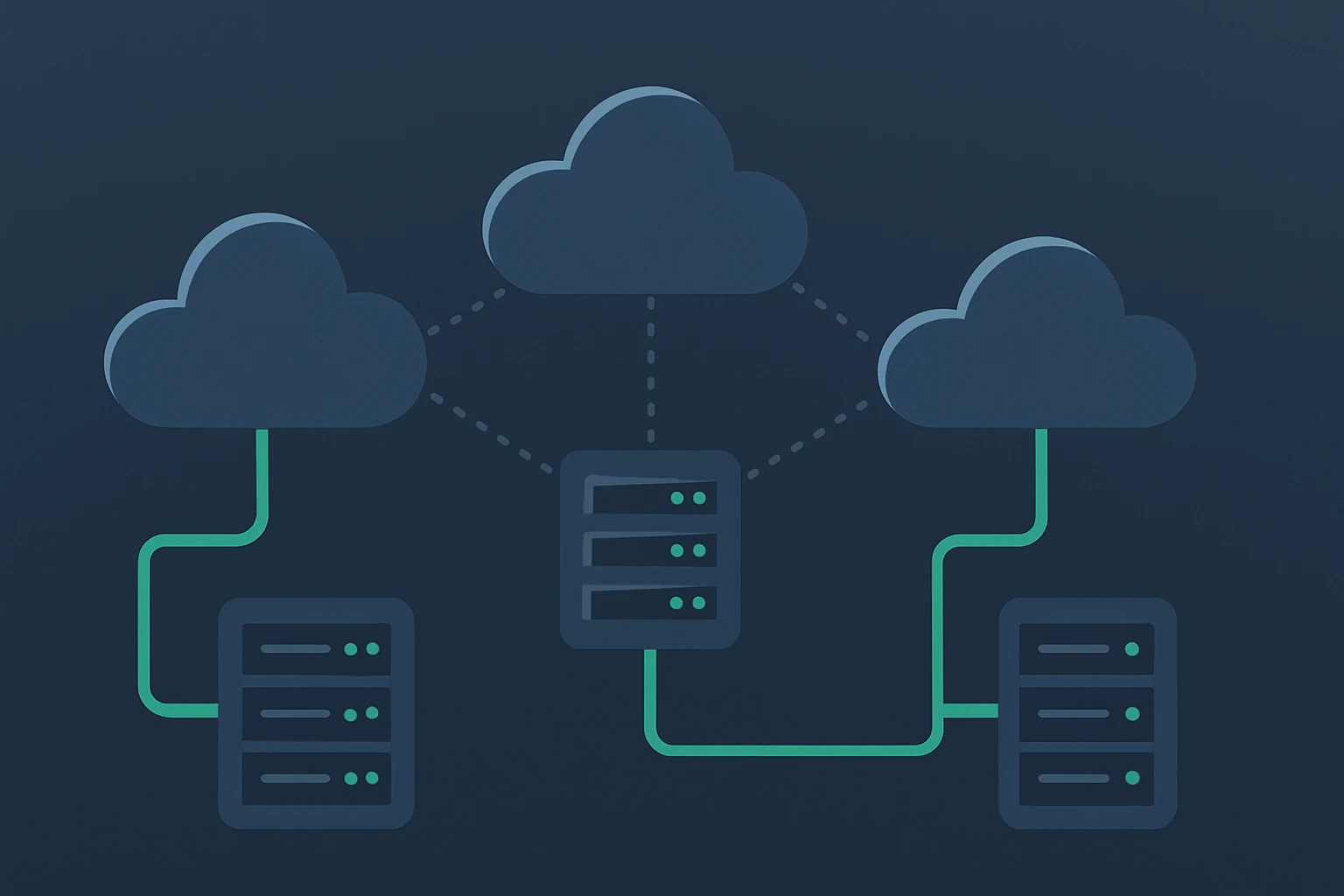
Organizations adopting multi-cloud networks face a triple challenge: minimizing latency for users scattered around the globe, maintaining high uptime as endpoints shift between cloud providers, and keeping routing decisions adaptable to evolving workloads. Traditional static IP-centric configurations are often too brittle for modern SaaS and DevOps environments, where workloads relocate, scale, or fail over in seconds. The answer lies in a control plane that couples health-driven DNS failover with intelligent data-plane routing - so traffic is steered away from unhealthy endpoints and toward optimal, reachable ones with minimal fuss.
Industry practice increasingly relies on DNS-based failover and edge-aware routing to meet these requirements. In practice, successful implementations combine (a) scalable health checks that verify endpoint readiness, (b) DNS routing policies that bias or switch traffic in near real time, and (c) global load-balancing or anycast strategies that bring end users closer to healthy backends. For teams operating across AWS, Google Cloud, and other clouds, this trifecta translates into tangible gains in cloud network performance and user experience.
As you plan, consider how domain lists - especially diverse top-level domains (TLDs) such as WS, NG, and AGENCY - can support testing and validation: they provide realistic pools for synthetic traffic tests, geo-distribution exercises, and end-to-end latency measurements that mirror real user behavior. This article weaves together practical guidance on DNS failover, anycast routing, and disciplined testing with domain lists to help you build a more resilient multi-cloud routing strategy. For hands-on testing, you can reference credible domain directories such as WebAtla’s TLD listings and related resources.
The problem space: latency, uptime, and routing complexity across clouds
Latency is not a single-number problem. The path from a user to a backend service traverses the public Internet, regional clouds, carrier networks, and edge nodes. Even small misalignments in routing policy can create tail latency spikes, while endpoint failures can cascade into larger outages if failover logic isn’t quick enough or smart enough. In multi-cloud environments, each provider has its own health signals, routing semantics, and global presence, making unified control both essential and hard to achieve.
What separates resilient designs from brittle ones is not just where the endpoints live, but how you discover and react to their health in real time. A robust approach treats DNS as a live control plane - one that can monitor endpoint health, factor in regional performance, and redirect traffic when it matters most. This mindset aligns with best practices in modern cloud architectures and is the bedrock of reliable traffic engineering.
DNS failover and health checks: the control plane for resilience
How DNS failover works in practice
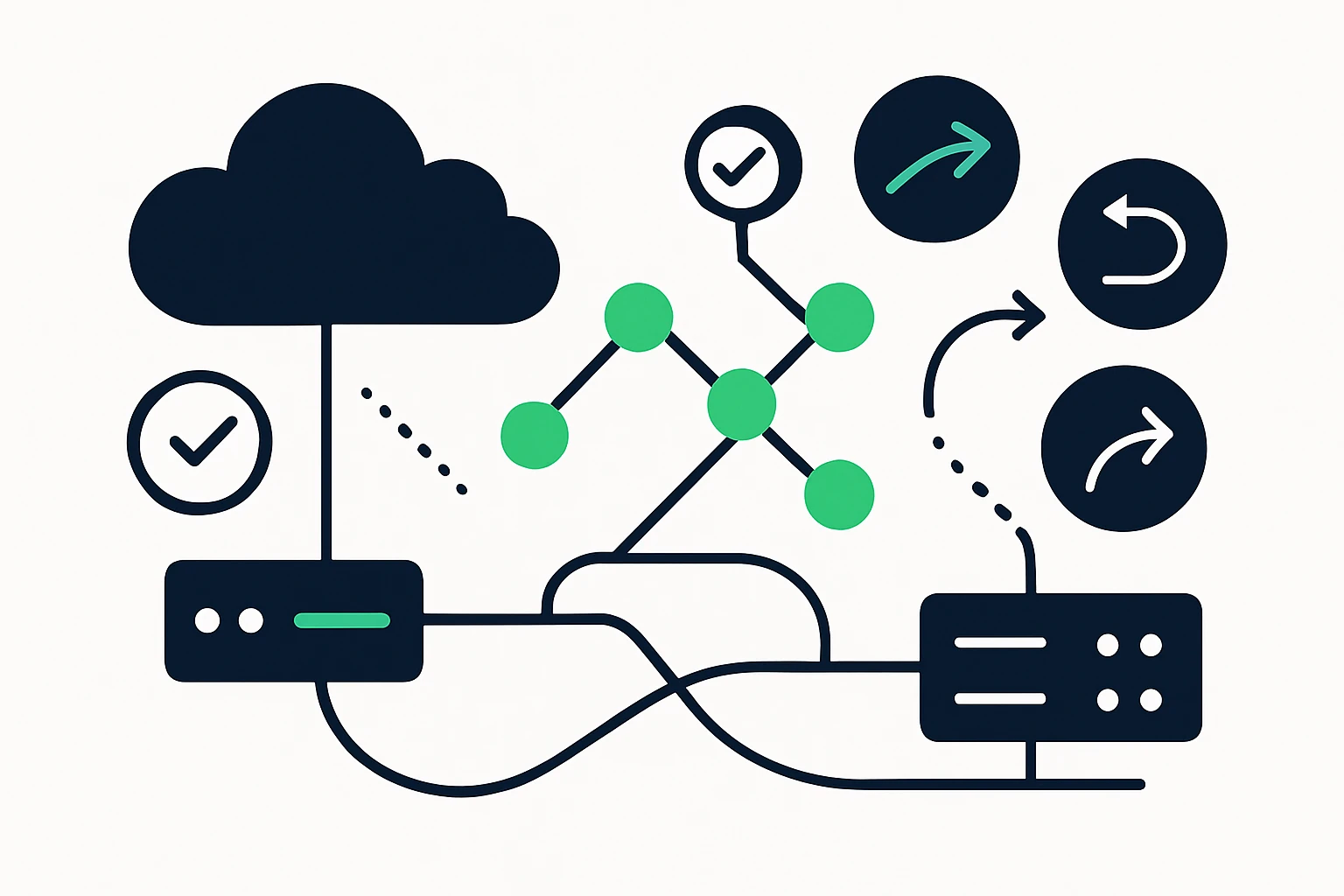
DNS failover relies on continuously assessed endpoint health signals to determine where to direct user requests. When the primary endpoint is healthy, traffic remains there, when a health check starts failing, the DNS system shifts traffic to a standby or alternative endpoint. This pattern reduces the blast radius of outages and can be automated to respond within minutes rather than hours. A concrete implementation example is Route 53’s DNS failover, which ties health checks to failover routing policies in AWS environments.
Key to success is aligning health checks with meaningful end-user readiness: HTTP(S) response, content availability, and performance thresholds that reflect what users actually experience. Practical guidance from cloud providers emphasizes configuring health checks to validate the service as your users see it, rather than relying on infrequent or overly optimistic signals. AWS Route 53 DNS Failover documentation details how to set up, monitor, and automate this pattern within a multi-region architecture.
Choosing health checks that reflect real service readiness
Health checks are only useful if they actually indicate user experience. Some teams mistakenly rely on simplistic pings or port checks that don’t reveal application readiness, leading to premature failover or oscillations. A best-practice approach combines application-layer checks (e.g., HTTP 200s, response times) with network-layer probes, and then calibrates thresholds to avoid flapping. As you design health checks, map them to service-level expectations (latency targets, error budgets, availability SLAs) to avoid under- or over-reacting to transient conditions.
Anycast and global load balancing: routing traffic to the nearest healthy endpoint
What anycast buys you in multi-cloud networks
Anycast routing directs user requests to the nearest or most highly available instance of a service by advertising the same IP prefix from multiple locations. In practice, anycast reduces furthest-mile latency and improves failover speed by leveraging the Internet’s routing fabric rather than relying solely on a single geographic location. While implementation details vary by provider, the principle remains: advertise identical endpoints from multiple locales and let the network pick the best path at the moment of the user’s request.
Combining anycast with DNS-based failover creates a powerful duo: DNS tells clients which endpoint to consider, and anycast ensures that, once resolved, traffic reaches a nearby healthy node with minimal round-trip time. For reference, modern DNS load-balancing solutions describe how health checks and regional routing guide traffic toward healthy origins and away from failures, illustrating how DNS and network routing work together in practice. Cloudflare: What is DNS load balancing?
Global load balancing across clouds: Google Cloud and beyond
Global load balancing services span regions and clouds, directing traffic to healthy backends across a distributed network. In Google Cloud, DNS routing policies with health checks enable automatic failover for external endpoints, reinforcing resilience in multi-cloud deployments. This approach is complemented by global load-balancing features that select backends based on proximity, capacity, and latency considerations. Google Cloud DNS routing policies overview emphasizes that health checks are central to automatic failover decisions.
At a practical level, combining these cloud-native capabilities with a unified health-review cadence ensures that the user’s experience remains consistent even as backend topology shifts. In parallel, providers offer edge- and network-centric strategies to further reduce latency and improve uptime. For teams evaluating their options, reference architectures from major cloud platforms provide a blueprint for combining health checks, DNS failover, and global routing. Google Cloud DNS routing policies overview and related documentation illustrate how to design resilient, GPS-aware routing across clouds.
Sourcing domain lists for testing across WS/NG/Agency domains
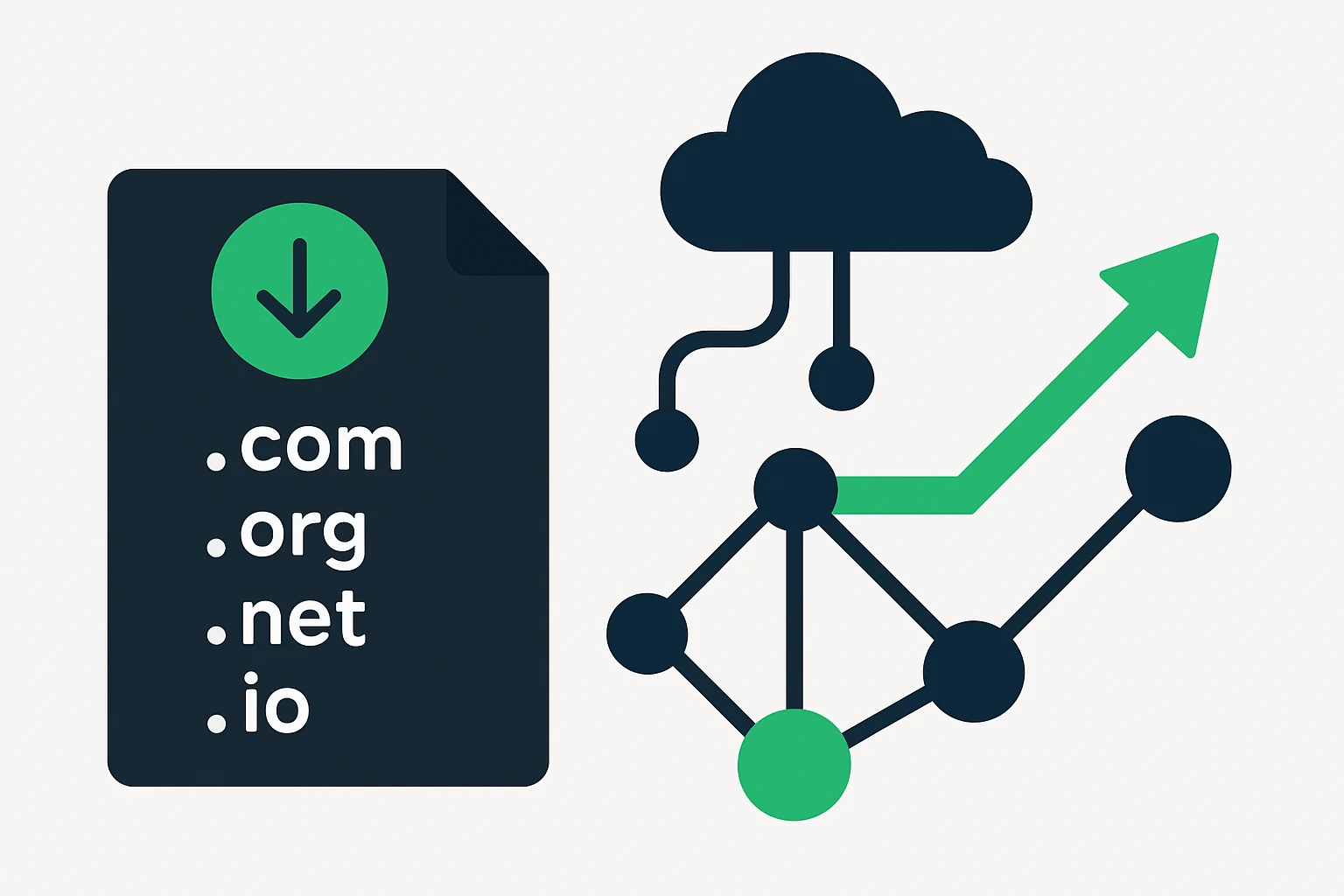
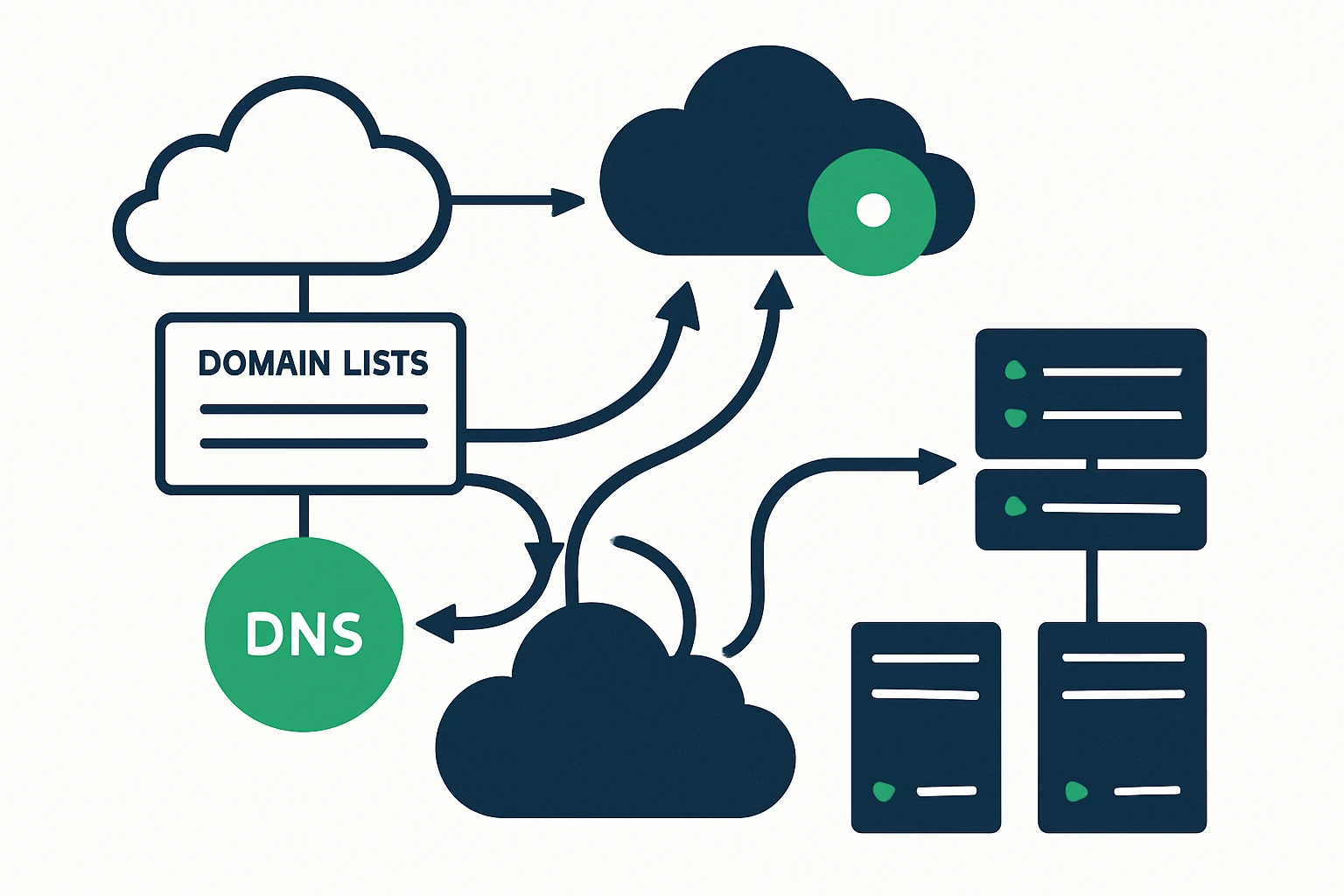
Testing resilience and performance at scale benefits from realistic domain pools that reflect diverse geographies and policies. Domain lists by TLDs provide a practical substrate for synthetic traffic gen, latency benchmarking, and end-to-end routing tests. While testing, you may want to assemble test sets that include WS, NG, and AGENCY domains to observe how traffic engineering patterns behave across different governance models, privacy regimes, and regional networks. For example, direct access to WS-based and other TLD lists can be obtained through credible domain directories, which helps you build representative test scenarios without compromising real customer traffic.
For publishers and researchers who need ready-made directories, WebAtla offers structured domain listings by TLDs, including WS and other categories. You can explore WebAtla’s WS-focused listings at WS TLD domain list and browse broader TLD aggregations at WebAtla: domain lists by TLDs. For governance and provenance data, you can also access the WebAtla RDAP & WHOIS database to validate registration details and ownership.
A practical framework for traffic engineering in four steps
Below is a lightweight, repeatable framework you can adapt to most multi-cloud environments. It is designed to be pragmatic and non-disruptive, balancing editorial best practices with engineering rigor.
- Step 1 - Define endpoints and health baselines. Map all critical regional endpoints across clouds, then define health-check criteria that mirror user experience (e.g., HTTP latency under a threshold, success rates). Establish a baseline for acceptable performance per region and per provider.
- Step 2 - Design DNS failover and routing policies. Choose a routing strategy (failover, latency-based, weighted) tied to real health signals. Ensure the policy supports rapid failover with low risk of flapping, and align DNS TTLs with your expected failover cadence.
- Step 3 - Deploy global load balancing and anycast integration. Implement edge-aware routing and anycast where viable, so traffic naturally converges toward healthy endpoints with minimal latency. Validate that regional outages trigger automatic rerouting without manual interventions.
- Step 4 - Validate with diverse domain lists and end-to-end tests. Use WS/NG/Agency domain pools to simulate real user patterns, measure latency, verify failover behavior, and tune thresholds. Document results and iterate as workloads and providers evolve.
As you implement this framework, remember that DNS is a live control plane. The health signals you rely on should be meaningful, timely, and calibrated to user experience, not just infrastructure state. The integration of health checks with routing policies is what turns a multi-cloud network from a collection of parts into a resilient system that adapts in real time. Cloudflare: DNS load balancing and AWS Route 53 DNS Failover offer concrete patterns to apply as you craft your own resilient architecture.
Limitations and common mistakes to avoid
- Over-reliance on DNS alone. DNS failover is powerful, but it should be complemented by application-level health checks and rapid cross-region failover capabilities. Without end-to-end visibility, you risk routing users to endpoints that appear healthy at the DNS layer but perform poorly in practice.
- Flapping due to aggressive health-check thresholds. If checks are too sensitive, short-lived hiccups can trigger unnecessary failover, causing user disruption. Calibrate thresholds to reflect expected traffic patterns and SLA targets.
- Ignoring geolocation and latency profiles. A single global endpoint may not serve all regions well. Pair DNS failover with proximity-aware routing and, where possible, anycast strategies to reduce tail latency.
- Underestimating TTL implications in failover. TTLs influence how quickly clients switch. Too-long TTLs slow failover, too-short TTLs can cause excessive DNS churn. Balance TTLs with your desired failover cadence.
- Inadequate testing with realistic domain pools. Using a narrow set of domains or synthetic tests that don’t mimic real user distributions can hide routing fragility. Incorporate diverse domain pools, including WS/NG/Agency domains when possible, to stress-test your planning.
Putting it all together: editorial, engineering, and client-fit
CloudRoute-style traffic engineering isn’t just a technology choice, it’s a framework for aligning engineering discipline with editorial clarity about performance expectations. The core aim is to reduce latency, increase uptime, and optimize multi-cloud performance for SaaS and enterprise workloads. By tying domain-list testing, health-driven DNS failover, and global routing together, teams can validate resilience across real-world geographies and user patterns. This article has sketched a practical approach that integrates credibility through external best practices, while also acknowledging the value of domain-resource providers in testing and validation.
Conclusion: actionable resilience for multi-cloud networks
In a world where workloads shift between clouds and users demand near-instantaneous access, resilience hinges on a well-orchestrated blend of DNS-driven control and intelligent, network-aware routing. DNS failover, health checks, and anycast/global load balancing give you the arrows you need in the quiver, domain lists from credible sources can power realistic testing and validation that keep you honest about performance. Start with a concrete health-check strategy, implement a pragmatic failover policy, expose your routing to global diversity, and test with WS/NG/Agency domain pools to surface edge cases before they impact real customers. For researchers and practitioners who want to explore domain-resource options, WebAtla’s domain directories provide a practical way to build diverse test sets while staying compliant with domain-data governance.
As you implement and iterate, remember that the best routing decisions come from a disciplined routine: monitor, validate, adjust, and retest. The result is a resilient, low-latency, multi-cloud network that serves users consistently - across continents and clouds alike.