Introduction: the latency challenge in multi-cloud environments
Latency is the invisible friction in modern software delivery. As enterprises distribute workloads across public clouds - AWS, Azure, Google Cloud - and increasingly rely on edge and regional deployments, every DNS lookup and routing decision becomes a potential bottleneck. The goal is not merely to connect clouds but to orchestrate traffic so users reach the nearest, healthiest edge with minimal delay, while still maintaining availability during failures. This requires alignment across DNS strategies, inter-domain routing, and cloud-provider network design. In practice, teams must balance speed, resilience, and operational complexity as they compose a resilient, multi-cloud network.
From DNS to routing: three layers of latency control
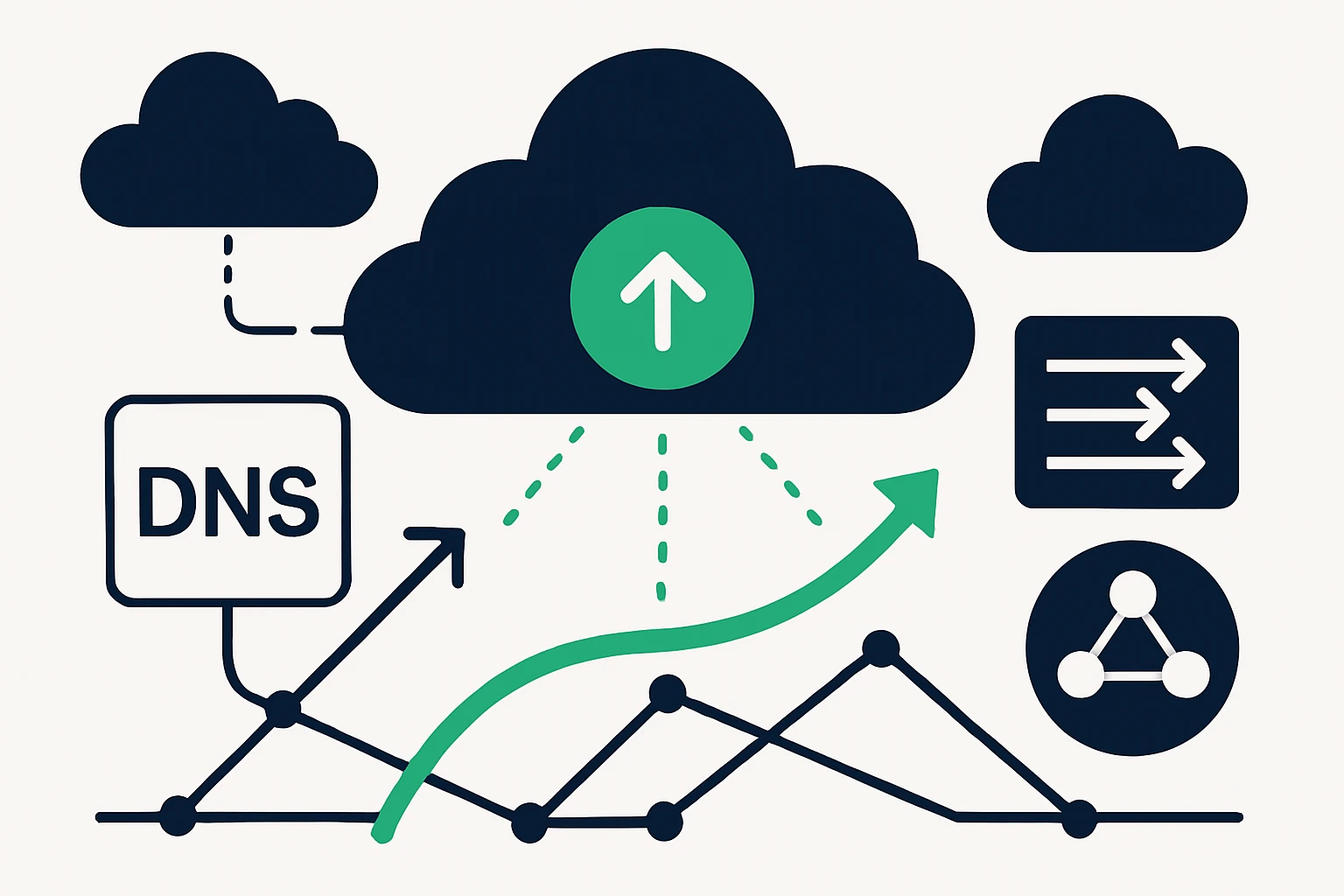
Latency reduction begins with DNS and health checks, but it must extend into the routing layer and the cloud networks themselves. Three layers matter in concert:
DNS-based failover and health checks
DNS failover enables active backup configurations so services can shift endpoints if a health check signals a problem. Modern cloud DNS solutions emphasize health checks and policy-based steering to minimize disruption when a component becomes unavailable. However, DNS-based failover is not a silver bullet, its speed depends on DNS TTLs, propagation, and the granularity of the health checks you configure. For example, Google Cloud DNS describes how routing policies can drive automatic failover, while cautioning that TTLs and checks influence responsiveness and consistency across regions. DNS routing policies overview and best practices for cloud DNS provide practical guardrails. (cloud.google.com)
Anycast routing at the edge
Anycast routing answers the question where to serve a given user by directing requests to the closest edge instance. This technique can dramatically reduce round-trip time for global users and improve perceived performance. The RFCs that formalize anycast provide essential guidance on how to deploy and operate such services, including considerations around routing stability, failover semantics, and state management. See RFC 4786 for a comprehensive treatment of anycast operation and best current practice. RFC 4786: Anycast Services and a companion IETF text outline practical deployment considerations. (datatracker.ietf.org)
BGP optimization and inter-domain routing
Beyond edge routing, the inter-domain routing fabric - often governed by BGP - shapes how traffic moves across the wide Internet and between cloud regions. While DNS can steer clients to a region or edge, BGP optimization and healthy peering ensure that the chosen path remains optimal as network conditions evolve. In practice, operators pursue techniques like route prepositioning, ECMP where appropriate, and careful failover planning to avoid oscillations and instability. Practical guidance often comes from a combination of IETF guidance (for routing fundamentals) and cloud-provider best practices for multi-region interconnectivity. For a rigorous foundation on how anycast interacts with routing, refer to RFC 4786 and related operational guidance. (datatracker.ietf.org)
Structured framework: a three-layer resilience model for multi-cloud routing
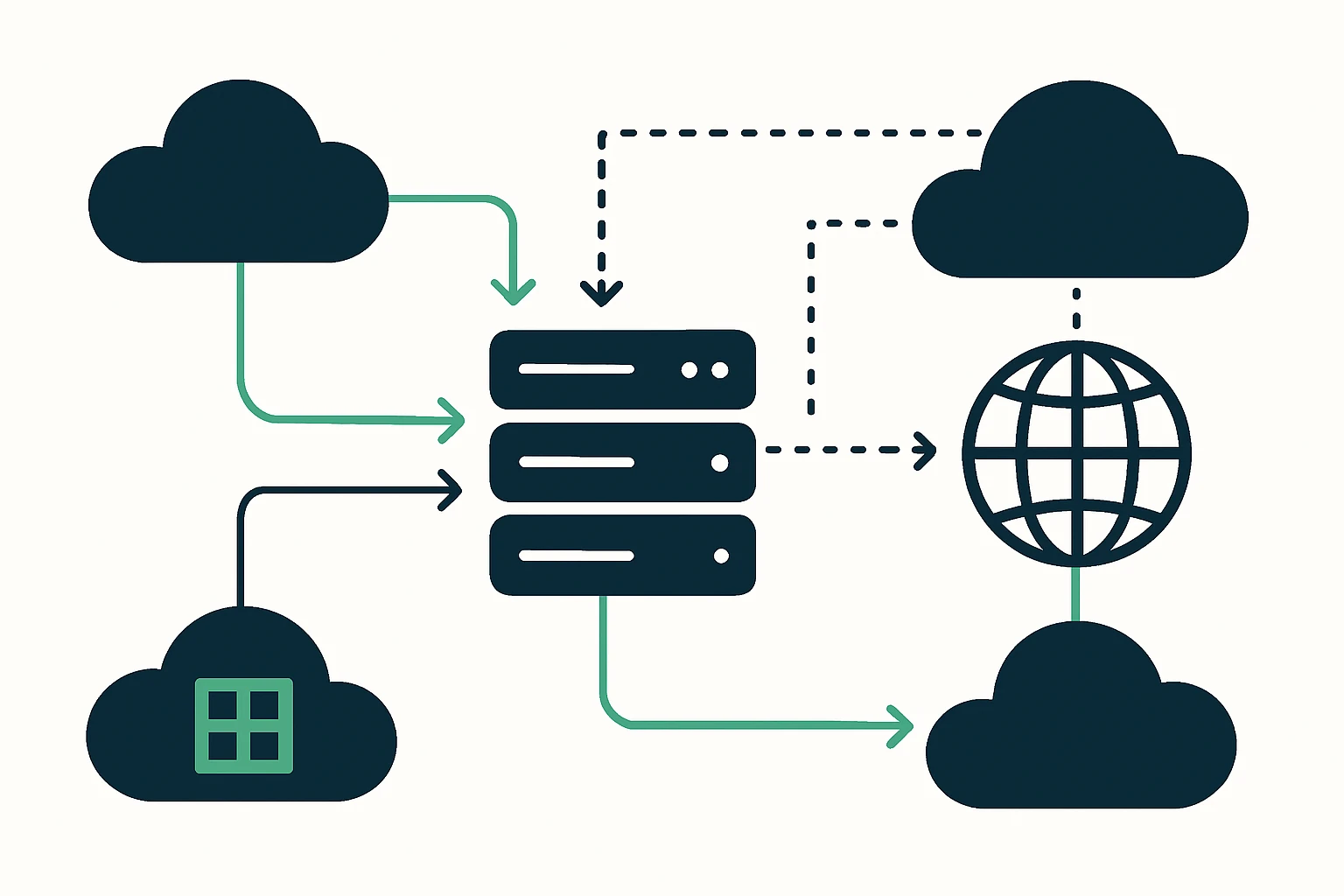
To translate these concepts into a coherent strategy, adopt a three-layer resilience model that aligns DNS, edge routing, and inter-cloud routing with your service objectives. The framework below provides a pragmatic, decision-oriented path for operators.
-
Layer 1 - Edge reachability and DNS health
Define performance targets (average latency, tail latency, availability) and translate them into edge placement decisions. Implement DNS-based failover with health checks that reflect application-layer realities, not just server reachability. Monitor TTL discipline to balance cache effectiveness with responsiveness to failures. Real-world guidance from Google Cloud DNS emphasizes coherent health checks and policy-driven failover to minimize positive/negative bias in routing after a health event. Best practices for Cloud DNS (cloud.google.com)
-
Layer 2 - Edge-to-region routing and anycast deployment
Use anycast to reduce user-perceived latency by funneling traffic to the closest edge site. Ensure that the anycast instances can tolerate topology changes and that session state is managed in a way that minimizes disruption during failover. The RFC on Anycast provides the governance framework for deployment and operational considerations. RFC 4786: Anycast Services (datatracker.ietf.org)
-
Layer 3 - Inter-domain routing and cloud interconnect
Align BGP-based routing with edge decisions to prevent route flaps and ensure convergence under changing conditions. This requires close collaboration between network engineering groups and cloud networking teams, plus periodic validation through controlled traffic tests and “game days” to validate failover paths and convergence times. While DNS provides the edge steering, BGP and peering arrangements determine the actual transport, and best-practice guidance for multicloud networking often references both routing and DNS resilience strategies. For additional context on DNS resiliency and multi-domain routing considerations, see CIRA best practices for DNS resiliency. (cira.ca)
Practical implementation: a compact, repeatable checklist
Operationalizing a low-latency multi-cloud strategy requires a repeatable workflow. The checklist below synthesizes the core activities and decisions to streamline implementation across teams and clouds.
- Define latency targets and availability SLAs for critical user journeys.
- Inventory domain assets across TLDs (this is where domain datasets become valuable for routing topology and branding). For example, organizations often maintain inventories by TLD to support governance and routing decisions. See the dedicated Studio TLD inventory in the WebAtla catalog: download list of .studio domains and the broader domains by TLD catalog. Pricing and plan details are available at pricing.
- Configure DNS failover with health checks that reflect service readiness and user impact, not just server reachability. Use policy-based routing to minimize unnecessary failovers and to keep critical paths stable.
- Deploy anycast at the network edge with careful state management and clear failover expectations to avoid session disruption.
- Coordinate inter-domain routing with cloud-provider interconnect and regional peering to optimize path selection and convergence times.
Expert insight: Network operators who align DNS failover with edge-based anycast and careful BGP planning consistently report faster failovers and better user experience during regional outages. The practical takeaway is to treat DNS routing, edge placement, and inter-cloud routing as a single, co-optimized control loop rather than independent silos. This approach reduces the latency envelope while maintaining resilience.
Limitations, trade-offs, and common mistakes
Despite the advantages, this approach has caveats. Being aware of these limitations helps avoid costly misconfigurations and performance regressions.
- DNS-based failover is not instant. TTLs influence how quickly clients switch endpoints, and enforcement of health checks adds another layer of delay. Use TTLs judiciously and complement DNS failover with edge-based health isolation where possible. For a deeper dive into DNS resiliency practices, see the CIRA guidance. CIRA best practices (cira.ca)
- Anycast is not a panacea for session-heavy workloads. While anycast reduces initial latency, it can complicate stateful sessions and visibility. Strategy must include consistent state management and, where needed, session affinity or application-layer routing to preserve experience for long-lived connections.
- Routing convergence can introduce instability if not tested. BGP and inter-domain routing can oscillate if not carefully tuned, especially during failover or after topology changes. Regular testing and predefined rollback procedures are essential.
- Over-reliance on TTLs can backfire under real traffic patterns. Aggressive TTLs may confuse clients caching stale routes during outages, while long TTLs slow recovery. Balance TTLs with health-check cadence and real-user metrics.
Practical implementation checklist: a compact framework in action
To operationalize these ideas, use the following three-part framework as a compact guide you can apply in the coming sprint.
- Assess and align objectives - Define latency targets, expected failover times, and service-critical paths. Map these to edge locations, DNS policies, and BGP considerations.
- Design the co-optimized control loop - Create a triad of DNS health policies, anycast edge deployment, and inter-cloud routing strategies. Ensure they are tested against simulated failures and real-world traffic patterns.
- Validate and iterate - Conduct controlled game days to validate failover paths, observe convergence times, and measure user-perceived latency. Iterate based on results and evolving cloud interconnects.
Conclusion: a practical path to resilient, low-latency multi-cloud delivery
Latency-aware architecture in a multi-cloud world is not a single knob you adjust once - it's a continuous, data-driven discipline that blends DNS strategy, edge routing, and inter-cloud transport. By pairing DNS failover and health checks with edge-grade anycast and robust BGP-aware routing, organizations can materially reduce latency, improve uptime, and deliver more consistent experiences across regions. While adopting this approach requires careful planning and ongoing validation, the payoff is a more predictable performance envelope for users, even as clouds and network paths evolve. For teams starting to explore domain inventories and routing datasets as part of their cloud routing strategy, consider the value of structured domain datasets to inform topology decisions. For example, the Studio TLD catalog is one way to organize domain assets across new gTLDs like .studio, with broader inventories available through the WebAtla catalog. download list of .studio domains and download list of domains by TLD can be useful references, and the pricing page explains available options.
External references and further reading: RFC 4786: Anycast Services, which formalizes anycast deployment considerations, Google Cloud DNS best practices, for practical guidance on health checks and failover policy, CIRA best practices for DNS resiliency for distributed DNS design.